
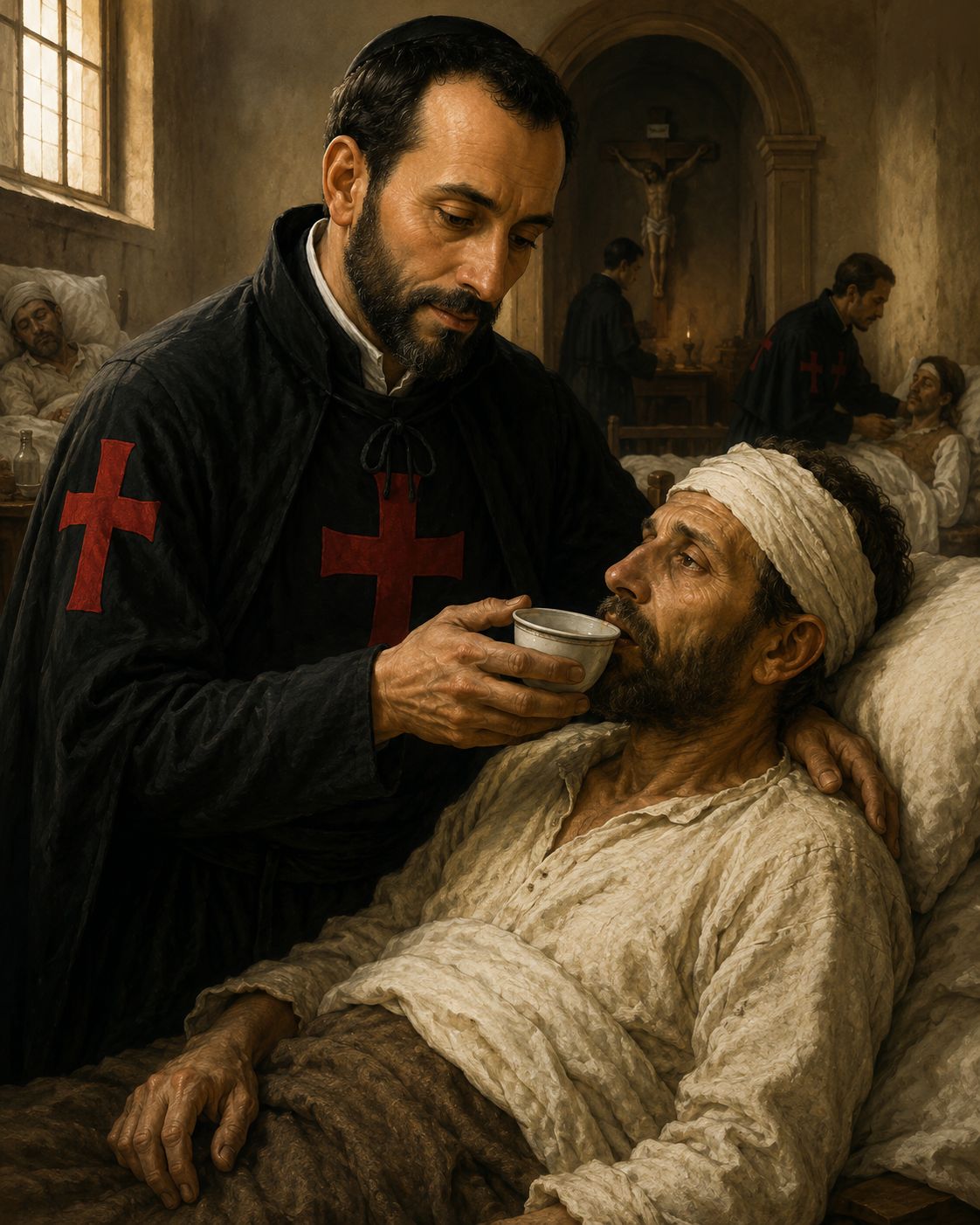
Saint Camillus de Lellis: From Soldier and Gambler to Patron of the Sick
Saint Camillus de Lellis lived one of the most dramatic conversion stories in the history of the Church. He spent his early years as a Soldier, a Gambler, and a man with little direction in life. However, a profound change of heart eventually turned him into one of the most beloved patrons of the sick, nurses, and hospitals. The Church celebrates his feast day every July 18, and his story still inspires healthcare workers around the world today.
Saint Camillus de Lellis’s Feast Day and Early Struggles
The Catholic Church honours Saint Camillus de Lellis with a feast day on July 18. He was born on May 25, 1550, in Bucchianico, a town then part of the Kingdom of Naples. His mother was nearly sixty years old when she gave birth to him, and because his father served as a military officer who was often away from home, young Camillus grew up with very little supervision. After his mother passed away in 1562, he was raised by relatives who struggled to manage his fiery temper. By his teenage years, he was already following his father into military camps, and at sixteen, he joined the Venetian army to fight against the Turks.
A Life Changed by Illness and Faith
Military service left Camillus with a painful leg wound that never fully healed. Meanwhile, his gambling habit spiraled out of control, and by 1574, he had lost everything and found himself penniless in Naples. Eventually, he sought treatment at Rome’s San Giacomo Hospital, but staff dismissed him due to his difficult attitude. Afterward, he took a labour job at a Capuchin friary, where the guardian noticed something redeemable in him despite his rough exterior. This encouragement led to a genuine religious conversion in 1575, prompting Camillus to enter the Capuchin novitiate. Unfortunately, his leg wound was declared incurable, so the friars could not accept him into full religious life.
Saint Camillus de Lellis Discovers His True Calling
Rather than giving up, Camillus returned to San Giacomo Hospital, this time as a caregiver and he eventually rose to become it’s superintendent. During this period, he adopted a strict, disciplined lifestyle and began working closely with Saint Philip Neri, who served as his confessor and spiritual director. As Camillus observed the poor quality of care given to patients, he felt called to do something about it. With Neri’s encouragement and a generous benefactor’s financial support, he pursued the priesthood and was ordained in 1584 at the age of thirty-four.
Founding the Camillians to Serve the Sick
Soon after his ordination, Saint Camillus de Lellis founded the Ministers of the Sick, an order now known as the Camillians. Members wore a distinctive red cross on their habits, a symbol still associated with charity and emergency care today. In 1585, the group expanded into a larger house in Rome, and by 1588, they had opened a new community in Naples. Notably, Camillus and his companions bravely cared for plague-stricken sailors aboard quarantined ships, even though two of his men died from the disease during that mission.
In 1591, Pope Gregory XIV elevated the Camillians to the status of a full religious order. Around this same time, Camillus introduced a groundbreaking fourth vow requiring members to serve the sick even at risk to their own lives. The order later sent members to care for wounded soldiers in Hungary and Croatia, effectively creating history’s first field medical unit.
Compassion Until the End of Life
Saint Camillus de Lellis also cared deeply about how patients were treated in their final moments. Camillus worried about cases of people being mistakenly buried alive. So he instructed his brothers to wait fifteen minutes after a patient’s apparent last breath. Only then could burial preparations begin. This attention to dignity, even in death, became a hallmark of his order’s mission.
Despite constant pain from his old leg injury, Camillus refused special treatment and reportedly crawled to reach patients when he could no longer walk. He resigned as Superior General in 1607 but continued serving the order faithfully. After attending a General Chapter and touring hospitals across Italy in 1613, he fell seriously ill and died in Rome on July 14, 1614.
Canonization and Enduring Legacy
Pope Benedict XIV beatified Saint Camillus de Lellis in 1742 and canonized him just four years later, in 1746. Afterward, Pope Leo XIII named him patron of hospitals and the sick in 1886, and Pope Pius XI later declared him co-patron of nurses, alongside St. John of God, in 1930. Today, the faithful also invoke his intercession against gambling, a nod to his own early struggles.
His remains rest in the Church of St. Mary Magdalene in Rome. Nearby hangs a cross that, according to tradition, once spoke to him. It asked why he was afraid and reminded him the work was never truly his own. That message still guides the religious communities born from his legacy. These include the Daughters of St. Camillus and the wider Camillian family. They continue serving the sick throughout the world today.
To learn more about the saint who guided his path to the priesthood, read our related feature on Saint Philip Neri.

Leave a Reply