
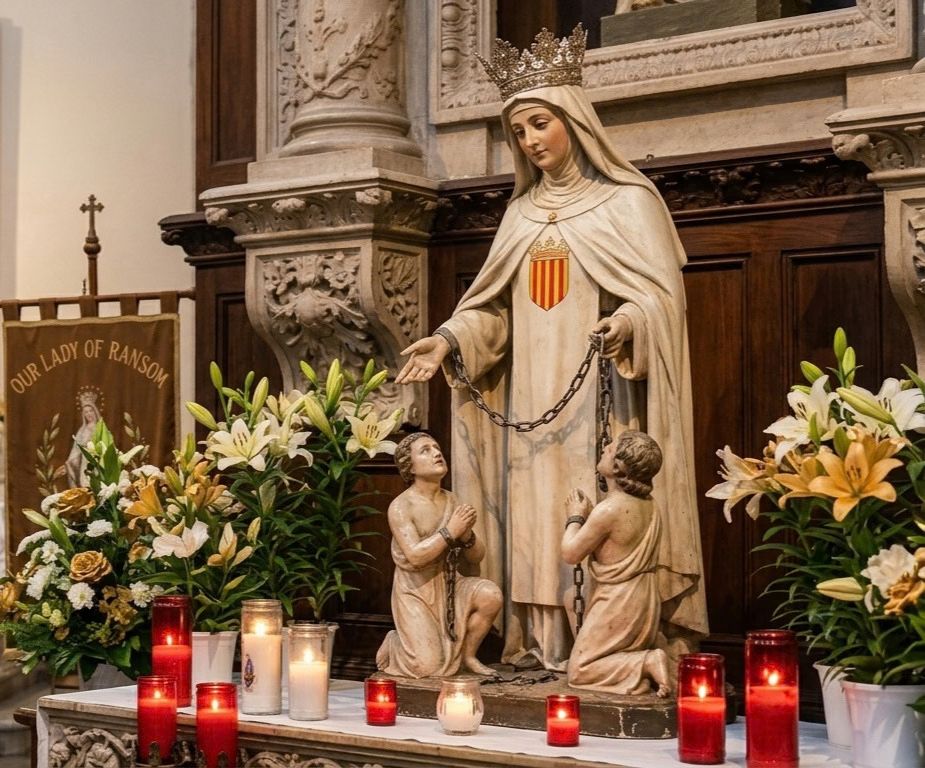
Marian Feast That Freed Captives
The Catholic Church honours Our Lady of Ransom annually on September 24, commemorating a devotion rooted firmly within medieval history. Also known as Our Lady of Mercy, or Nuestra Señora de la Merced in Spanish, this feast celebrates Mary’s role in freeing captive Christians. Consequently, it remains particularly significant across Spain, France and numerous former Spanish colonies worldwide. Furthermore, this devotion connects directly toward a remarkable religious order founded specifically for ransoming prisoners from hostile captivity. Therefore, understanding this feast requires exploring the courageous life of its founder, Saint Peter Nolasco.
Peter Nolasco was born around 1189, within the Languedoc region of southern France, into considerable wealth and privilege. At 25, he took a vow of chastity, donating his vast estates entirely toward charitable religious causes. Afterwards, he journeyed toward the shrine of Our Lady of Montserrat, before eventually settling within the bustling city of Barcelona. There, he devoted himself passionately toward practical works of charity, particularly assisting Christians held captive across North Africa and Spain. Many of these prisoners endured brutal treatment, often facing severe pressure toward abandoning their Christian faith entirely.
According to tradition, the Virgin Mary appeared personally to Peter Nolasco during the night, while the Church celebrated the feast of Saint Peter in Chains. She reportedly expressed her desire that he establish a religious order specifically dedicated toward ransoming these Christian captives. Consequently, members would commit themselves toward securing prisoners’ freedom, even offering their own bodies as hostages when necessary funds ran short. This remarkable order, later known as the Mercedarians, formally took shape in Barcelona in 1223. King James of Aragon legally constituted the order, while Pope Gregory IX granted official approval in 1235.
The Mercedarians adopted the Rule of Saint Augustine, alongside a distinctive white habit symbolising innocence and purity. Notably, King James also authorised members to wear his own royal Aragonese coat of arms upon their scapulars. Peter Nolasco himself served as the order’s first Commander-General, while also personally undertaking dangerous ransom missions himself. These missions required him to travel directly into Moorish territories, negotiating tirelessly for captives’ eventual release. According to historical records, the order accomplished approximately 70 thousand rescues throughout its long, remarkable history, including around 2700 during Nolasco’s own lifetime.
Alongside Peter Nolasco, another notable figure, Mary de Cervellione, contributed significantly toward this charitable mission during its earliest years. Born into Barcelona nobility, she worked extensively within local hospitals, eventually connecting closely with Nolasco’s growing religious community. Consequently, she became affectionately known as Mary of Help, reflecting her tireless charitable service toward the sick and needy. The Church now celebrates her own feast day separately, on September 19, shortly before Our Lady of Ransom’s principal celebration.
Regarding the feast’s own liturgical history, various regions initially celebrated it on differing dates throughout the 17th century. Spain received official permission in 1680, followed by France a decade later, in 1690. Eventually, in 1696, the Church extended this feast throughout the entire Latin Church, fixing its date permanently at September 24. Today, Our Lady of Ransom remains the principal patron of Barcelona, reflecting the devotion’s deep historical roots within that particular city. Following the Second Vatican Council, the Church officially renamed this Marian commemoration “Our Lady of Mercy” within its universal liturgical calendar.
Nevertheless, popular devotion under the original title, Our Lady of Ransom, has persisted strongly across numerous countries and cultures. In England, believers historically revived this particular devotion, praying specifically for their nation’s eventual return toward the Catholic faith. Meanwhile, in India, the National Shrine Basilica of Our Lady of Ransom at Vallarpadam continues drawing considerable numbers of devoted pilgrims annually. Similarly, communities throughout the Philippines and broader Latin America maintain vibrant celebrations honouring this same enduring Marian title. This widespread devotion demonstrates how a medieval Spanish rescue mission ultimately shaped Catholic practice across entirely different continents and centuries.
Peter Nolasco eventually died in 1256, having resigned his leadership position roughly seven years beforehand. Pope Urban XIII later canonised him formally in 1628, recognising his extraordinary courage and lifelong charitable dedication. Today, believers continue invoking Our Lady of Ransom particularly on behalf of prisoners, captives and anyone experiencing genuine oppression or persecution. Consequently, this feast retains genuine contemporary relevance, extending naturally toward modern concerns regarding human trafficking and unjust imprisonment worldwide. For readers wishing to explore further Marian history, additional detail remains available through Catholic Culture and the New Advent Encyclopedia, alongside earlier articles published on this website concerning other significant Marian feast days.

Leave a Reply