
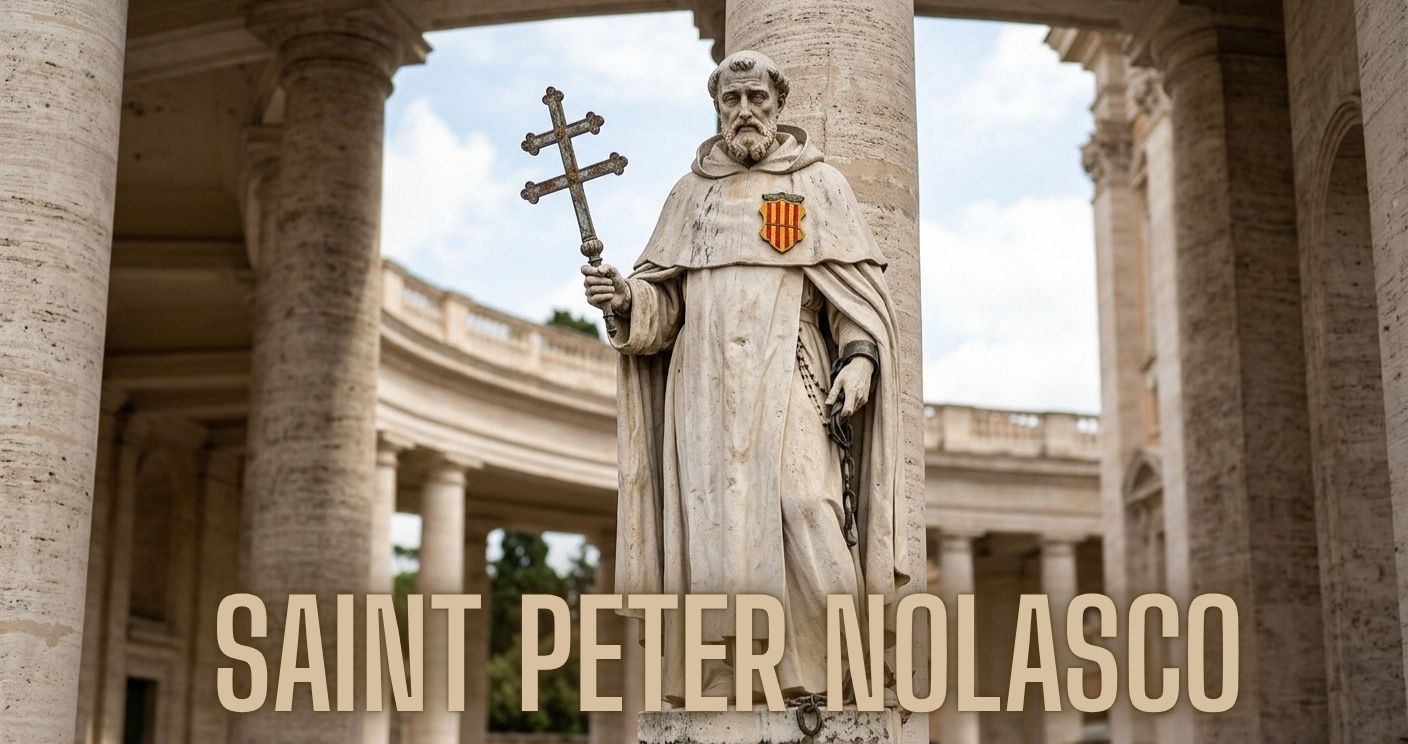
Saint Peter Nolasco: The Founder Who Ransomed Christian Captives
The Catholic Church honours Saint Peter Nolasco every year on January 28, according to the current general Roman calendar. However, the Mercedarian Order he founded instead celebrates his feast on May 6, marking his actual death. Consequently, believers across different communities remember him on slightly different dates, depending upon local liturgical tradition. Furthermore, his remarkable life story centres almost entirely upon one extraordinary mission: freeing Christian captives from brutal Moorish enslavement. Therefore, exploring his biography reveals why this medieval nobleman remains venerated as patron saint of captives worldwide.
Historical sources disagree somewhat regarding Peter Nolasco’s exact birthplace and birth year, though most place it around 1189. Many accounts identify Mas-des-Saintes-Puelles, within the Languedoc region of southern France, as his likely birthplace. As a teenager, he travelled toward Barcelona, reportedly escaping religious turmoil then spreading throughout southern France. There, he joined an army fighting against the Moors, who still controlled substantial portions of the Iberian Peninsula. Following King Peter II’s defeat at the Battle of Muret, young Nolasco received an unexpected new responsibility entirely.
He became tutor toward the king’s six-year-old son, James, who would later become James I of Aragon. This prestigious appointment granted Nolasco considerable social standing throughout the Aragonese royal court and wider Spanish society. Afterwards, he undertook a meaningful pilgrimage toward Our Lady of Montserrat, a journey that deepened his spiritual conviction considerably. Consequently, he began dedicating himself increasingly toward charitable works, particularly assisting the poor throughout Barcelona’s crowded streets. Gradually, however, his attention turned toward a far more urgent and dangerous humanitarian crisis unfolding nearby.
Christian captives, seized during Moorish raids along Spain’s coastline, faced horrific conditions within North African prisons and Spanish citadels. Many endured relentless pressure toward abandoning their Christian faith, facing torture or death should they refuse conversion. Deeply moved by their suffering, Nolasco reportedly wished he could personally exchange places with these suffering prisoners. According to tradition, he began funding ransom missions using his own considerable inheritance, starting these efforts as early as 1203. Eventually, he concluded that lasting, sustainable change required establishing a properly organised religious order dedicated entirely toward this mission.
Tradition holds that the Virgin Mary appeared personally to Nolasco, encouraging him toward founding this new religious community formally. Working alongside his confessor, Saint Raymond of Peñafort, he based the order’s structure upon the established Rule of Saint Augustine. Consequently, the Mercedarian Order took formal shape in Barcelona during 1218, according to several historical accounts. King James I later legally constituted the order in 1223, before Pope Gregory IX granted official papal approval in 1235.
Members adopted a distinctive white habit, symbolising innocence, alongside King James’s own royal Aragonese emblem displayed prominently upon their scapulars. Remarkably, these religious men committed themselves toward offering their own bodies as ransom hostages whenever necessary funds proved insufficient. Nolasco himself served as the order’s first Commander-General, while also personally undertaking dangerous negotiations directly within Moorish-controlled territories. Historical records suggest the order eventually secured freedom for approximately seventy thousand captives throughout its long, remarkable institutional history. During Nolasco’s own lifetime alone, the order reportedly accomplished around 2700 individual rescues.
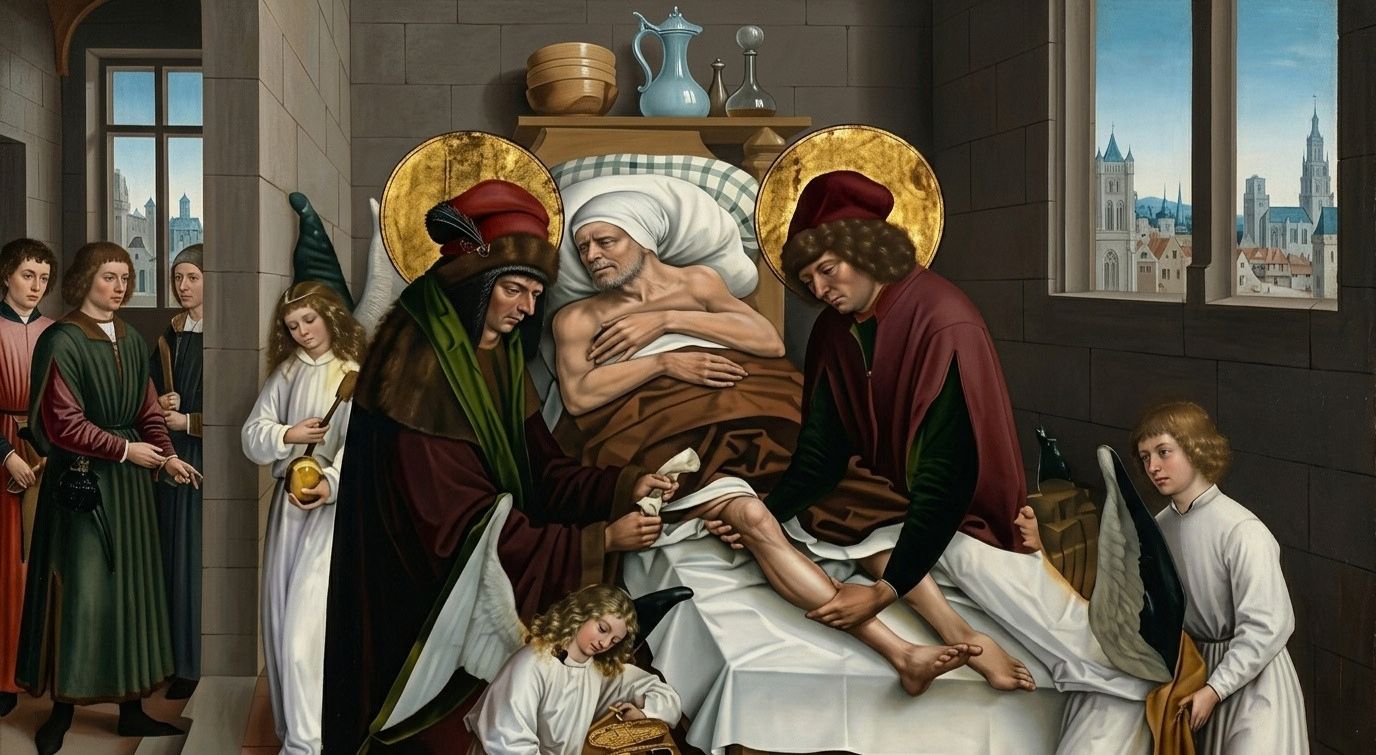
As Nolasco approached death, he reportedly gathered his followers close, urging them toward perseverance in their compassionate mission. He spoke tenderly of dying peacefully under Mary’s protection, reflecting the deep Marian devotion that had shaped his entire life. Nolasco died on May 6, 1256, according to most Mercedarian sources, having resigned his leadership role several years earlier. However, other historical traditions suggest he may have died on Christmas Day instead, sometime between 1256 and 1259.
Pope Urban XIII formally canonised Nolasco in 1628, recognising his extraordinary courage and lifelong charitable dedication toward suffering captives. Today, a magnificent statue depicting him stands prominently within Saint Peter’s Basilica’s famous colonnade, sculpted by Lazzaro Morelli. Believers now invoke him specifically as patron saint of captives, midwives and fittingly, the broader Mercedarian religious family. Consequently, his legacy extends powerfully into contemporary times, since Mercedarian friars continue ministering within prisons and marginalised communities worldwide. Therefore, Nolasco’s story offers genuine inspiration for anyone seeking to combine practical compassion with courageous, sacrificial faith.
Ultimately, Saint Peter Nolasco’s life demonstrates how genuine holiness often emerges through concrete, costly service toward society’s most vulnerable members. Rather than remaining content with comfortable charity, he risked his own safety repeatedly to secure others’ freedom. For readers wishing to explore further Mercedarian history, additional detail remains available through Britannica and the Mercedarian Order’s official archives, alongside earlier articles published on this website concerning Our Lady of Ransom.


Leave a Reply