
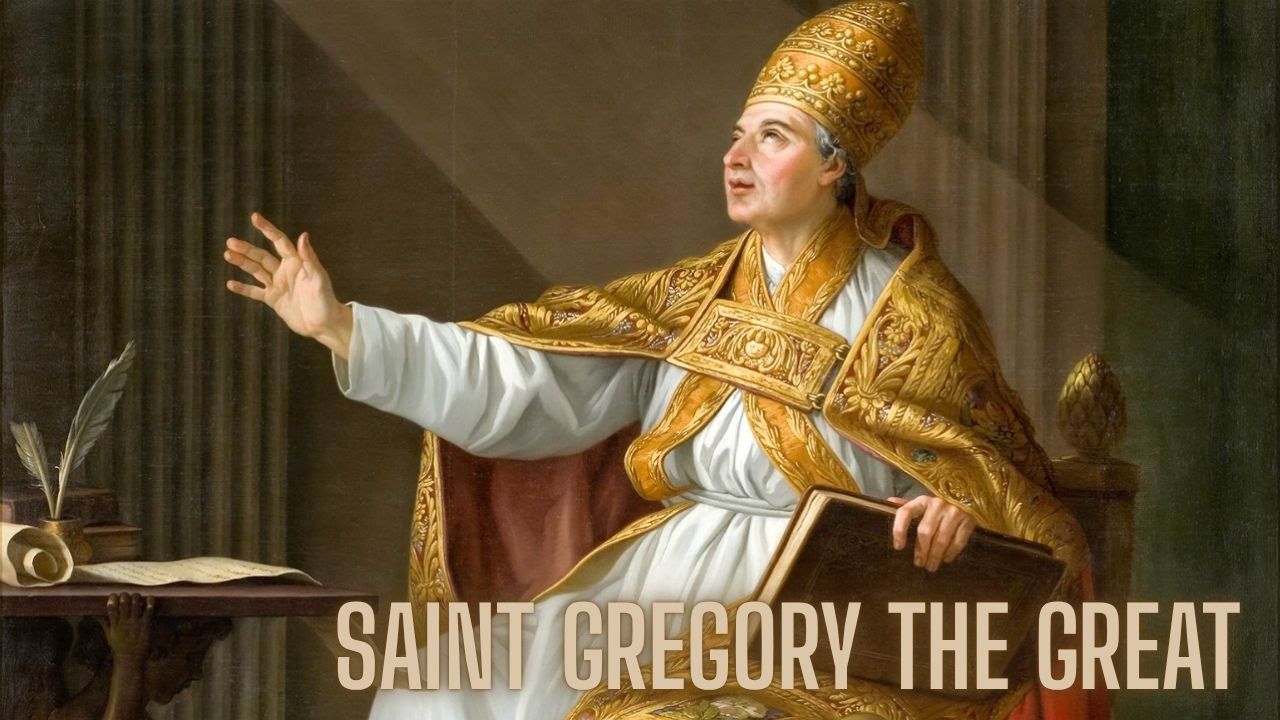
Saint Gregory the Great: The Pope Who Fed Rome’s Poor
Saint Gregory the Great remains one of the most influential figures in the early medieval Church. Born into Roman nobility, he ultimately preferred quiet monastic life over worldly power. Nevertheless, his papacy transformed Rome’s approach to charity, worship, and missionary work in ways that still echo today.
Saint Gregory the Great’s Feast Day Falls on 3 September
The Catholic Church now honours Saint Gregory the Great every year on 3 September. Originally, his feast fell on 12 March, the anniversary of his death in 604. However, this date consistently landed during Lent, when major feasts cannot be fully observed. Consequently, the Second Vatican Council moved his commemoration to 3 September in 1969, marking his episcopal consecration instead.
A Roman Nobleman Turned Monk
Saint Gregory the Great was born around 540 into a wealthy and deeply religious Roman family. His father served as a senator and Prefect of Rome, while his mother and two aunts are all honoured as saints. Remarkably, his childhood coincided with tremendous upheaval, including the devastating Plague of Justinian and repeated barbarian invasions. Despite this turmoil, Gregory received an excellent education and became Prefect of Rome himself at just thirty-three years old.
After his father’s death, Gregory made a decisive choice that reshaped his entire life. He converted the family villa into a monastery, dedicating himself fully to prayer and contemplation. As a monk, he initially showed considerable severity, famously refusing comfort to a dying brother who had secretly hoarded gold coins. Later, however, Gregory softened his judgement and arranged Masses to aid the deceased monk’s soul.
Saint Gregory the Great’s Reluctant Rise to the Papacy
Before becoming pope, Saint Gregory the Great served as an ambassador to the imperial court in Constantinople. There, he unsuccessfully sought military assistance against the invading Lombards threatening Rome. When Pope Pelagius II died from plague in 590, Gregory was elected pope by popular acclamation, despite his own reluctance. He openly admitted preferring monastic solitude, yet he accepted the burden out of duty. From this point onward, Gregory referred to himself as “servant of the servants of God,” a title still used by popes today.
Saint Gregory the Great’s Legacy of Charity
Perhaps most remarkably, Saint Gregory the Great transformed how the Church cared for Rome’s suffering population. When famine struck during the 590s, he ordered vast Church-owned farmland to distribute food freely rather than sell it for profit. As a result, thousands of desperate Romans avoided starvation entirely. He personally refused to eat until his monks returned from feeding the hungry each day, and he regularly dined alongside twelve poor guests at his own table.
Furthermore, Gregory built an organised administrative system to manage these charitable efforts efficiently. He replaced uncooperative officials, paid clergy fairly, and demanded genuine accountability throughout the process. Because of this compassionate leadership, ordinary Romans increasingly looked to the Church rather than distant emperors for guidance and protection.
Saint Gregory the Great’s Lasting Influence on the Church
Beyond his charitable work, Saint Gregory the Great left a lasting mark on Christian worship and missionary expansion. He reorganised elements of the Mass, including the position of the Our Father, which remains unchanged today. Additionally, he dispatched Augustine of Canterbury to evangelise Anglo-Saxon England in 597, a mission that reshaped British Christianity. Although historians still debate his exact role, Gregorian chant continues to bear his name and legacy.
Gregory also proved remarkably prolific as a writer, producing works such as Moralia in Job and his Pastoral Care. Hundreds of his personal letters survive today, offering valuable insight into daily life within the early medieval Church. He is honoured alongside Augustine, Jerome, and Ambrose as one of the four Great Latin Church Fathers. Readers interested in similarly influential popes can explore our Catholic Saints archive.
Ultimately, Saint Gregory the Great’s life demonstrates how genuine humility and practical compassion can transform an entire society. His example continues inspiring believers who balance spiritual devotion with tangible care for others.


Leave a Reply