
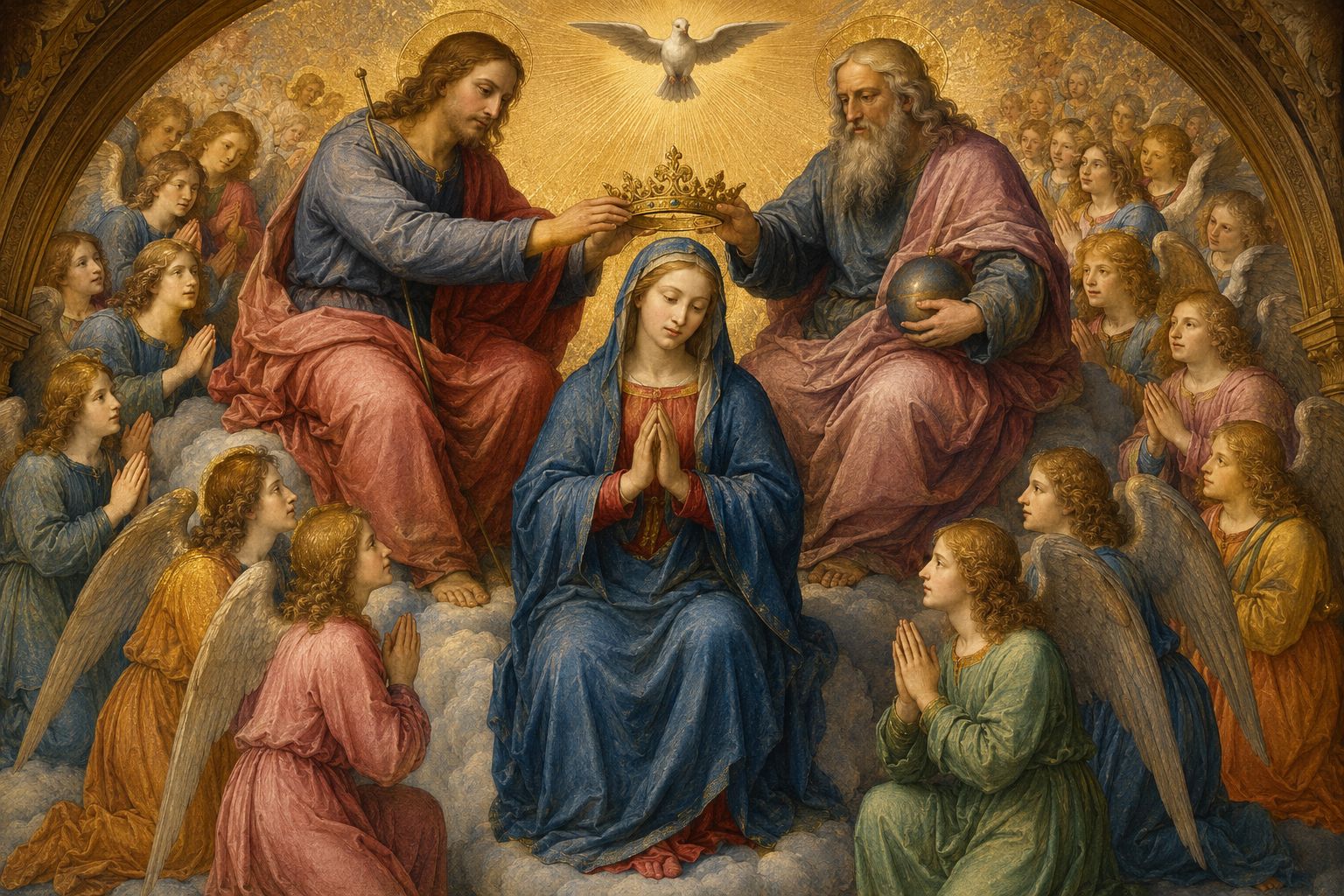
What Is the Queenship of Mary? Why Catholics Call Her Queen of Heaven
The Queenship of Mary celebrates one of the Church’s most beloved titles for the Blessed Virgin Mary. Catholics honour Mary as Queen of Heaven because of her unique relationship with Jesus Christ, the King. However, the title does not place Mary above God or make her equal to Christ. Instead, it points to her special place in salvation history and her closeness to her Son.
The Church celebrates the Queenship of Mary on 22 August, exactly one week after the Solemnity of the Assumption. This connection matters because Mary’s assumption into heavenly glory leads naturally to the celebration of her queenship. The Vatican explains that the liturgical calendar places these celebrations close together to show their deep connection.
Queenship of Mary Feast Day: 22 August
The Catholic Church observes the Queenship of Mary each year on 22 August. Pope Pius XII established the feast in 1954 during the Marian Year. He originally assigned it to 31 May.
Later, the Church revised the liturgical calendar and moved the celebration to 22 August. The new date places it eight days after the Assumption. Therefore, the calendar highlights the connection between Mary’s glorification and her heavenly queenship.
The feast also reflects a much older Christian devotion. Christians had called Mary Queen for centuries before the modern feast existed. Pope Pius XII therefore stressed that the feast did not introduce a new doctrine. Instead, it gave a formal liturgical celebration to an ancient belief.
Why Do Catholics Call Mary Queen of Heaven?
At the heart of the title stands Mary’s relationship with Christ.
Jesus is King because He is the Son of God and the Redeemer of humanity. Mary, meanwhile, is His mother. Catholics therefore see her queenship as flowing from her unique motherhood and her close participation in Christ’s saving mission.
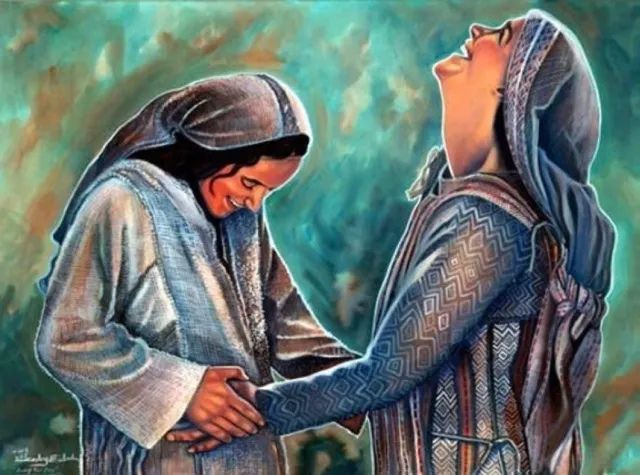
The Archangel Gabriel announced that Mary’s Son would receive the throne of David and reign forever. Elizabeth also recognised Mary as the “mother of my Lord” when Mary visited her. These biblical passages provide an important foundation for Catholic reflection on Mary’s dignity.
Furthermore, Mary remained united with Jesus throughout His earthly life. She accepted God’s call at the Annunciation and stood faithfully near the Cross. Because of this, the Church sees her as the New Eve, united with the New Adam in a unique way.
Pope John Paul II explained that Mary’s queenship rests not only on her motherhood. He also connected it with her cooperation in the work of redemption.
Mary’s Queenship Points Us to Jesus
The title Queen of Heaven can sometimes confuse people. Does it mean Catholics believe Mary possesses divine power equal to God?
No.
Catholic teaching keeps Christ at the centre. Mary’s honour always depends upon her relationship with Jesus. She does not replace Him, compete with Him or share His unique identity as God.
Instead, Mary points believers towards her Son.
At Cana, Mary directed the servants towards Jesus and told them to do whatever He said. Her role remains similar in Catholic devotion today. Catholics ask Mary to pray for them because they believe her maternal intercession leads them closer to Christ.
Pope Benedict XVI described Mary as both Queen close to God and Mother close to humanity. He also encouraged Christians to imitate her faith, availability and generous response to God.
The Assumption and the Queenship of Mary
The Queenship of Mary cannot be separated from the Assumption.
The Church teaches that God took Mary, body and soul, into heavenly glory at the end of her earthly life. The Assumption celebrates her participation in the glory of her risen Son.
One week later, the Church celebrates her queenship.
This sequence carries a powerful message. Mary’s queenship does not come from earthly political authority. Instead, it comes from her relationship with Christ and her glorification with Him.
The Second Vatican Council expressed this connection clearly. It taught that Mary was taken into heavenly glory and exalted by the Lord as Queen over all things.
An Ancient Christian Devotion
Although Pope Pius XII established the feast in 1954, Christians had honoured Mary as Queen long before that date.
Early Christian prayers, hymns and writings used royal language for Mary. Over the centuries, devotion to her as Queen appeared in both Eastern and Western Christianity.
The famous Salve Regina, or Hail, Holy Queen, provides one of the best-known examples. Catholics have prayed this ancient Marian hymn for centuries.
Mary also appears as Queen in the Litany of Loreto, where Catholics invoke her with titles such as Queen of Angels, Queen of Patriarchs, Queen of Apostles and Queen of Peace. Pope Pius XII specifically referred to these traditions when explaining the long history behind the feast.
What Does Mary’s Queenship Mean for Catholics?
For Catholics, Mary’s queenship offers more than a beautiful title. It also provides a model of faithful discipleship.
Mary accepted God’s will even when she could not see the entire path ahead. She trusted Him through joy, uncertainty, suffering and loss. She remained close to Jesus from His birth to His death and beyond.
Therefore, Catholics look to Mary as an example of faithful obedience.
Her queenship also carries a maternal dimension. Catholics believe that Mary continues to intercede for the Church and its members. This belief does not diminish Christ’s unique role as the one Mediator. Instead, Catholic teaching understands Mary’s intercession as dependent upon and participating in the grace that comes from Christ.
That is why Catholics can confidently call her Queen of Heaven while remaining completely centred on Jesus.
A Queen Who Leads Us to Christ
The Queenship of Mary ultimately celebrates Christ as much as it honours His mother. Mary’s crown has meaning because her Son is King.
Her life shows what faithful cooperation with God can produce. She began as a humble young woman from Nazareth. Yet God chose her to become the mother of the Saviour and gave her a unique place in the story of salvation.
Today, Catholics continue to honour her as Queen of Heaven and Mother of the Church. Her feast on 22 August invites believers to remember her faith, seek her prayers and follow her example.
Above all, Mary’s message remains simple: look to Christ, trust Him and follow His will.

Leave a Reply