
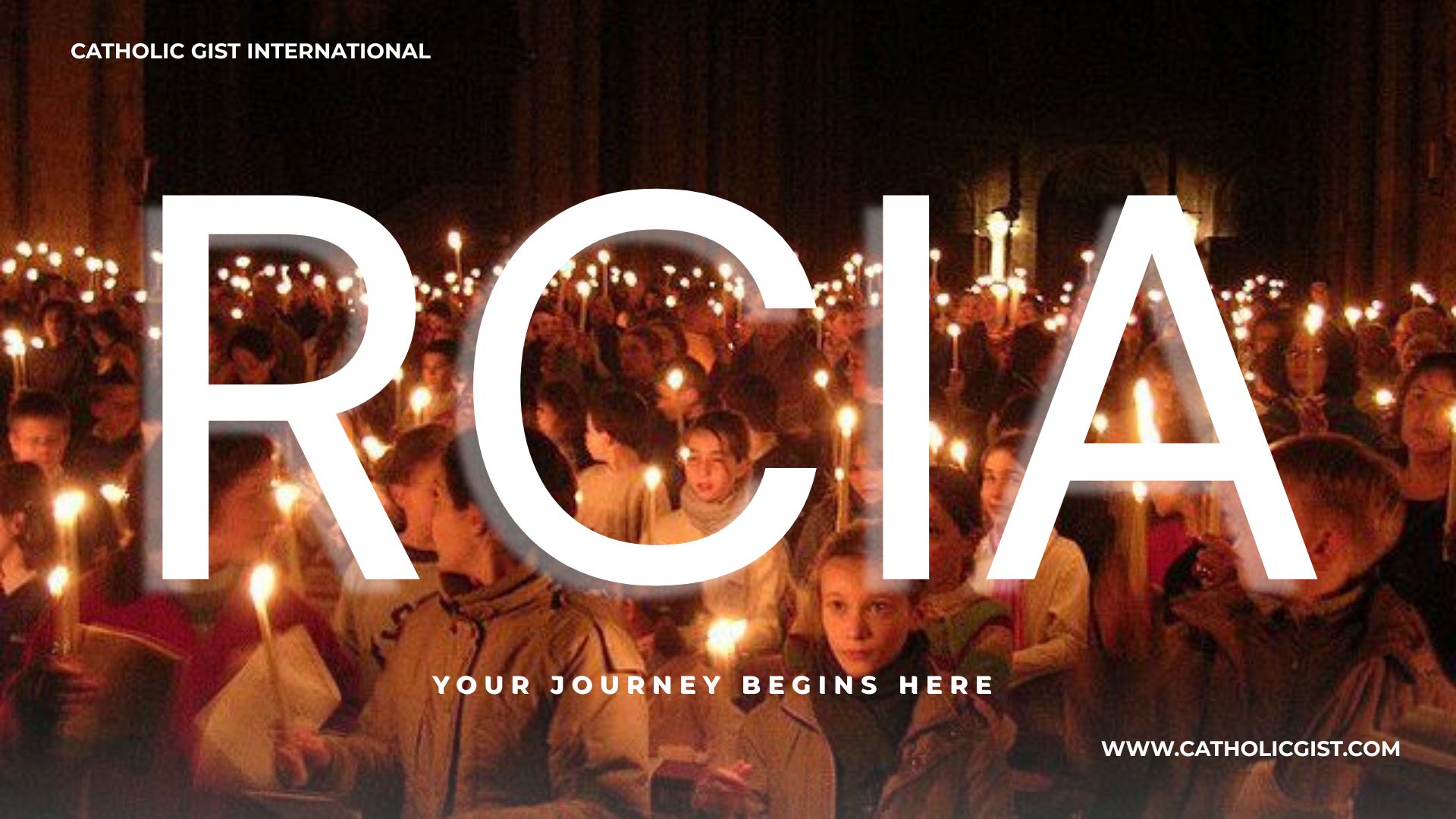
From “just looking” to Easter Vigil — what actually happens, how long it takes, and why now might be the perfect time.
Thinking about becoming Catholic? This 2026 RCIA guide explains every step, answers every awkward question, and shows you exactly what to expect — no prior knowledge needed.
What Is RCIA? (And Why You’re Hearing About It Right Now)
RCIA stands for the Rite of Christian Initiation of Adults. It’s the formal process the Catholic Church uses to welcome new adult members.
But here’s why it matters today: the Catholic Church just saw its biggest Easter convert surge in decades. Dioceses across America reported increases of 50–110% in 2026 [cite your trending post]. RCIA classes that once struggled for numbers now have waitlists. Young adults ages 18–39 are leading the charge, many saying they were “looking for objective truth in a world that stopped making sense.”
If you’re reading this, you’re not alone. And you’re not late. You’re right on time.
Who Is RCIA For?
RCIA is not just one thing. It serves several groups:
Table
| You Are… | RCIA Is Your Path |
|---|---|
| Unbaptized | Full initiation: Baptism, Confirmation, Eucharist |
| Baptized in another Christian church | Profession of faith + Confirmation + Eucharist |
| Baptized Catholic but never confirmed | Completion of initiation (often a shorter track) |
| Just curious, not sure yet | Welcome. Inquiry is the first step — no commitment required. |
You do NOT need to:
- Know Catholic theology
- Have your life “figured out”
- Be married (or single, or any particular age)
- Have gone to church before
The only requirement is honest curiosity.
The Four Stages of RCIA (What Actually Happens)
RCIA is not a class. It’s a journey with rituals that mark your progress. Here’s the full path:
Stage 1: Inquiry (Pre-Catechumenate)
When: Usually September–December
What: You ask questions. Lots of them. No dumb questions exist here. You’ll learn basic Catholic beliefs, meet the RCIA team, and decide if you want to continue.
The Ritual: None yet. This is purely exploratory.
Typical questions at this stage:
- “Do Catholics really worship Mary?”
- “What if I’m divorced?”
- “Can I disagree with the Church on [issue] and still become Catholic?”
- “How much does this cost?” (Answer: nothing. RCIA is free.)
Stage 2: Catechumenate
When: Usually January–Lent
What: Formal learning begins. You’ll study Scripture, the Creed, the sacraments, and Catholic moral teaching. But it’s not just intellectual — you’ll start attending Mass (even if you can’t receive Communion yet), get connected to a parish community, and be assigned a sponsor — a practicing Catholic who walks with you.
The Ritual: Rite of Acceptance / Rite of Welcoming
The parish formally accepts you into the catechumenate. If you’re unbaptized, you become a catechumen. If you’re already baptized, you’re a candidate.
This matters: From this point forward, the Church prays for you by name at Mass.
Stage 3: Purification & Enlightenment
When: Lent (40 days before Easter)
What: This isn’t about learning new information. It’s about interior preparation. You’ll receive special prayers called scrutinies, examine your life, and focus on conversion of heart.
The Ritual: Rite of Election / Call to Continuing Conversion
Usually celebrated at the Cathedral with the Bishop. Your name is entered into the Book of the Elect. This is a big deal — the Church publicly declares its intention to initiate you.
Stage 4: Initiation & Mystagogy
When: Easter Vigil (the night before Easter Sunday)
What: This is it. If you’re unbaptized, you’ll receive Baptism, Confirmation, and First Holy Communion — all in one night. If you’re already baptized, you’ll be confirmed and receive the Holy Eucharist.
The Ritual: Easter Vigil — the most beautiful liturgy of the year. Candles, darkness turning to light, the Exsultet sung, and you becoming fully Catholic.
After Easter:Mystagogy (Greek: “leading into mystery”) — 50 days of unpacking what just happened to you. Many say this is when the real conversion begins.
How Long Does RCIA Take?
Table
| Track | Typical Timeline |
|---|---|
| Full RCIA (unbaptized) | September → Easter Vigil (~7–8 months) |
| Baptized non-Catholic | Often shorter; depends on background |
| Catholic seeking Confirmation | May be a few months to a full year |
| Inquiry only | As long as you need — weeks, months, or years |
Some parishes offer year-round RCIA or shortened tracks for those with extensive Christian backgrounds. Ask your local parish what’s available.
What RCIA Is NOT
Let’s clear up misconceptions:
Table
| Myth | Reality |
|---|---|
| “It’s like Sunday school for adults” | No. It’s formation, not just education. You don’t just learn about Catholicism — you become formed as a Catholic. |
| “You have to agree with everything” | You need to be genuinely open, but RCIA is for questions, doubts, and struggles. Honesty is expected. |
| “It’s only for intellectuals” | RCIA meets you where you are. Some parishes even offer child care. |
| “If I start, I have to finish” | You can pause or leave at any time. Inquiry has zero commitment. |
| “It’s expensive” | RCIA is free. Materials might cost $20–$50. Scholarships exist. |
The “2026 Difference”: Why Parishes Are Ready for You
Because of the current surge, many parishes have:
- Expanded RCIA teams with more sponsors and catechists
- Young adult-specific sessions (many converts are 18–39)
- Hybrid options (in-person + virtual for busy schedules)
- Shorter inquiry periods to accommodate demand
Don’t let “the Church is full” stop you. The Church is expanding to meet this moment.
How to Start RCIA (3 Simple Steps)
Step 1: Find Your Parish
Use the USCCB Parish Finder or simply Google “[your city] Catholic church RCIA.”
Step 2: Email or Call
Say: “Hi, I’m interested in learning more about RCIA. Can someone contact me?”
You don’t need a polished speech. Parish staff hear this daily.
Step 3: Show Up to Inquiry
Bring your questions, your skepticism, your story. That’s literally all you need.
FAQ: The Questions You’re Actually Thinking
Q: What if I’m divorced and remarried?
A: This requires conversation with a priest, but it doesn’t automatically disqualify you. Annulment may be an option. Start the conversation — don’t pre-reject yourself.
Q: I’m LGBTQ+. Can I become Catholic?
A: Yes. The Church teaches that all people are called to holiness. RCIA is open to everyone. Specific questions about teaching and practice are best discussed honestly with a priest or RCIA director.
Q: I work Sundays. Can I still do RCIA?
A: Many parishes offer weeknight sessions. Some have Saturday or online components. Ask — parishes are increasingly flexible.
Q: Do I have to get baptized again if I was baptized in another church?
A: If your baptism was valid (using water and the Trinitarian formula — “In the name of the Father, Son, and Holy Spirit”), the Catholic Church recognizes it. You won’t be re-baptized.
Q: What if I’m not sure I believe everything?
A: RCIA is for that. Faith is a journey. The Church asks for openness, not perfect certainty.
What Converts in 2026 Are Saying
Real reasons from recent converts:
“I was tired of opinions masquerading as truth.” — Sarah, 24, Oklahoma City
“The Eucharist was either the body of Christ or the biggest lie in history. I had to know which.” — Mike, 31, Boston
“I didn’t expect to find a home. I expected to find rules. I found both — and the rules made sense.” — Jennifer, 28, Detroit
Ready? Here’s Your Next Step
You don’t need to have it all figured out. You just need to take one step.
Find a parish. Send one email. Show up to one inquiry session.
The rest is a journey — and you won’t walk it alone.
Have questions about RCIA? Drop them in the comments. If you found this helpful, share it with someone who’s been “thinking about it” for too long.

Leave a Reply