
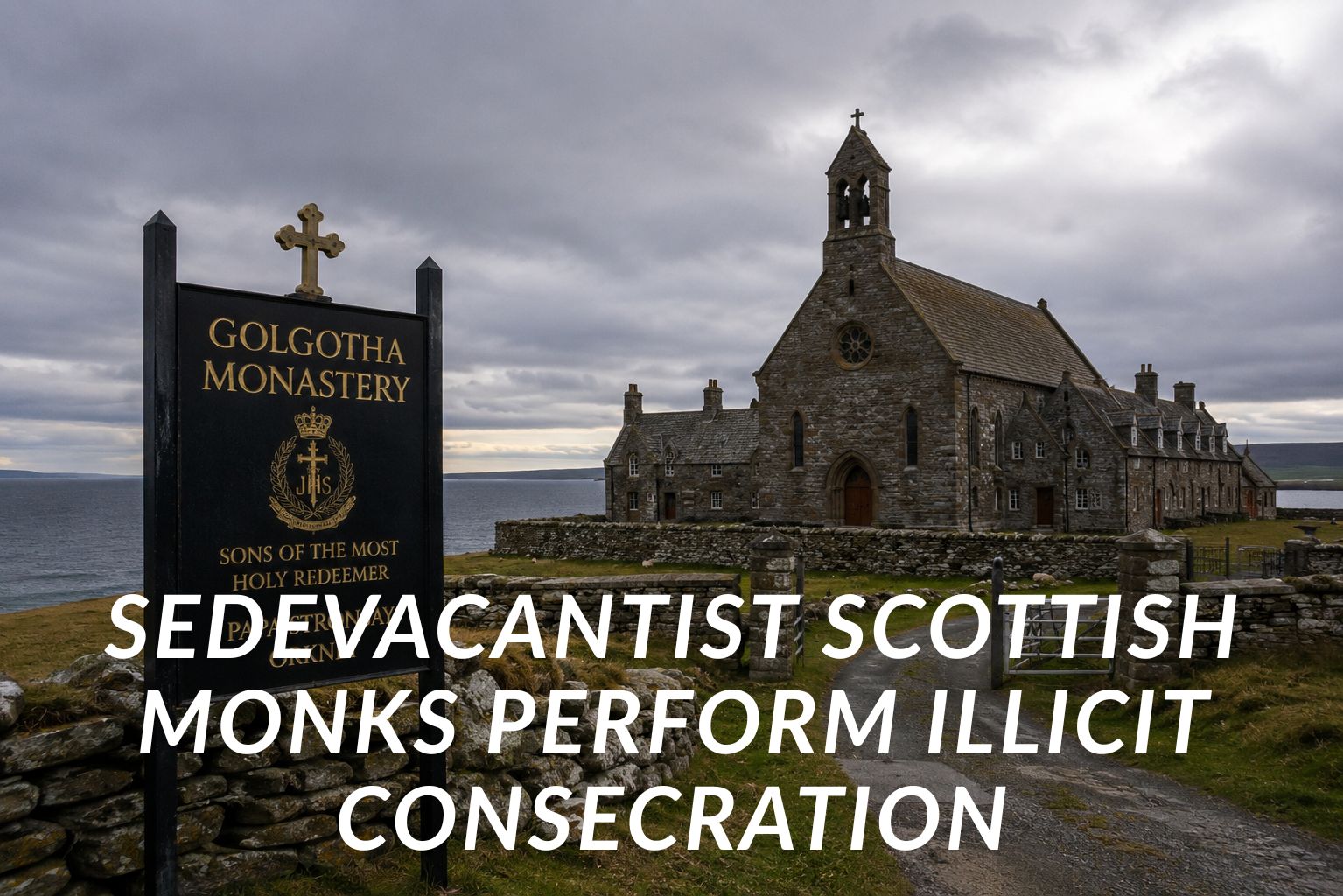
Sedevacantist Scottish Monks Defy Warnings With Illicit Consecration
A community of sedevacantist Scottish monks pressed ahead with a disputed episcopal consecration on July 25, 2026, despite repeated warnings that doing so would formally place them outside the Catholic Church. The Transalpine Redemptorists, also known as the Sons of the Most Holy Redeemer, livestreamed the ceremony from their remote Monastery on Papa Stronsay, an Island within Scotland’s Orkney archipelago. Consequently, what began as a theological dispute has now escalated into what Church officials describe as an outright act of schism.
Timeline Leading Up to the Consecration
Aberdeen Bishop Hugh Gilbert had already cautioned the community in June, warning that any consecration would proceed “without a papal mandate” and would therefore represent a serious act of disobedience. Despite this warning, the sedevacantist Scottish monks continued preparations. Bishop Gilbert then issued a stronger pastoral letter on July 18, stating plainly that the ceremony would constitute an act of schism and would place everyone involved outside the Catholic Church. Nevertheless, the community proceeded exactly one week later.
Who Performed the Illicit Ceremony
Three men identified only as Bishops Rodrigo Ribeiro da Silva, Fernando Altamira and Pierre Roy carried out the consecration. Bishop Gilbert referred to the trio as “unauthorized bishops from the Americas,” and reports indicate that all three hold sedevacantist beliefs themselves. The ceremony centered on Father Michael Mary, a priest belonging to the Order who also serves as it’s rector. Because no pope authorized this consecration, canon law considers the entire proceeding illegitimate, regardless of the ceremonial forms observed.
A Community Already Rejecting the Modern Papacy
This latest controversy did not emerge without warning. Earlier in 2026, the sedevacantist Scottish monks publicly released a statement rejecting the legitimacy of the modern papacy altogether. Specifically, in May, the community announced it would offer “no juridical recognition” to Pope Leo XIV, along with every pope who has served since the Second Vatican Council, arguing that these pontiffs had departed from the true faith. This declaration effectively foreshadowed the group’s later decision to consecrate a bishop entirely outside the Church’s own authority structure.
A History of Canonical Disputes
Interestingly, this is far from the group’s first clash with Church authorities. In August 2025, the Vatican permitted the Diocese of Christchurch in New Zealand to ban the Transalpine Redemptorists from public ministry within that diocese entirely. That decision followed serious allegations involving unauthorized exorcisms performed by members of the Order.
Christchurch Bishop Michael Gielen had already addressed these concerns back in July 2024, revealing that an apostolic visitation had been conducted by Australian Bishop Robert McGuckin to investigate the community’s activities. Following that visitation, and acting on the Vatican’s recommendation, Bishop Gielen removed the group’s ministry faculties and formally requested that its members leave the Christchurch Diocese altogether.
What This Means Going Forward
Taken together, these events paint a troubling picture of a religious community that has increasingly separated itself from mainstream Catholic authority over the past several years. First came the canonical violations in New Zealand, then the outright rejection of the papacy itself and now, an illicit episcopal consecration performed in direct defiance of a bishop’s explicit warning. Each step has pushed the sedevacantist Scottish monks further from formal communion with Rome.
For now, Church officials have made their position unmistakably clear: this consecration carries no canonical legitimacy, and everyone directly involved has effectively placed themselves outside the Catholic Church through their own actions. Whether the Vatican issues any further formal response, or whether the community continues operating independently on Papa Stronsay, remains to be seen. Given the group’s history of escalating disputes, however, few observers expect this to be the final chapter in this unfolding story.
Leave a Reply