
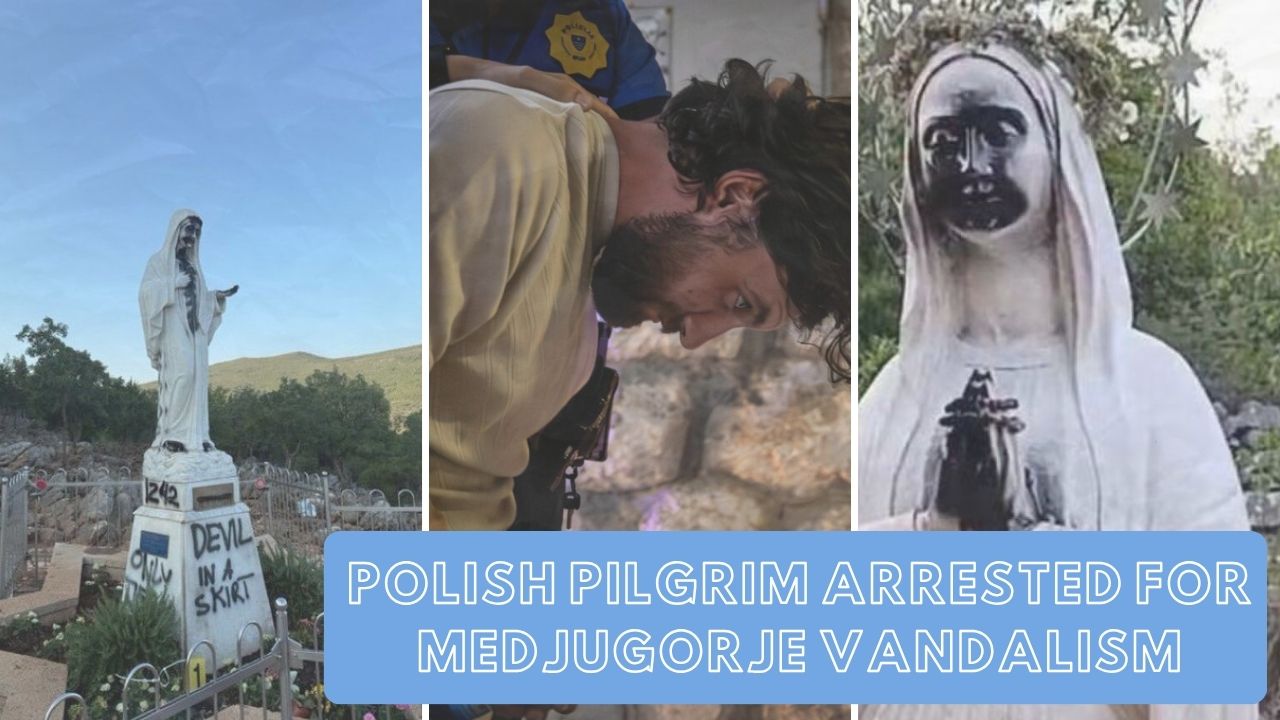
Polish Pilgrim Arrested for Medjugorje Vandalism
Bosnian prosecutors have requested pretrial detention for the man suspected in the Medjugorje vandalism attack. Polish media have identified him as Bartłomiej Włodzimierz Krakowiak. His name adds a striking twist to the story, since he once walked more than 1,300 kilometers from Warsaw to Medjugorje as an act of devotion. That earlier pilgrimage made him a familiar face within Polish Catholic circles, which makes his alleged involvement in the shrine’s vandalism especially shocking to those who once knew his story of conversion.
Medjugorje Vandalism Suspect Faces Pretrial Detention
Bosnian authorities have not officially confirmed the suspect’s identity, though numerous Polish outlets have already named him. Investigators arrested the man in the Ljubuški area on Tuesday afternoon and prosecutors have since asked a local court to approve his pretrial detention while the investigation continues. Officials say they are still working to confirm his motive and whether he acted alone during every incident recorded across the village that night.
From Devoted Pilgrim to Polish Pilgrim Vandalism Suspect
Roughly nine years before his arrest, Krakowiak completed his long walking pilgrimage from Poland, later describing the experience as one that transformed his life through faith. He wrote a book about the journey, spoke about it in parishes and schools across Poland, and even appeared in a Polish documentary discussing how he overcame a personal crisis through religious conviction. In earlier interviews, he stated firmly that he believed the visionaries had truly experienced apparitions of the Virgin Mary, adding that no one needed to prove it to him. Because of that history, his alleged role in the recent attack surprised many people who once saw him as a symbol of Medjugorje’s spiritual pull rather than a threat to it.
What Happened During the Medjugorje Vandalism
Early on July 28, someone defaced two statues of the Virgin Mary at the shrine, covering the central statue’s face and hands in black paint and scrawling the words “Devil in a skirt” across its pedestal. A second statue nearby was marked with the word “Evil.” Investigators also found a banner near the main statue, written in Polish, naming the six people associated with the reported apparitions and accusing them of fraud. Around 5 a.m., a fire broke out at the outdoor Altar behind Saint James Church, which security footage reportedly showed being doused with gasoline before it was set alight. The fire damaged flooring, seating, and canopy materials used for outdoor Mass, though it was extinguished before spreading further.
Investigators Examine the Suspect’s Past Connection to Medjugorje
Officials investigating the Medjugorje vandalism are reportedly looking closely at the suspect’s personal history, given his documented struggles with mental health following his original pilgrimage. According to earlier Polish media reports, he had once spoken publicly about being diagnosed with depression and about turning to faith as part of his recovery. Investigators have not said whether any recent personal crisis contributed to the alleged attack and the evidence gathered so far suggests the vandalism targeted specific figures at the shrine rather than appearing random or indiscriminate.
Parish and Church Leaders Respond to the Attack
The Medjugorje parish office described receiving news of the vandalism with great sadness, while confirming that cleanup began immediately so the damaged areas could return to normal use. Leaders called on the faithful to answer the attack the way Our Lady has reportedly taught for more than 40 years in Medjugorje, through prayer, fasting, and forgiveness. Bishop Petar Palić of Mostar-Duvno echoed that message, urging Catholics not to let the incident’s evil intent spread further into their own hearts. Bosnia’s Interreligious Council also condemned the attack, describing it as a strike against peace and religious respect more broadly.
Why the Timing Matters So Much This Year
The Medjugorje vandalism struck just days before the 2026 Mladifest, the shrine’s 37th annual youth festival, scheduled for August 1 through 6. More than a million pilgrims visit Medjugorje every year, and Mladifest alone regularly draws over 50,000 young people from around the world. Parish officials have confirmed that the festival’s schedule remains unchanged and that the shrine stays open to all visitors throughout the ongoing investigation.
A Shrine With a Contested but Recognized History
Medjugorje became a major pilgrimage destination after six young people reported apparitions of the Virgin Mary there in 1981, a claim the Church has debated for decades. In September 2024, the Dicastery for the Doctrine of the Faith formally approved the spiritual experience connected with Medjugorje as a legitimate place of pilgrimage, without declaring the reported apparitions themselves supernatural. That decision helped fuel the shrine’s continued growth, and it stands as important context for understanding why an attack on the site carries such weight for Catholics worldwide.
For more background on the case, see Vatican News’s coverage of the parish statement and InfoVaticana’s reporting on the suspect’s background. Readers can also revisit our earlier coverage of the Medjugorje vandalism and fire for full details on the overnight attack itself.





Leave a Reply