
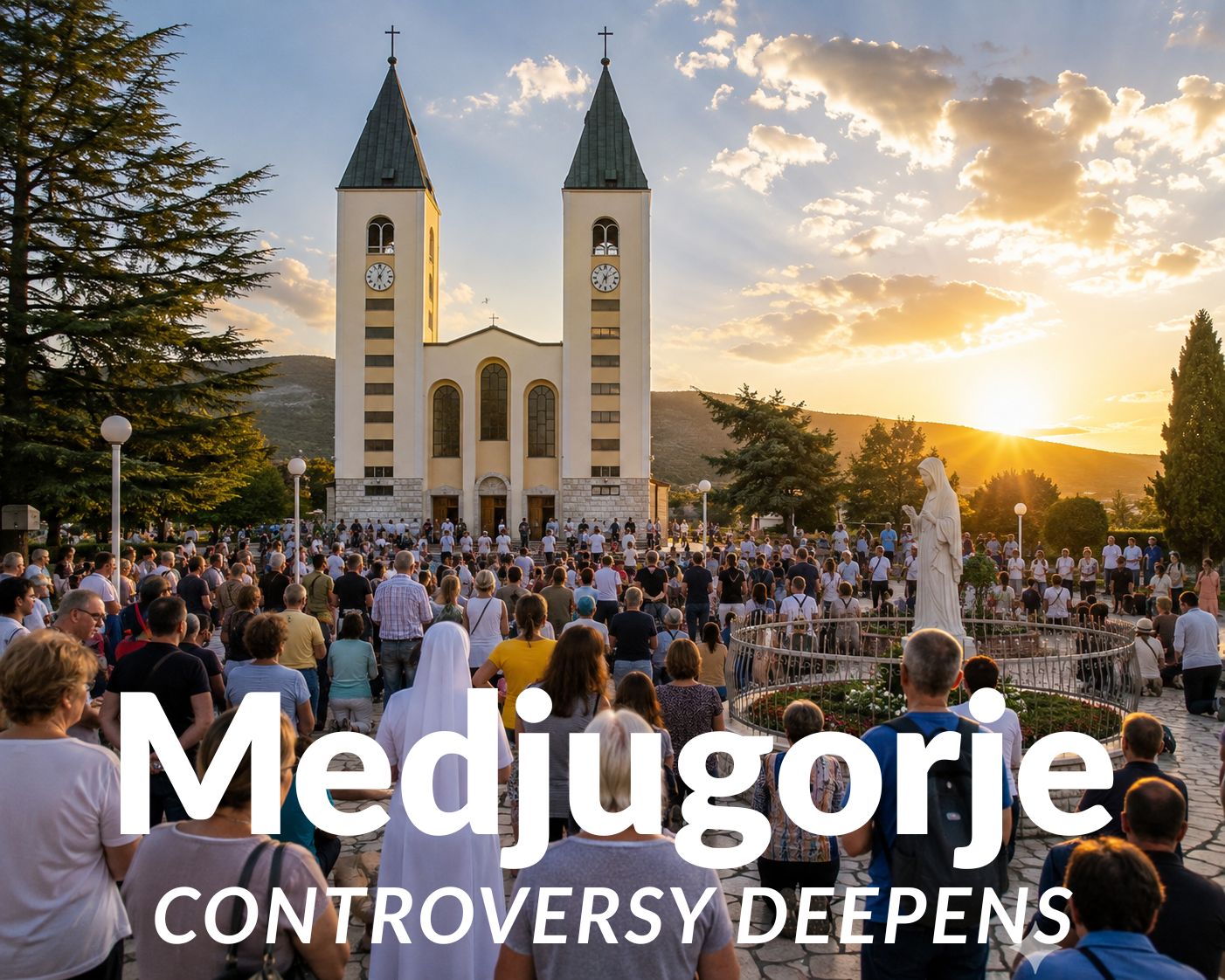
For nearly a decade, the result of a confidential Vatican vote on Medjugorje sat buried in a file inside Rome, unseen by the public and, apparently, by most of the Catholic world. That changed this month. An Italian journalist obtained the numbers, and what they show has reopened one of the Church’s longest-running disputes. The Medjugorje controversy, it turns out, was never as settled as officials liked to suggest.
The Paper Trail Behind the 2016 Vatican Vote
The story begins with a byline: David Murgia, an Italian journalist who runs the blog Il Segno di Giona. On 17 August, Murgia published what he described as the results of a consultation held inside the then Congregation for the Doctrine of the Faith on 17 September 2016. Thirty-three cardinals, bishops, theologians and other experts had gathered to render a verdict on the alleged apparitions first reported in Bosnia-Herzegovina back in June 1981.
Murgia says he verified the figures through “detailed checks and controls” before publishing, and he has promised to release individual voting records at a later date, without redactions. Neither the Vatican nor the Dicastery for the Doctrine of the Faith has publicly confirmed or denied the leaked figures, leaving journalists and theologians alike to weigh the credibility of an unverified but detailed account.
What the Documents Reportedly Reveal
According to Murgia’s account, the numbers were stark. Twenty-one of the 33 participants concluded that the events did not carry a supernatural origin, invoking the Latin formula constat de non supernaturalitate. Only nine voted the opposite way, while three called the evidence insufficient to decide. Do the maths, and nearly two-thirds of the Church’s own consultors rejected the apparitions outright.
Buried deeper in the same file sits an even more explosive detail. Six of the dissenting voters reportedly went beyond simple rejection, concluding that the phenomenon carried signs of diabolical involvement. These six also pushed for a damnatio memoriae, a formal effort to strip the visionaries of credibility rather than issue a routine condemnation. If accurate, this represents one of the harshest private judgements ever reported from within Vatican walls.
Tracing the Trail Back to the Ruini Commission
To understand why this vote matters, investigators need to look further back, to 2010. That year, Pope Benedict XVI quietly established an international commission under Cardinal Camillo Ruini to examine the apparitions. The Ruini Commission worked in secrecy for four years and reportedly reached a far gentler verdict, at least regarding the earliest visions.
Sources cited by Vatican Insider in 2017 indicated that thirteen commission members voted in favour of the first seven apparitions, dated between 24 June and 3 July 1981, with only one dissenting vote and one abstention. Everything reported after that initial week, however, split the commission badly, and members apparently could not agree on how to judge the ongoing visions some claim continue today.
The 2016 voters seem to have directly challenged that earlier leniency. They reportedly argued the Ruini Commission worked from incomplete documentation, information the Congregation for the Doctrine of the Faith held but had not fully shared.
The Bishops Who Sounded the Alarm First
Long before either Vatican commission convened, local bishops had already raised red flags. Bishop Pavao Žanić of Mostar-Duvno voiced doubts almost immediately, and his successor, Bishop Ratko Perić, continued that opposition for decades. By 1991, the Yugoslav National Conference of Bishops had formally ruled that the evidence could not confirm supernatural apparitions.
Notably, the six dissenting 2016 voters called for both bishops to receive full pastoral rehabilitation, effectively vindicating years of local scepticism that Rome had previously sidestepped.
Why Rome Never Closed the File
Despite these damning figures, the Vatican’s public posture stayed remarkably soft. Pope Francis called the Ruini Commission theologians “good, good, good” during a 2017 press conference, without addressing the harsher 2016 findings. Then in May 2019, he authorised official pilgrimages to Medjugorje, citing pastoral necessity given the sheer number of pilgrims already travelling there.
That gap between private judgement and public policy sits at the heart of the Medjugorje controversy. Investigators and commentators alike now ask the same question: if internal consultors were this critical, why has Rome avoided a definitive ruling for so long?
An Investigation That Isn’t Finished
None of this amounts to an official Vatican statement, and until the Church releases its own account, Murgia’s report remains one journalist’s reconstruction of a secret process. Still, the documents add real weight to decades of scepticism from local bishops.
Readers wanting a fuller account of the earlier commission’s findings can consult Catholic World Report’s coverage of the Ruini report has
As more pages of this file surface, the Medjugorje controversy looks less like old news and more like an investigation still very much in progress.
Leave a Reply