
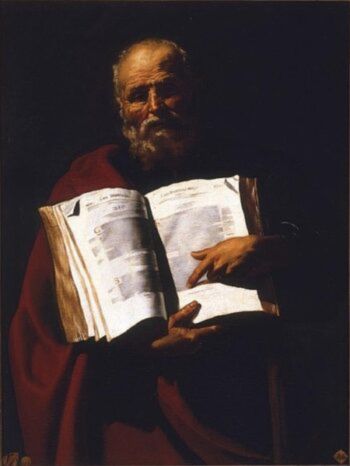
Image Credit: FaithND
Saint Barnabas: The Son of Encouragement Who Bridged Jewish and Gentile Christianity
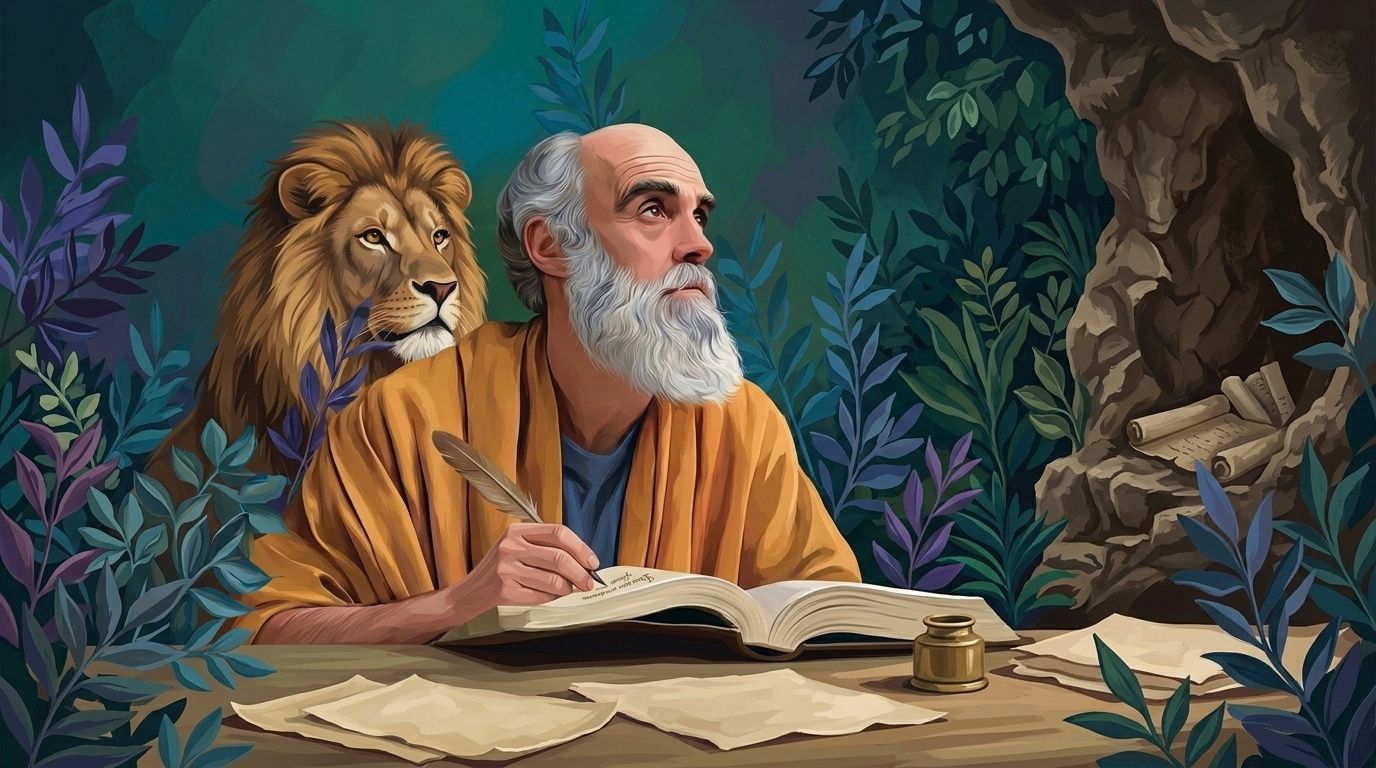
Saint Barnabas stands among the most underrated figures in early Christian history. Though often overshadowed by his more famous partner Paul, Barnabas played a decisive role in shaping the Church’s universal mission. His generosity, discernment, and reconciling spirit earned him the nickname “Son of Encouragement,” and his legacy continues in the Cypriot Church he founded nearly two millennia ago.
The Feast Day of Saint Barnabas
The Church commemorates Saint Barnabas on June 11, a date celebrated across Catholic, Orthodox, and Anglican traditions. This midsummer feast honours a man whose life exemplified the bridge-building necessary for Christianity to become a world religion. He is invoked as a peacemaker and protector against hailstorms, while serving as patron of Cyprus and Antioch.
From Joseph to Barnabas: A New Identity
Barnabas was born into a Jewish family on the island of Cyprus, bearing the name Joseph. His Levite heritage connected him to the priestly tribe of Israel, yet his Hellenistic upbringing in the Greek-speaking Mediterranean gave him unique cultural fluency. This dual identity would prove essential for the Church’s expansion.
His transformation began in Jerusalem, where he joined the earliest Christian community. Acts records that he sold a field he owned and laid the proceeds at the apostles’ feet. This act of radical generosity so impressed the community that they gave him a new name: Barnabas, meaning “son of encouragement” or “son of consolation.” The Greek explanation in Acts creates a beautiful wordplay—this “son of encouragement” would spend his life encouraging others to remain faithful to the Lord.
The Apostle Maker
Barnabas’ most consequential act was recognizing potential that others feared. When Saul of Tarsus—the notorious persecutor of Christians—returned to Jerusalem claiming conversion, the community was understandably suspicious. Barnabas alone vouched for him, introducing Saul to the apostles and persuading them to accept this unlikely disciple. Without Barnabas’ intervention, Paul might never have found a place in the Church he would eventually transform.
This pattern of discernment repeated when the Jerusalem church heard about successful Gentile evangelism in Antioch. They sent Barnabas to investigate, and he found the work so extensive that he traveled to Tarsus to recruit Paul as his colleague. Together, they labored in Antioch for a full year, teaching and building what would become the launching pad for the Gentile mission.
Missionary Journeys and Shifting Partnerships
Barnabas and Paul embarked on their first missionary journey with John Mark, Barnabas’s cousin. They traveled to Cyprus, Barnabas’s homeland, where the Roman governor Sergius Paulus became a believer. From there they crossed to the mainland, preaching in Perga, Pisidian Antioch, Iconium, and Lystra. The reception was dramatic—first acclamation as gods, then violent stoning that left them for dead.
Throughout these travels, a subtle shift occurred. Initially, Acts refers to “Barnabas and Saul,” reflecting Barnabas’s seniority and closer ties to Jerusalem. After the Cyprus episode, however, the order reverses to “Paul and Barnabas,” acknowledging Paul’s growing eloquence and leadership. Only in two later passages does Barnabas regain first place—once because he had been mentioned first two verses earlier, and once because of his stronger Jerusalem connections.
The partnership faced its greatest test after the Council of Jerusalem. This pivotal meeting decided that Gentile converts need not be circumcised, a victory for the Barnabas-Paul position. Yet upon returning to Antioch, controversy erupted. Peter had been eating freely with Gentile believers until certain disciples of James arrived. Then Peter withdrew, fearing criticism from the circumcision party. Astonishingly, Barnabas followed his example.
Paul confronted them both publicly, declaring they were “not acting in line with the truth of the gospel.” This “Incident at Antioch” reveals Barnabas’s human complexity—even the “son of encouragement” could succumb to peer pressure. Yet the friendship survived. Years later, Paul would write that Barnabas, like himself, worked to support himself rather than burden the churches, indicating their relationship had healed.
The Painful Separation
The final rupture came over John Mark. When Paul proposed another missionary journey, Barnabas insisted on bringing his cousin, who had deserted them in Perga. Paul refused, considering this abandonment disqualifying. The dispute grew so sharp that the two apostles parted company—Barnabas taking Mark to Cyprus, Paul choosing Silas for his new venture.
This separation has been variously interpreted. Some see it as tragic failure; others as providential expansion, allowing two missionary teams instead of one. What is clear is that Barnabas’s choice ultimately vindicated Mark, who would become the author of the second Gospel and a valued companion to Paul in his final years.
Final Years and Martyrdom
Little is known of Barnabas’s subsequent ministry. Tradition holds that he preached in Alexandria and Rome, though these claims are uncertain. What is firmly believed is that he was martyred at Salamis in Cyprus around 61 AD, stoned to death by Jews enraged at his preaching success. His kinsman John Mark secretly buried his body.
The legend of his tomb’s discovery is richly symbolic. In 478, Archbishop Anthemios of Cyprus dreamed that Barnabas revealed his burial place beneath a carob tree. The next day, workers found the tomb containing Barnabas’s remains with a manuscript of Matthew’s Gospel resting on his breast. Anthemios presented this Gospel to Emperor Zeno at Constantinople, receiving in return the privileges that define the Cypriot Orthodox Church to this day—the purple cloak, imperial scepter, and red ink for the archbishop’s signature.
Writings and Misattributions
Barnabas’ name has been attached to several texts, though modern scholarship disputes most attributions. The Epistle of Barnabas, included in the Codex Sinaiticus, was long considered his work. Today, scholars generally date it to an Alexandrian Christian writing between 70 and 100 AD. Tertullian named Barnabas as author of the Epistle to the Hebrews, a view few modern scholars accept. The Gospel of Barnabas, which contradicts canonical Christianity and aligns with Islamic views of Jesus, is a medieval composition with no connection to the apostle.
The fifth-century Acts of Barnabas, once attributed to John Mark, is now recognized as a later composition. These misattributions testify to Barnabas’s enduring reputation rather than his actual authorship.
Legacy: The Barnabites and Beyond
In 1538, a Catholic religious order acquired the monastery of Saint Barnabas in Milan and became popularly known as the Barnabites. This “Clerics Regular of Saint Paul” continues his legacy of combining apostolic zeal with religious discipline.
Barnabas’ true legacy, however, lies deeper. He was the first to see Paul’s potential when others saw only danger. He was the bridge between Jerusalem’s Jewish-Christian roots and Antioch’s Gentile flowering. He was the patron of second chances, both for Paul and for Mark. In an age of division, his example of encouragement, generosity, and reconciliation remains urgently relevant.
Saint Barnabas teaches us that greatness in the Church often wears a quiet face. He never wrote a Gospel, yet he enabled Mark to do so. He never dominated the missionary stage, yet he launched Paul upon it. His name means encouragement, and his life proves that encouragement can change history.


Leave a Reply