
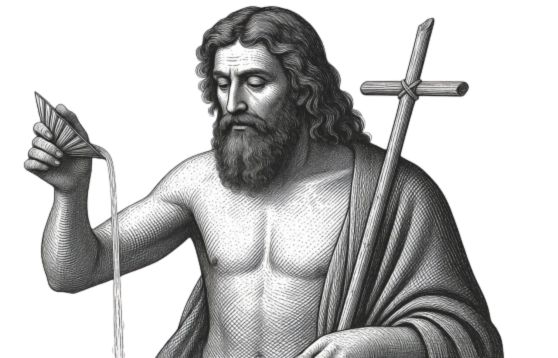
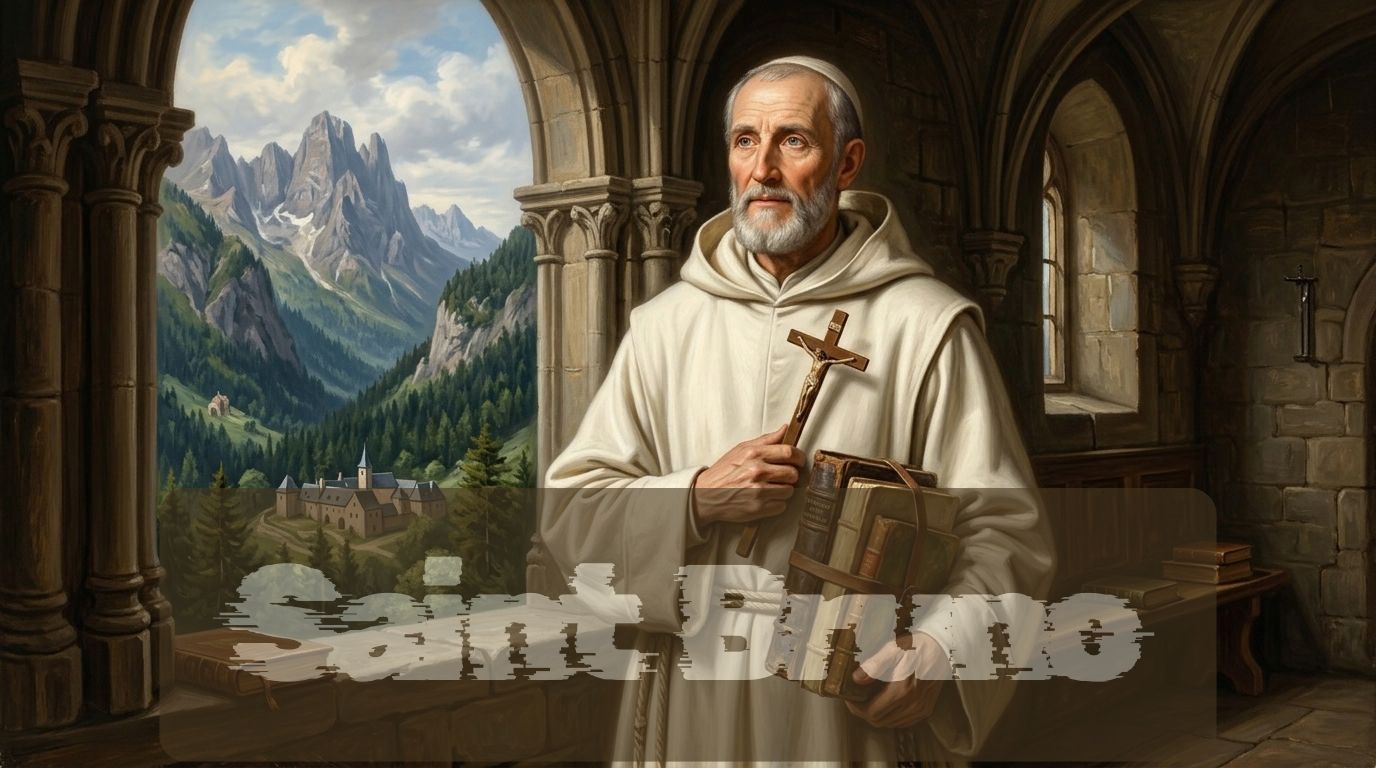
Image Credit: Image of Saint John the Baptist – Mundo Catolico; additional artwork from Canva
Saint John the Baptist: The Forerunner Who Prepared the Way
Saint John the Baptist stands among the most pivotal figures in Christian history. As the immediate precursor to Jesus Christ, he bridged the Old and New Testaments through his fiery preaching, call to repentance, and iconic baptism of the Messiah. His life overflows with miraculous beginnings, courageous truth-telling, and martyrdom that continues to inspire believers across every continent today.
The Feast Day of Saint John the Baptist
The Catholic Church celebrates Saint John the Baptist on June 24, marking his nativity. Uniquely, he remains the only saint whose birth and death both appear on the liturgical calendar. The Church commemorates his beheading on August 29, offering a second feast that recalls his brutal martyrdom. This dual recognition underscores his extraordinary significance in salvation history.
A Miraculous Birth Foretold by Heaven
Long before John drew his first breath in the wilderness, divine intervention shaped his destiny. His parents, Zechariah and Elizabeth, had grown old without children. According to sacred Scripture, the Angel Gabriel appeared to Zechariah while he served as a priest in the Jerusalem temple. The heavenly messenger announced that Elizabeth would conceive a son who must receive the name John.
Zechariah doubted this promise. Consequently, he lost his voice until the prophecy fulfilled itself. When Elizabeth finally gave birth and neighbours suggested naming the child after his father, Zechariah wrote “His name is John” upon a tablet. Immediately, his speech returned. This miraculous conception parallels other biblical figures, yet John’s role would exceed them all.
The Gospel of Luke records another extraordinary moment during Elizabeth’s pregnancy. Mary, carrying Jesus, visited her relative. Upon hearing Mary’s greeting, John leaped within Elizabeth’s womb. This movement revealed to Elizabeth that Mary bore the Son of God. Even before birth, John recognized and rejoiced in Christ’s presence.
The Voice Crying in the Wilderness
Around 30 AD, John emerged from the desert regions near the Jordan River to launch his public ministry. Crowds flocked to hear his uncompromising message of repentance and spiritual renewal. Unlike the polished religious leaders of his day, John wore clothing woven from camel hair and sustained himself on locusts and wild honey. His appearance deliberately echoed the prophet Elijah, signaling that ancient prophecies were reaching fulfillment.
John’s baptism ritual transformed Jewish purification practices into something radically new. He called people to confess their sins publicly and undergo immersion in the Jordan as an outward sign of inward transformation. This act attracted such massive followings that it eventually alarmed the political authorities.
Baptizing the Lamb of God
The most transformative moment in John’s ministry arrived when Jesus himself approached the riverbank. John immediately recognized his cousin and initially hesitated. He declared, “It is I who need baptism from you,” acknowledging Jesus’s sinless perfection and divine authority.
However, Jesus insisted upon receiving baptism to fulfill all righteousness. John complied, and the heavens opened dramatically above them. The Holy Spirit descended like a dove, and a voice from heaven proclaimed, “This is my beloved Son, in whom I am well pleased.” This theophany confirmed Jesus’s messianic identity before the watching world.
Following this event, John directed his disciples toward Christ. He famously identified Jesus as the “Lamb of God,” a title rich with sacrificial meaning. Many who had followed John transferred their allegiance to Jesus, becoming among Christianity’s earliest converts.
Confronting Royal Corruption
John’s fearless truth-telling ultimately sealed his fate. He publicly condemned King Herod Antipas for divorcing his wife and unlawfully marrying Herodias, his half-brother’s spouse. This marriage violated both Jewish law and basic moral decency.
Herod initially arrested John and imprisoned him at Machaerus fortress. Yet the tetrarch harboured an uneasy fascination with the prophet. He feared John’s righteousness and holiness, sometimes listening to him speak despite their adversarial relationship. Herodias, however, nursed a bitter grudge against the man who exposed her scandalous union.
The Martyrdom of a Prophet
Herodias seized her opportunity during Herod’s birthday celebration. Her daughter Salome performed a dance that so delighted the king that he rashly promised her anything she desired, even half his kingdom. Prompted by her mother, Salome requested the head of John the Baptist on a platter.
Though reluctant, Herod felt bound by his public oath. He ordered John’s execution, likely occurring between 33 and 36 AD. The soldiers beheaded the prophet in prison and delivered his severed head to Salome. John’s disciples retrieved his body and laid it in a tomb, mourning the loss of their courageous teacher.
A Legacy Spanning Faiths and Centuries
Saint John the Baptist transcends denominational boundaries. Christians honour him as the greatest of prophets and the bridge between covenants. The Eastern Orthodox Church venerates him as the Forerunner, often depicting him with angel wings in icons because Scripture calls him a messenger. Islam recognizes him as Yahya ibn Zakariya, a prophet who received wisdom in childhood and heralded Jesus’ coming. The Mandaeans consider him their greatest and final prophet.
His patronage extends across the globe. He serves as patron of Jordan, where his ministry flourished; Puerto Rico and its capital San Juan; French Canada and Newfoundland; and numerous cities including Florence, Genoa, Turin, and Porto. The Knights Hospitaller of Jerusalem claim him as their name-giving patron, reflecting his enduring association with healing and protection.
Relics and Enduring Devotion
Multiple locations claim precious relics of the Baptist. The Umayyad Mosque in Damascus houses what many believe to be his head. Amiens Cathedral in France preserves another reputed skull, brought from Constantinople after the Fourth Crusade. Siena Cathedral displays his right arm and hand—the very limb that baptized Christ—donated by Pope Pius II in 1464. Archaeological discoveries on Bulgaria’s Sveti Ivan island in 2010 yielded first-century bones that DNA testing identified as possibly belonging to a Middle Eastern man, fueling speculation about their connection to John.
The Forerunner’s Eternal Message
John’s life distilled into a single powerful truth: preparation matters. He prepared Israel for Messiah’s arrival through repentance and expectation. He prepared himself through desert solitude and ascetic discipline. Even his famous declaration—”He must increase, but I must decrease”—models the humility that genuine faith requires.
Christians worldwide light bonfires on Saint John’s Eve, celebrating the summer solstice alongside his nativity feast. This ancient tradition connects his “burning and shining lamp” imagery with the physical light that reaches its peak around June 24. From Brazilian Festas Juninas to Portuguese street festivals, from Philippine water dousing celebrations to Quebec’s Fête Nationale, John’s memory permeates global culture.
Saint John the Baptist remains eternally relevant because his message refuses compromise. He called religious hypocrisy what it was. He challenged political corruption regardless of consequences. He pointed beyond himself to the One who alone brings salvation. In an age of self-promotion and moral ambiguity, his voice still cries across the centuries: “Prepare the way of the Lord.”

Leave a Reply