
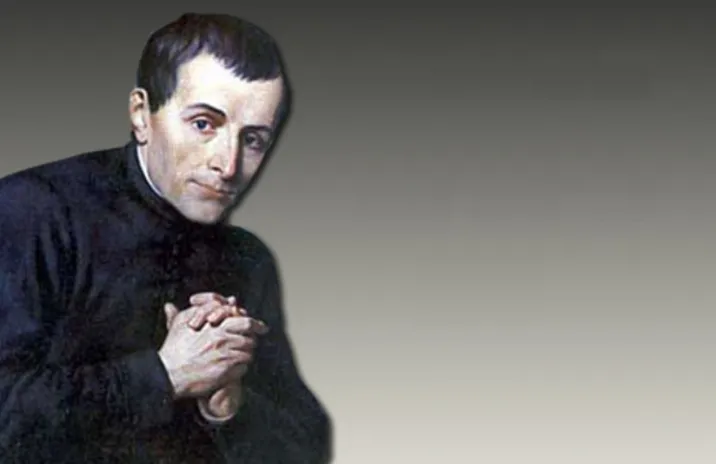
Saint Joseph Cafasso: The Priest of the Gallows and Father of Mercy
Feast Day: June 23
Saint Joseph Cafasso shines as one of the most remarkable priests of the nineteenth century. Furthermore, he transformed the lives of condemned prisoners, guided future saints, and reformed priestly education in Turin, Italy. Born with a deformed spine and fragile health, he nevertheless became a towering figure of mercy, discipline, and spiritual wisdom. Consequently, the Church honors him as the “Priest of the Gallows” and the patron of prisoners, prison chaplains, and all who minister to the incarcerated.
Early Life and Vocation
Joseph Cafasso entered the world on January 15, 1811, in Castelnuovo d’Asti, a small town in the Piedmont region of northern Italy. Moreover, his parents were simple peasants, and he was the third of four children. His younger sister Marianna later became the mother of Giuseppe Allamano, who would found the Consolata Missionaries. Therefore, holiness ran deep in this family.
From his earliest years, Cafasso showed an unusual attraction to prayer and virtue. In fact, those who knew him as a child could not recall him ever committing a sin. Additionally, he felt a clear call to the priesthood and pursued his studies with intense dedication. Despite a deformed spine that left him short in stature and physically frail, he never allowed his condition to become an excuse for idleness or self-pity.
He studied at the seminary in Turin and received ordination on September 21, 1833. Afterward, he continued advanced theological studies at the University of Turin and the Institute of Saint Francis of Assisi, a college dedicated to rebuilding priestly education after the devastation of the Napoleonic invasions. There, he eventually succeeded Luigi Guala as rector in 1848.
Opponent of Jansenism and Defender of Mercy
Cafasso emerged as a brilliant lecturer in moral theology beginning in 1836. However, he faced a serious challenge. Jansenism, with its harsh emphasis on sin, damnation, and human depravity, had infected much of the religious education in Italy. Consequently, many priests and seminarians lived in fear rather than in the freedom of God’s mercy.
Cafasso fought this rigorism with the gentler spirituality of Saint Alphonsus Liguori and Saint Francis de Sales. Furthermore, he taught that moral theology must lead souls to Christ, not crush them with anxiety. He insisted on high standards for priests, but he paired discipline with compassionate guidance. As a result, his students loved him, and his classrooms filled with young men eager to learn both theology and holiness.
In addition, Cafasso actively resisted state intrusion into Church affairs. The secular government of Piedmont sought to control ecclesiastical institutions, but Cafasso defended the autonomy of the Church with courage and legal acumen. Therefore, he became not only a teacher but also a defender of the Church’s freedom.
Spiritual Director of Saints
Perhaps the most far-reaching aspect of Cafasso’s ministry was his role as spiritual director to men and women who would transform the Church. Most famously, he guided Saint John Bosco, the founder of the Salesians and the Salesian Sisters.
Cafasso and Bosco first met when Bosco was fourteen years old, and their friendship lasted until Cafasso’s death. Significantly, it was Cafasso who convinced Bosco that his vocation lay in working with street boys in Turin. Without Cafasso’s encouragement, the Salesian movement — which has educated millions of poor and orphaned youth worldwide — might never have begun.
Moreover, Cafasso directed Giulia Falletti di Barolo, who became a passionate advocate for women prisoners. He also guided Francesco Faà di Bruno, founder of the Franciscan Sisters of the Poor, and Clemente Marchisio, founder of the Daughters of Saint Joseph of the Apparition. Consequently, his spiritual fatherhood extended far beyond his immediate circle.
The Priest of the Gallows
Cafasso’s most distinctive ministry was his work with condemned prisoners. In the prisons of Turin, he spent countless hours hearing confessions, offering spiritual counsel, and accompanying men to the gallows. Because of this, he earned the title “Priest of the Gallows.”
He did not merely comfort the condemned. Instead, he fought to improve their terrible conditions. He advocated for cleaner cells, better food, and more humane treatment. Furthermore, he convinced civil authorities to allow him access to prisoners who had been denied religious ministry. His small, frail figure became a familiar presence in the darkest corners of the prison system.
One remarkable story illustrates his courage. On one occasion, Cafasso seized the beard of a huge, violent inmate and refused to let go until the man confessed. Surprisingly, the inmate wept, made his confession, and left praising God. Additionally, Cafasso once escorted sixty converted prisoners to their executions. Most of them had confessed and received absolution, so he called them “hanged saints.”
His mortifications were extreme. He never smoked, never drank wine or coffee, and never ate between meals. He bore toothaches and headaches without complaint, offering his pain for the conversion of sinners. When asked if his relentless work exhausted him, he simply replied: “Our rest will be in Heaven.”
Death and Canonization
Cafasso’s health finally collapsed on June 23, 1860. He died in Turin from pneumonia, complicated by a stomach hemorrhage and his lifelong congenital conditions. Saint John Bosco himself wrote the biographical account of his friend and preached at the funeral, though he did not celebrate the Mass.
In his will, Cafasso bequeathed everything to the Little House of Divine Providence, founded by Saint Giuseppe Benedetto Cottolengo. His body was originally buried at the Institute he had led, but in 1870, the college moved to the Santuario della Consolata, and his remains were re-interred there.
The canonization process opened soon after his death. Pope Pius X formally introduced the cause on May 23, 1906. Pope Benedict XV declared him Venerable after confirming his heroic virtue. Pope Pius XI beatified him on May 3, 1925, calling him “the educator and formation teacher of priests.” Finally, Pope Pius XII canonized him on June 22, 1947, in Saint Peter’s Basilica.
Subsequently, Pius XII declared him patron of all Italian prisons and prisoners on April 9, 1948. In his apostolic exhortation Menti Nostrae (September 23, 1950), the Pope offered Cafasso as a model for all priests serving as confessors and spiritual directors.
Legacy and Relevance Today
Saint Joseph Cafasso speaks directly to contemporary challenges. First, he demonstrates that physical disability does not limit spiritual greatness. His deformed spine, far from hindering his mission, perhaps deepened his compassion for the suffering.
Second, he shows the power of spiritual direction. Without his guidance, John Bosco might never have founded the Salesians. Therefore, the mentor matters as much as the founder.
Third, he embodies mercy for the marginalized. In an age of mass incarceration, his advocacy for prisoners remains urgently relevant. He did not ask whether the condemned deserved mercy. He simply gave it.
Finally, his opposition to Jansenism offers a corrective to religious rigorism today. Cafasso taught that moral theology must draw souls to Christ, not drive them to despair. Consequently, his approach to confession, formation, and pastoral care remains a model for seminaries and parishes.
Prayer to Saint Joseph Cafasso
Saint Joseph Cafasso, Priest of the Gallows,
you who walked with the condemned and brought them to Christ,
pray for all who sit in darkness,
for prisoners forgotten by society,
for chaplains who minister in despair,
and for all who fear they are beyond mercy.
Teach us to see Christ in the outcast,
to offer hope where hope seems lost,
and to trust that no soul is ever beyond God’s love.
Through Christ our Lord. Amen.

Leave a Reply