
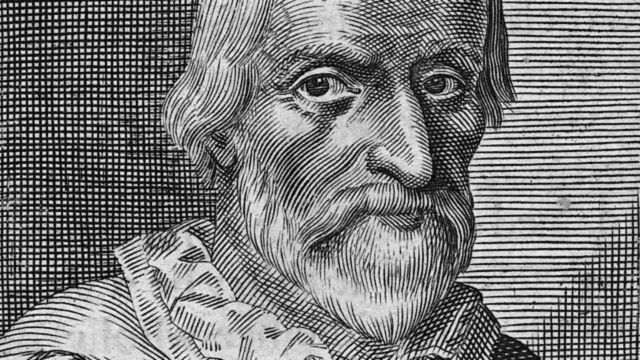
Image Credit: BBC
Venerable Bede: Father of English History Who Never Left His Monastery
Born in 673 near the twin monastery of Wearmouth-Jarrow in Northumbria, England, the Venerable Bede entered monastic life at age seven. He never truly left. At thirty, he received ordination. Scripture, teaching, and writing consumed his entire life. His output exceeded sixty books. Scholars consider him the most learned man of his age. He fathered English history. He pioneered the anno domini (A.D.) dating system. Pope Leo XIII declared him a Doctor of the Church in 1899. For over a century, he stood as the only English Doctor until John Henry Newman joined him in 2025. He breathed his last at Jarrow on May 25, 735. The Church honors him on that same date.
A Noble Oblate in a Plague-Stricken Monastery
Lands belonging to Monkwearmouth and Jarrow witnessed Bede’s birth. Monkton, two miles from the later Jarrow site, claims some traditions. His family enjoyed wealth. Noble ancestry shaped his comfortable origins. The name Bede carries West Saxon and Anglian roots. It derives from the Old English word for “to bid, command.”
At seven, his family sent him as a puer oblatus to Monkwearmouth. This practice was common for boys of noble birth. Benedict Biscop, the founder, educated him. Ceolfrith, who founded Jarrow in 682, took Bede there around that year. The dedication stone for Jarrow’s church survives. It is dated April 23, 685. Bede likely helped build it. He would have performed menial tasks as part of monastic life.
In 686, plague struck Jarrow. The Life of Ceolfrith records that only two monks could sing the full offices. One was Ceolfrith. The other was a young boy taught by him. This boy was almost certainly Bede. He was about fourteen. The two managed the entire liturgy until others could be trained.
Ordination and Early Writings
Bede was ordained a deacon around age nineteen. This was early. The canonical age was twenty-five. His abilities must have been exceptional. Alternatively, age requirements were often disregarded. He became a priest in his thirtieth year, around 702. Bishop John of Hexham performed both ordinations.
His first works appeared around 701. He wrote De Arte Metrica and De Schematibus et Tropis. Both were classroom texts. He continued writing for the rest of his life. He completed over sixty books. Most survived. Not all can be easily dated. He may have worked on some texts over many years.
His last surviving work is a letter to Ecgbert of York. It was written in 734. Ecgbert had been his student. A 6th-century Greek and Latin manuscript of Acts, the Codex Laudianus, is believed to have been used by Bede. It now rests in the Bodleian Library at Oxford.
The Ecclesiastical History: A Masterpiece
Bede’s best-known work is the Historia Ecclesiastica gentis Anglorum. It is the Ecclesiastical History of the English People. He completed it around 731. He was then in his fifty-ninth year. The work covers Christianity in England up to 729. It is the primary source for early English history.
Bede organized his history into five books. The first opens with geographical background. It traces English history from Caesar’s invasion in 55 BC. Roman Britain fills its pages. The martyrdom of St Alban appears there. Augustine’s mission in 597 receives full treatment.
The second book tracks Christianity’s advance in Kent. Early evangelization efforts in Northumbria fill its pages. Disaster struck these efforts around 632. The pagan Penda killed the Christian Edwin at Hatfield Chase.
The third book recounts Christianity’s growth under Oswald and Oswy of Northumbria. Its climax is the Council of Whitby in 664. This was a major turning point. The fourth book begins with Theodore’s consecration as Archbishop of Canterbury. It recounts Wilfrid’s efforts in Sussex. The fifth book brings the story to Bede’s own day. It includes missionary work in Frisia. It covers the Easter controversy with the British church.
Bede dedicated the work to King Ceolwulf of Northumbria. The preface mentions that Ceolwulf received an earlier draft. The king knew enough Latin to understand it. He may even have read it. This indicates connections between Bede’s monastery and the Northumbrian nobility.
Scholar, Scientist, and Controversialist
Bede’s interests reached far beyond history. Biblical commentaries on both Testaments flowed from his pen. He composed works on computus, the science of calculating calendar dates. He popularized the Anno Domini dating system. Dionysius Exiguus invented it. Bede’s adoption and promulgation in De Temporum Ratione spread it across Europe.
He wrote on the nature of things, modeling his approach partly on Isidore of Seville. The spherical Earth fascinated him. He explained how its shape influenced daylight length. He recorded the moon’s effect on tides. Tide timing relates directly to lunar position, he showed. He also noted that tides vary along the same coast.
In 708, monks at Hexham accused him of heresy. They targeted his work De Temporibus. He had calculated the world’s age himself. He concluded Christ was born 3,952 years after creation. This contradicted the accepted figure of over 5,000 years. The accusation came at a feast before Bishop Wilfrid. Some drunken monks made the charge. Wilfrid did not respond. But a monk relayed the episode to Bede. He replied within days with a defense. He asked that his letter be read to Wilfrid.
Bede suffered another brush with Wilfrid between 706 and 709. They discussed Æthelthryth, abbess of Ely. Wilfrid had been present at her exhumation in 695. Bede questioned him about the circumstances. He asked for more details of her life. Wilfrid had been her advisor.
Music, Poetry, and the Death Song
Music delighted Bede. He sang with skill. He recited vernacular poetry from memory. A speech impediment may have troubled him. A phrase in his verse life of St Cuthbert suggests this. Translations disagree. Some say he was cured. Others say he was merely inspired by the saint’s works.
Latin poetry also flowed from his pen. Scholars attribute Versus de die iudicii to him. A metrical Vita Sancti Cudbercti bears his name. Two collections of verse complete the list. The vernacular tongue attracted him too. His disciple Cuthbert noted that Bede was “learned in our songs.” On his deathbed, he composed a five-line vernacular poem. Bede’s Death Song became its title. It is the most widely copied Old English poem. Forty-five manuscripts preserve it. Scholars debate its attribution.
The poem warns: “No man can face that enforced journey more prudently than wisdom demands, if he considers—before he departs—what judgment awaits his spirit, for good or for evil, after his day of death.”
Final Days and Death
In 733, Bede made the journey to York. Ecgbert, then Bishop of York, welcomed him. The two likely discussed plans for elevating York to an archbishopric. This elevation came in 735. Bede hoped to return in 734. Illness prevented him. Lindisfarne also drew his footsteps. A monk named Wicthed owned an unknown monastery there. Bede visited it. His pen traveled even farther than his feet. Letters flew across the British Isles. Many correspondents he likely met in person. Other journeys probably occurred. No records survive.
Rome never saw him. His autobiographical chapter omits it entirely. Prayer, monastic discipline, and Scripture study filled his days. Contemporaries judged him the most learned man of his age.
The Feast of the Ascension, May 26, 735, brought his death at Jarrow. His disciple Cuthbert preserved the account. Bede grew ill before Easter. Breathlessness plagued him frequently. Pain remained minimal. Two days before the end, his breathing turned worse. His feet swelled. Still he dictated to his scribe. He passed the night in wakeful prayer. The next morning, he dictated again.
At three o’clock, he asked for a box of his treasures. He distributed them among the monastery’s priests. He gave pepper, napkins, and incense. That night, he dictated a final sentence to the scribe, a boy named Wilberht. He died soon after. The exact time is unclear. By Bede’s reckoning, the day changed at sunset, not midnight. Cuthbert is clear he died after sunset. So while his box came at three o’clock on Wednesday afternoon of May 25, the final dictution fell on what was considered May 26.
Veneration and Legacy
Devotees formed a cult around Bede by the tenth century. They spread his veneration widely across England by the fourteenth. Monks translated his body to Durham Cathedral around 1020. They placed it in the same tomb as Saint Cuthbert. Later, they moved it to an independent shrine in 1370. Reformers destroyed the shrine during the English Reformation. Workers reburied his bones in the cathedral. In 1831, they dug them up again and reburied them in a new tomb. It still stands in the Galilee Chapel.
Bede’s cult spread outside England through Boniface and Alcuin. Both promoted him on the continent. Boniface requested copies of his theological works. Alcuin, taught at York by Bede’s pupil Ecgbert, praised him as a model for monks. He disseminated Bede’s works to his friends.
Pope Leo XIII canonized Bede in 1899. He declared him a Doctor of the Church. Bede was the first native of Great Britain to achieve this. He remained the only English Doctor until John Henry Newman in 2025. His feast was added to the General Roman Calendar in 1899. It was placed on May 27, not his death date of May 26. That date belonged to St Augustine of Canterbury. The Church of England and Episcopal Church celebrate him on May 25. The Eastern Orthodox Church honors him on May 27.
Dante placed only one Englishman in Paradise. That was Bede. He appears in Paradiso X.130 among theologians and doctors. Isidore of Seville and Richard of St Victor stand beside him.
English writers and historians claim him as patron. Jarrow does too. Beda College in Rome, which prepares older men for the priesthood, carries his name. The annual Jarrow Lecture has celebrated his life since 1958, where the Hall museum documents his history. The Tyne and Wear Metro honors him with Bede Metro station.
On May 25, the Church remembers this monk who never left his monastery yet changed the world. Catholics seeking to serve God through scholarship find his model. Those who believe quiet study can shape history discover his proof. And every believer who has ever felt called to a hidden life of learning understands that holiness does not require adventure. Sometimes, it requires only a library, a pen, and the grace to use both until the final sentence is written.

Leave a Reply