
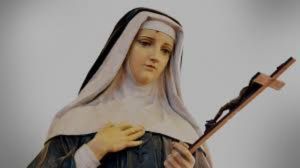
Image Credit: America Needs Fatima
St. Rita of Cascia: The Saint of Impossible Causes Who Bore the Wounds of Christ
St. Rita of Cascia is the patroness of hopeless causes. She is the saint people turn to when every door has closed. Her own life was a litany of suffering. An abusive marriage. Murder. The death of her sons. Rejection from the convent. Chronic illness. Yet she transformed each tragedy into deeper union with Christ. She bore a wound on her forehead that mirrored His crown of thorns. She died in 1457. Miracles erupted instantly. Pope Leo XIII canonized her in 1900. The Church celebrates her feast on May 22. In Spain, they call her La Santa de los Impossibles. Across the world, she is the last hope of the desperate.
A Peacemaker’s Daughter in Violent Times
Margherita Lotti was born in 1381 in Roccaporena. This tiny hamlet sits near Cascia in the Umbrian hills of Italy. Her parents, Antonio and Amata Ferri Lotti, were nobles. They were known for something rarer than wealth. They were peacemakers. Their neighbors called them Conciliatori di Cristo—Peacemakers of Christ. This title would prove prophetic for their daughter.
Her baptismal name was Margherita. It means “pearl.” Her family affectionately called her Rita. This nickname stuck for life. Even holiness could not displace it.
A strange legend surrounds her infancy. On the day after her baptism, her family noticed a swarm of white bees. The insects flew around her crib as she slept. They entered and exited her mouth peacefully. They caused no harm. Her family was mystified, not alarmed. Later hagiographers took this as a sign. Her life would be marked by industry, virtue, and devotion.
The Marriage She Never Chose
Rita expressed a desire to become a nun from early childhood. Her parents refused. They arranged her marriage instead. She was twelve years old. Some sources place the wedding around 1385. Catholic News Agency confirms she was twelve at the time of marriage.
Her husband was Paolo di Ferdinando di Mancino. Accounts describe him as cruel and harsh. The marriage lasted eighteen years. Rita bore two sons, Giangiacomo and Paolo Maria. She was remembered as a model wife and mother. She tried to convert her husband from his abusive behavior. Through prayer, patience, and her gift for pacification, she slowly succeeded. Paolo began living a more authentically Christian life.
Then violence shattered the family. Paolo became the victim of a family feud. He was murdered while his sons were still young. Rita faced a choice that would define her sanctity. At his funeral, she gave a public pardon to her husband’s murderers.
The feud did not end there. Paolo’s brother, Bernardo, continued the vendetta. He hoped to convince Rita’s sons to seek revenge, became their tutor and drew them into the Mancini villa. As the boys grew, their characters darkened. They wished to avenge their father’s murder.
Rita tried to dissuade them. She feared they would lose their souls, asked God to remove them from the cycle of vendettas. She begged Him to prevent mortal sin and murder. Her sons died of dysentery a year later. Pious Catholics believe this was God’s answer to her prayer. He took them by natural death rather than risk them committing murder and damning themselves.
An 18th-century hagiographer, Carlo Massini, recorded a shocking detail. Rita herself had prayed that God would kill her sons rather than allow them to avenge their father. This prayer reveals the depth of her spiritual terror. She preferred their death to their damnation.
Rejected by the Convent, Then Miraculously Accepted
After her husband and sons died, Rita sought to enter the monastery of Saint Mary Magdalene in Cascia. The convent turned her away. The nuns acknowledged her good character and piety. But they feared scandal. Her husband had died violently. She was not a virgin. These two facts barred her entry.
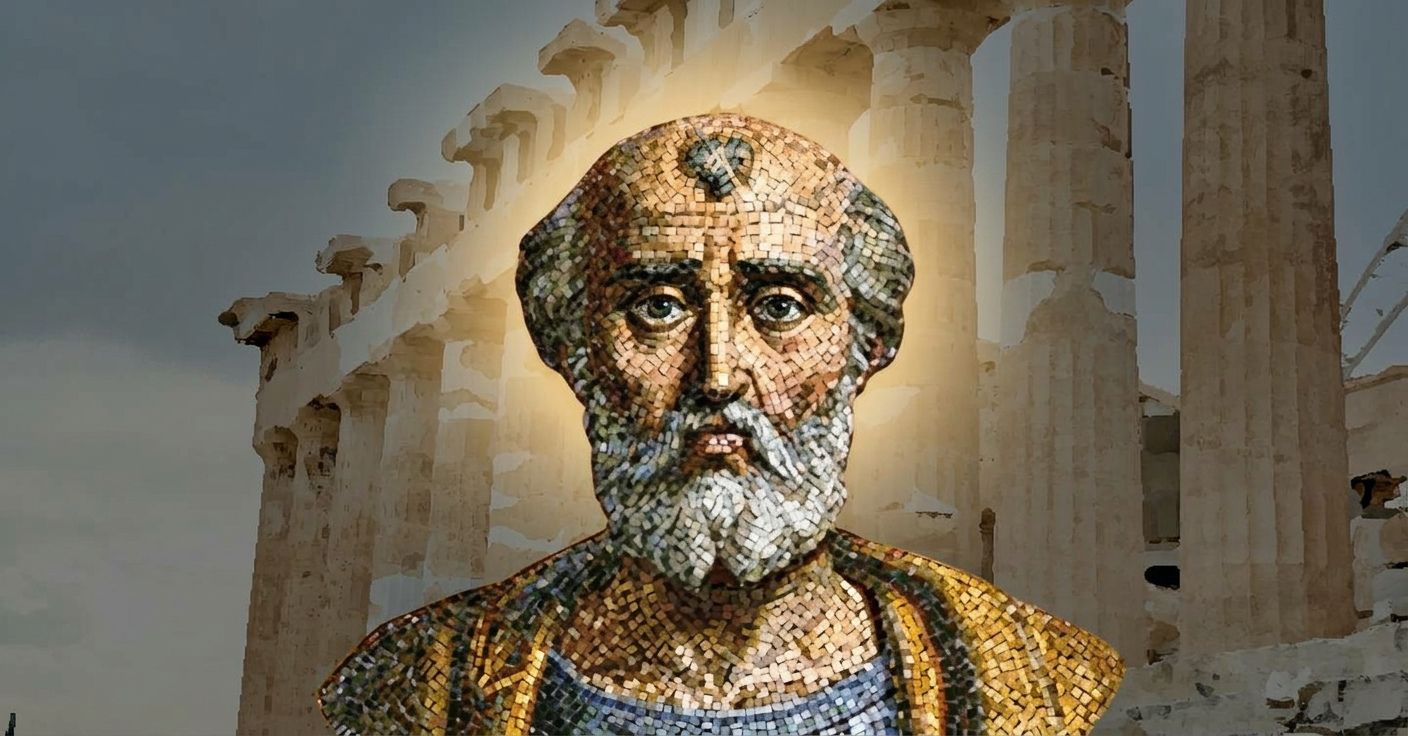
Rita persisted. The convent gave her a condition. She must reconcile her family with her husband’s murderers. She implored her three patron saints—John the Baptist, Augustine of Hippo, and Nicholas of Tolentino—to assist her.
Popular religious tales recount a dramatic intervention. The bubonic plague was ravaging Italy at the time. It infected Bernardo Mancini. The disease caused him to relinquish his desire for feud. Rita resolved the conflicts between the families. At age thirty-six, the convent finally accepted her.
Legends later claimed that her patron saints transported her into the monastery by levitation at night. They placed her in the garden courtyard. Whether literal or symbolic, the story captures the miraculous nature of her entry.
The abbess tested Rita’s vocation. She ordered her to water a dry vine bush in the cloister. Rita obeyed. The dead wood came back to life. It bore fruit. A vine dating back to the 19th century still grows in that same cloister today.
Forty Years of Monastic Life
Rita spent forty years in the monastery. She lived by the Augustinian Rule. Her days combined prayer, penance, and fasting. She also served the poor and sick of Cascia. She went out from the cloister to care for those in need.
Chronic illness marked her later years. She suffered from tuberculosis. Despite her physical limitations, she remained spiritually vibrant. She received visions. She practiced mortification of the flesh. Her prayers were known for their efficacy. People began seeking her intercession while she still lived.
The Wound of Love
When Rita was about sixty, she experienced her most famous mystical grace. She was meditating before an image of Christ crucified. Suddenly, a small wound appear on her forehead. It looked as though a thorn from Christ’s crown had loosened and penetrated her own flesh.
This was understood as partial stigmata. It was an external sign of her union with Christ’s passion. She bore this wound until her death in 1457. The sisters who prepared her body for burial noticed something extraordinary. The forehead wound remained fresh. Drops of blood still reflected light.
Her body was exhumed multiple times over the centuries. Each time, it showed no signs of deterioration. The wound remained unchanged. She was declared incorruptible after the third exhumation. Relics were taken in preparation for her eventual canonization. Part of her face has been slightly repaired with wax. Her bodily remains lie in the Basilica of Santa Rita of Cascia in Umbria today.
The Rose in January
Another famous miracle occurred near the end of her life. Rita was bedridden at the convent. A cousin from Roccaporena visited her. She asked if Rita desired anything from her old home. Rita requested a rose from the garden.
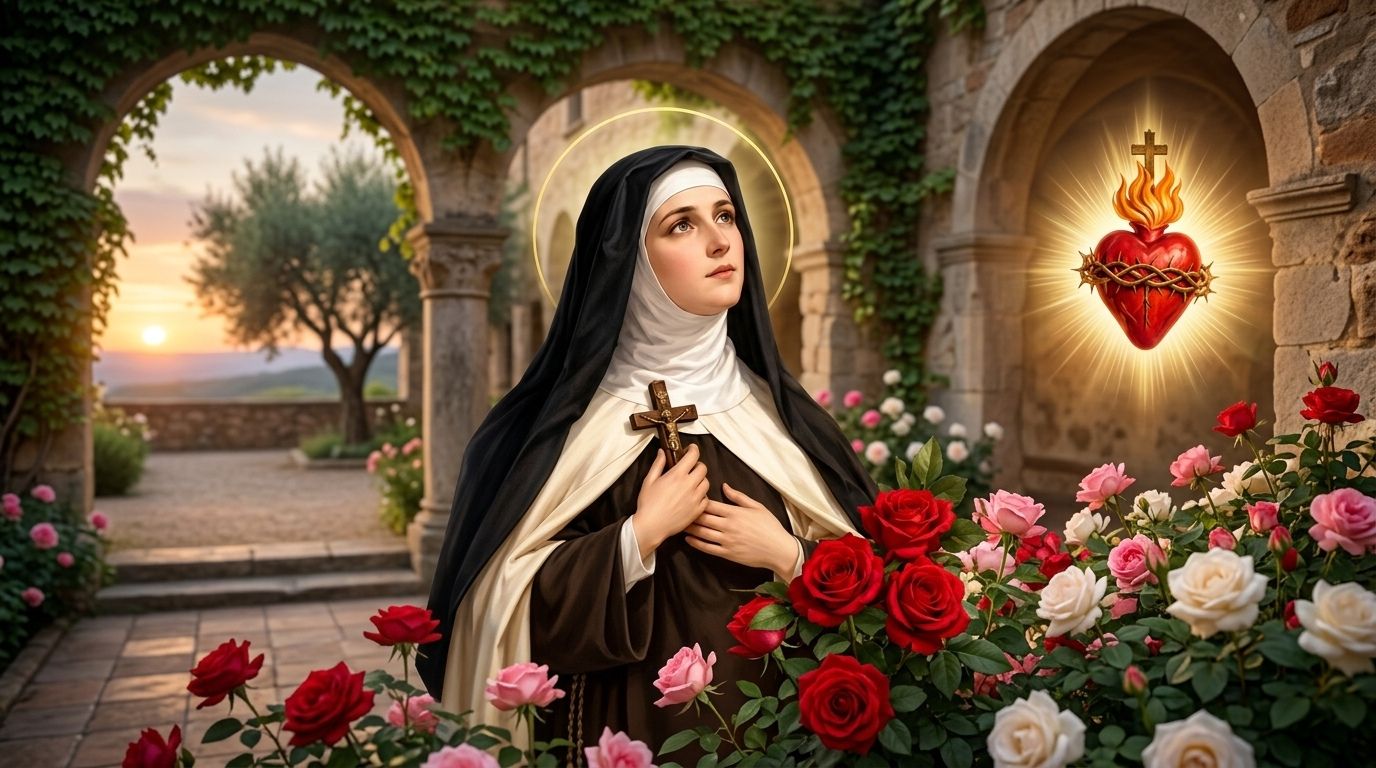
It was January. Winter gripped the Umbrian hills. Her cousin did not expect to find a rose. Yet when she went to the house, a single blooming rose stood in the garden. She brought it back to Rita. This miracle is why St. Rita is often depicted holding roses. On her feast day, churches bless roses for the congregation.
Canonization and Global Devotion
Augustinian Father Agostino Cavallucci wrote the first biography of Rita in 1610. It was based on oral tradition. Pope Urban VIII beatified her in 1626. The pope’s private secretary, Fausto Poli, had been born near her birthplace. His enthusiasm drove much of the impetus behind her cult.
Pope Leo XIII canonized Rita on May 24, 1900. He bestowed upon her the title “Patroness of Impossible Causes.” The three required miracles were: the pleasant scent emanating from her incorruptible body; the cure of smallpox; and the sudden recovery of sight of Elizabeth Bergamini, a young woman who had stayed four months at the Cascia convent seeking Rita’s intercession. A fourth miracle, the complete healing of Cosma Pellegrini in 1887, sealed the case.
On the 100th anniversary of her canonization in 2000, Pope John Paul II praised her “feminine genius.” He noted that she lived it intensely in both physical and spiritual motherhood.
Patronage and Iconography
Rita shares the title “saint of impossible causes” with St. Philomena and St. Jude. She is also patroness of sterility, abuse victims, loneliness, couples in marital difficulty, parenthood, widows, the sick, bodily ills, and wounds.
Her iconography is distinctive. She appears holding a thorn or crown of thorns, sometimes hold a large crucifix. She is often depicted with roses. Some images show her with a forehead wound. A black Augustinian habit appears in some artwork, though historically she would have worn the brown robes and white veil of her monastery.
The National Shrine of Saint Rita in Philadelphia, built in 1907, is a major pilgrimage site. A church in Nanthirickal, Kerala, India, holds the only relics of St. Rita in Asia. The sanctuary in Cascia and her birthplace in Roccaporena remain among Umbria’s most active pilgrimage destinations.
A Saint for the Desperate
St. Rita of Cascia speaks to anyone trapped in impossible circumstances. She endured violence, loss, rejection, and illness, never abandoned her faith but she turned each suffering into a deeper yes to God.
On May 22, the Church remembers this pearl of Umbria. Those facing abuse find in her a companion. Those grieving lost children discover a mother who understands. Those rejected by religious communities see that persistence can open locked doors. And those who have exhausted every human remedy learn that one saint still hears their plea.
La Santa de los Impossibles does not promise easy answers. She promises that God can work even when every path seems closed. Her own life proves it.

Leave a Reply