
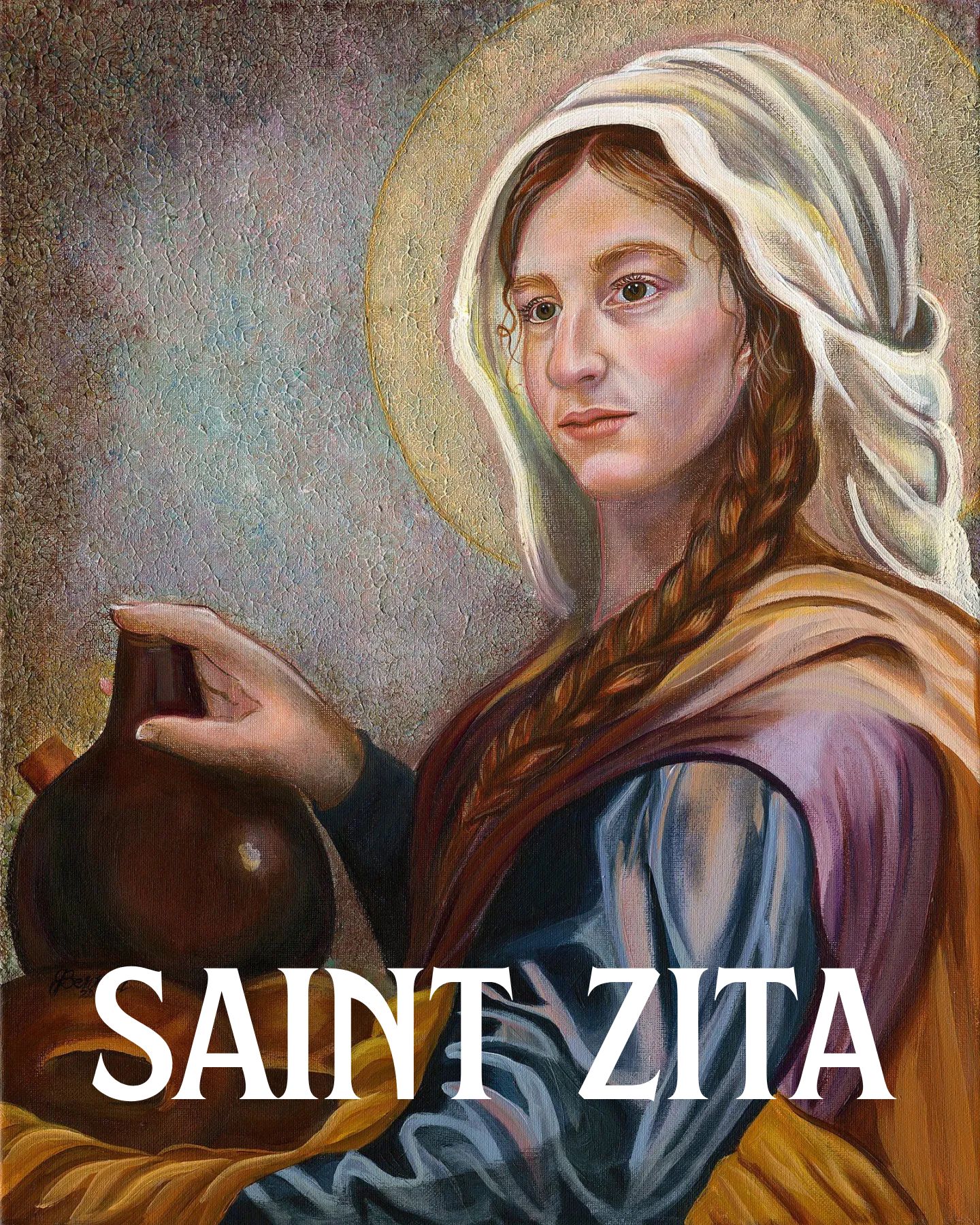
Image Credit: AnaStPaul
The humble Servant who became a model of Charity
Lived – (1218–1272)
Feast Day – April 27
Saint Zita is one of the most beloved saints of humble service in the Catholic Church, remembered for her extraordinary charity, deep faith, and quiet perseverance in ordinary work. Born around 1218 in Monte Sagrati near Lucca, Italy, she came from a poor but devout Christian family. Her parents, Giovanni and Buonissima Lombardo, raised her with strong moral values, while her uncle Graziano, a hermit, inspired her spiritual life through his example of prayer and sacrifice.
At just twelve years old, Zita entered domestic service in the household of the wealthy Fatinelli family in Lucca. What began as a simple role would become her lifelong vocation. She remained with the same family for nearly fifty years, dedicating herself fully to her duties. However, her early years were not easy. Her fellow servants misunderstood her humility and devotion, often mocking and mistreating her. They saw her kindness as weakness and her piety as pretence.
Despite this hostility, Zita responded with patience, silence, and unwavering commitment to her faith. She developed a disciplined routine, rising early each morning to attend Mass before beginning her daily chores. Her work was marked by diligence, foresight, and care—she often anticipated the needs of the household before being asked. Over time, her consistent virtue softened the hearts of those around her. Even her critics began to respect her.
Zita’s life was deeply rooted in charity. She carefully divided her modest earnings into three parts: one for her family, one for her personal needs, and one for the poor. Her generosity extended beyond money. She frequently gave away food, clothing, and even items belonging to her employers—acts that initially caused tension but eventually earned their trust. Her mistress, recognizing her integrity, placed her in charge of distributing alms to the poor.
Zita’s compassion reached society’s most vulnerable. She visited the sick, cared for prisoners, and welcomed homeless women into a small room provided for her in the house. She would often bring them food and offer them shelter for the night. In a time when servants were rarely given such responsibility or freedom, Zita transformed her position into a mission of mercy.
Her life is also associated with several remarkable miracles, both during her lifetime and after her death. One of the most well-known stories tells of how she was caught carrying bread in her cloak to give to the poor. When confronted by her master, she opened her cloak—only for the bread to have miraculously turned into flowers. Another tradition recounts that while she was away helping someone in need, an angel completed her household tasks, including baking bread.
During a time of famine, Zita gave away food from her master’s pantry. When questioned, the pantry was later found to be miraculously full. On another occasion, she offered water from a well to a thirsty traveler, which turned into wine after she blessed it. These accounts, whether symbolic or literal, reflect the deep belief in her holiness and divine favor.
Zita died peacefully on April 27, 1272, at the age of sixty, in the same household she had served for decades. According to tradition, a bright star appeared above her attic room at the moment of her death, signifying her sanctity. Her reputation for holiness spread quickly, and devotion to her grew among the people of Lucca and beyond.
In 1580, her body was exhumed and found to be incorrupt, further strengthening her veneration. Her remains are still preserved and displayed for public devotion in the Basilica of San Frediano in Lucca. Over 150 miracles were attributed to her intercession, leading to her canonization in 1696 by Pope Innocent XII. Later, Pope Benedict XIV included her name in the Roman Martyrology.
Saint Zita’s influence extended across Europe, especially during the late medieval period. In England, she was known as Sitha and was widely invoked by servants and housewives, particularly when searching for lost keys—a devotion that continues today. Guilds were formed in her honour to support unemployed or elderly domestic workers, reflecting her lasting impact on social care.
She is the patron saint of domestic workers, housekeepers, waitresses, and all those engaged in humble service. Artists often depict her holding keys, a bag, loaves of bread, or a rosary—symbols of her daily life and spiritual devotion.
Her feast day is celebrated on April 27, especially in Lucca, where people mark the occasion by baking bread and offering flowers in her honour. In modern times, her legacy continues to inspire, and she has even been included in the liturgical calendar of the Episcopal Church.
Saint Zita’s life reminds us that holiness is not reserved for the extraordinary but can be found in faithful service, humility, and love in everyday tasks. Through her quiet dedication, she transformed ordinary work into a path to sanctity, making her a timeless example for all.









Leave a Reply