
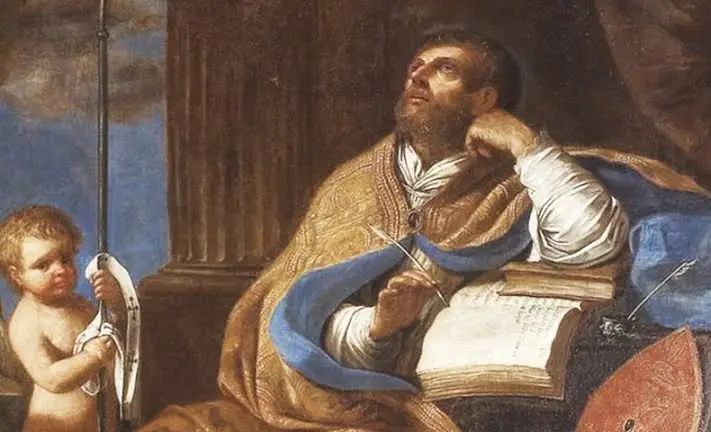
Image Credit: Franciscan media
Saint Peter Chrysologus: Feast Day, Life, and Legacy
Saint Peter Chrysologus earned a nickname that few preachers in Church history have ever matched. His congregation called him “golden-worded,” a title that still describes his simple yet powerful sermons today. Born in Italy around 380, he rose from a small-town deacon to a bishop whose homilies shaped Christian life across an entire empire. This article traces his early life, his rise to Ravenna, and the legacy that earned him lasting recognition as a Doctor of the Church.
Saint Peter Chrysologus’ Feast Day Falls on July 30
The Catholic Church honours Saint Peter Chrysologus every year on July 30. This date sits close to his actual death, which occurred around July 31, 450. For centuries, his feast had instead been celebrated on December 4, following his declaration as a Doctor of the Church in 1729. In 1969, however, Church officials moved his feast to July 30, placing it nearer to his true death anniversary and just before the feast of Saint Ignatius of Loyola on July 31.
Early Life and Ordination in Imola
Peter Chrysologus was born in Imola, a small town in northern Italy, around the year 380. Bishop Cornelius of Imola personally baptized him, educated him, and later ordained him a deacon. Through the influence of Emperor Valentinian III, Peter also rose to the rank of archdeacon, a role that gave him considerable responsibility within the local church. These early years in Imola quietly prepared him for the far larger role that awaited him in Ravenna.
A Vision That Led to Ravenna
According to tradition recorded in the Roman Breviary, Pope Sixtus III once saw a vision of Peter the Apostle alongside Apollinaris, the first bishop of Ravenna. In that vision, the two men pointed toward a young cleric destined to lead the see. When a delegation from Ravenna arrived in Rome, accompanied by Cornelius and his young archdeacon, Sixtus reportedly recognized Peter as the very man from his vision. He consecrated Peter as Bishop of Ravenna around the year 433, choosing him over the candidate the people of Ravenna had originally elected.
The Origin of the Name Chrysologus
Ravenna served as the capital of the Western Roman Empire during Peter’s episcopacy, giving his position unusual influence. After hearing his very first homily as bishop, Empress Galla Placidia was reportedly so impressed that she gave him the surname Chrysologus, meaning “golden-worded.” Peter kept his sermons short and simple, since he worried about tiring his listeners’ attention. Despite their brevity, his homilies carried real theological depth, and they remain valuable today for revealing everyday Christian life in fifth-century Ravenna.
Teaching, Reform, and Care for His Flock
As bishop, Saint Peter Chrysologus worked diligently to root out the last traces of paganism lingering among his people. He spoke firmly against indecent dancing, once warning that anyone who wished to frolic with the devil could not expect to rejoice with Christ. In his surviving homilies, he explained the Apostles’ Creed, defended the mystery of the Incarnation, and dedicated entire sermon series to John the Baptist and to Mary. He also encouraged daily reception of the Eucharist and urged his congregation to trust confidently in the forgiveness offered through Christ.
Standing Firm Against Heresy
When the heretic Eutyches sought support after being condemned at a synod in Constantinople in 448, he wrote to Peter Chrysologus hoping for an ally. Peter refused to offer that support, instead urging Eutyches to accept the synod’s ruling and submit to the authority of Rome. He reminded Eutyches that earlier heretics had been crushed after hurling themselves against what he called the Rock of Peter. This letter later appeared in the official acts of the Council of Chalcedon in 451, preserving his firm stand for future generations.
Death and Recognition as a Doctor of the Church
Saint Peter Chrysologus died around 450 during a visit to Imola, the town of his birth. Centuries later, Archbishop Felix of Ravenna gathered and preserved 176 of his homilies, ensuring that his teaching survived well beyond his own lifetime. In 1729, Pope Benedict XIII formally declared him a Doctor of the Church, largely because of his clear, practical preaching on Gospel subjects. His portrait still survives today among the mosaics of the Church of San Giovanni Evangelista in Ravenna, depicted alongside members of the imperial family he once served.
Why Saint Peter Chrysologus Still Matters
Saint Peter Chrysologus offers a model of preaching built on clarity rather than complexity, and his brief homilies continue guiding readers centuries later. For those interested in other saints honored during this same week of July, Saint Ignatius of Loyola follows just one day after his feast, while Saint Titus Brandsma offers another example of courageous, faithful teaching.

Leave a Reply