
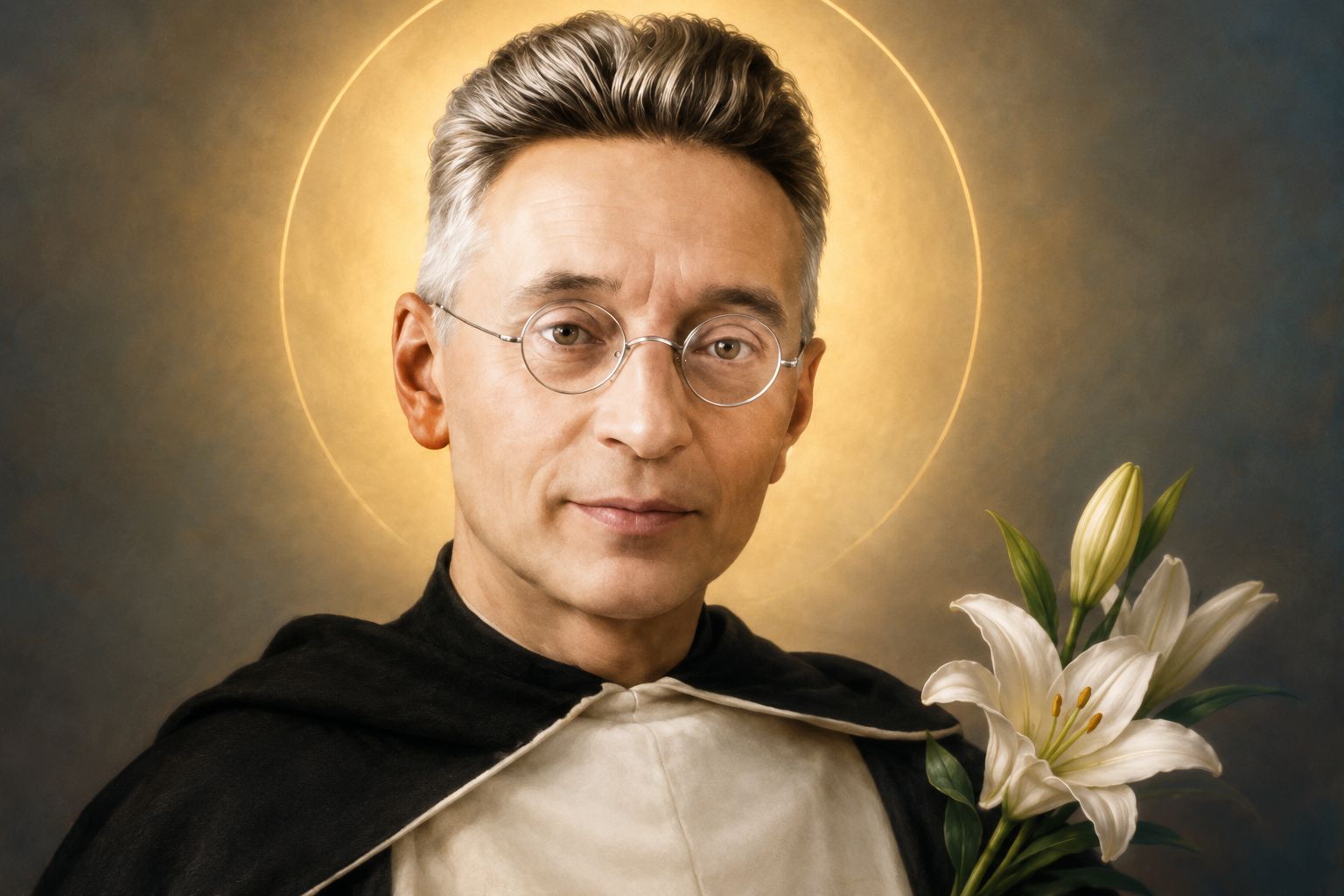
Saint Titus Brandsma: Feast Day, Life, and Martyrdom
Saint Titus Brandsma stands out as one of the most compelling figures on the Catholic calendar and his story explains why. He was a scholar, a journalist and eventually a martyr who refused to bend under Nazi pressure. Because his cause moved from beatification to sainthood only a few years ago, his story feels remarkably current, even though the events that shaped it happened more than eighty years ago. This article walks through his early life, his priesthood, his resistance to Nazism, and the legacy that still inspires journalists and believers around the world today.
Saint Titus Brandsma’s Feast Day Falls on July 27
The Church celebrates the feast of Saint Titus Brandsma every year on July 27. This date does not mark his birth; instead, it commemorates his death, which occurred on July 26, 1942, at the Dachau concentration camp in Nazi Germany. Because July 26 already honours other saints on the general calendar, the Carmelite order and later the universal Church settled on July 27 as his official feast day. Consequently, Catholics now pair his memory with a date that sits just one day after his actual death.
Early Life on a Dutch Dairy Farm
Titus Brandsma was born Anno Sjoerd Brandsma on February 23, 1881, in the small village of Oegeklooster in Friesland, a province in the northern Netherlands. His parents ran a dairy farm and the family stood out as devout Catholics in a largely Calvinist region. Notably, three of his sisters became nuns and one of his brothers entered the priesthood as well, so a life of religious devotion ran throughout the household. From an early age, young Anno attended a preparatory school for boys considering the priesthood, which set the direction of his life well before adulthood.
From Novice to Scholar: Titus Brandsma’s Path to the Priesthood
In 1898, Anno joined the Carmelite novitiate and took the name Titus in honour of his father. He was ordained a priest in 1905 at just twenty-four years old. Afterward, he pursued and completed a doctorate in philosophy in Rome, which opened the door to an academic career that spanned decades. He went on to teach philosophy and the history of mysticism at Dutch universities and he later served as rector of the Catholic University of Nijmegen, one of the institutions he helped establish. Alongside his teaching, he translated the works of Saint Teresa of Ávila into Dutch and lectured widely on Carmelite spirituality across Europe.
A Journalist’s Conscience Against Nazi Propaganda
Beyond the classroom, Titus Brandsma built a second career as a journalist and as an ecclesiastical adviser to the Dutch Catholic press. This role placed him at the center of events once Germany occupied the Netherlands during the Second World War. As Nazi authorities pushed Dutch newspapers to publish propaganda and antisemitic material, Brandsma took a firm stand. He personally traveled to Catholic newspaper offices and instructed editors to refuse the regime’s demands, warning them not to print the lies the Nazis were spreading about Jewish people and other targeted groups. This courageous stance made him a marked man in the eyes of the occupying government.
Arrest, Imprisonment and Death at Dachau
Because of his outspoken resistance, the Gestapo arrested Titus Brandsma in January 1942. He moved through several prisons and camps before arriving at Dachau, where conditions were brutal even by concentration camp standards. Despite his suffering, fellow prisoners later testified that he remained calm and offered spiritual comfort to those around him. On July 26, 1942, camp staff killed him with a lethal injection as part of the Nazi regime’s program of medical experimentation on prisoners. Before he died, he reportedly gave his Rosary to the nurse who administered the injection; she later converted to Catholicism and testified to his holiness during the sainthood investigation.
Beatification and the Long Road to Canonization
Pope John Paul II beatified Titus Brandsma on November 3, 1985, formally recognizing him as a martyr of the faith. His cause then advanced slowly over the following decades as investigators reviewed his life and searched for evidence of miracles attributed to his intercession. The turning point came through the case of Father Michael Driscoll, an American Carmelite priest who prayed for Brandsma’s intercession after being diagnosed with advanced melanoma. Driscoll applied a small piece of Brandsma’s habit to his head daily during his treatment and was ultimately declared free of cancer. The Vatican recognized this healing as a miracle in November 2021, clearing the final hurdle toward sainthood.
Canonization and Patronage
On May 15, 2022, Pope Francis canonized Titus Brandsma before more than 50,000 people gathered in St. Peter’s Square. In his homily, the pope remarked that holiness does not depend on a few heroic gestures but grows out of many small acts of daily love, a message that framed Brandsma’s quiet, steady courage rather than any single dramatic moment. Today, the Church honors him as the patron saint of Catholic journalists, along with Catholic Esperantists and the region of Friesland. Many in the media profession look to him as a model for practicing honest journalism under pressure.
Why Saint Titus Brandsma’s Story Still Resonates
Saint Titus Brandsma’s life connects several threads that feel just as relevant now as they did in the 1940s: the responsibility of the press to resist propaganda, the courage required to act on conscience, and the quiet holiness found in ordinary daily choices. His memorial in Nijmegen and the honours paid to him in Dachau keep his memory alive well beyond Church circles.
Leave a Reply