
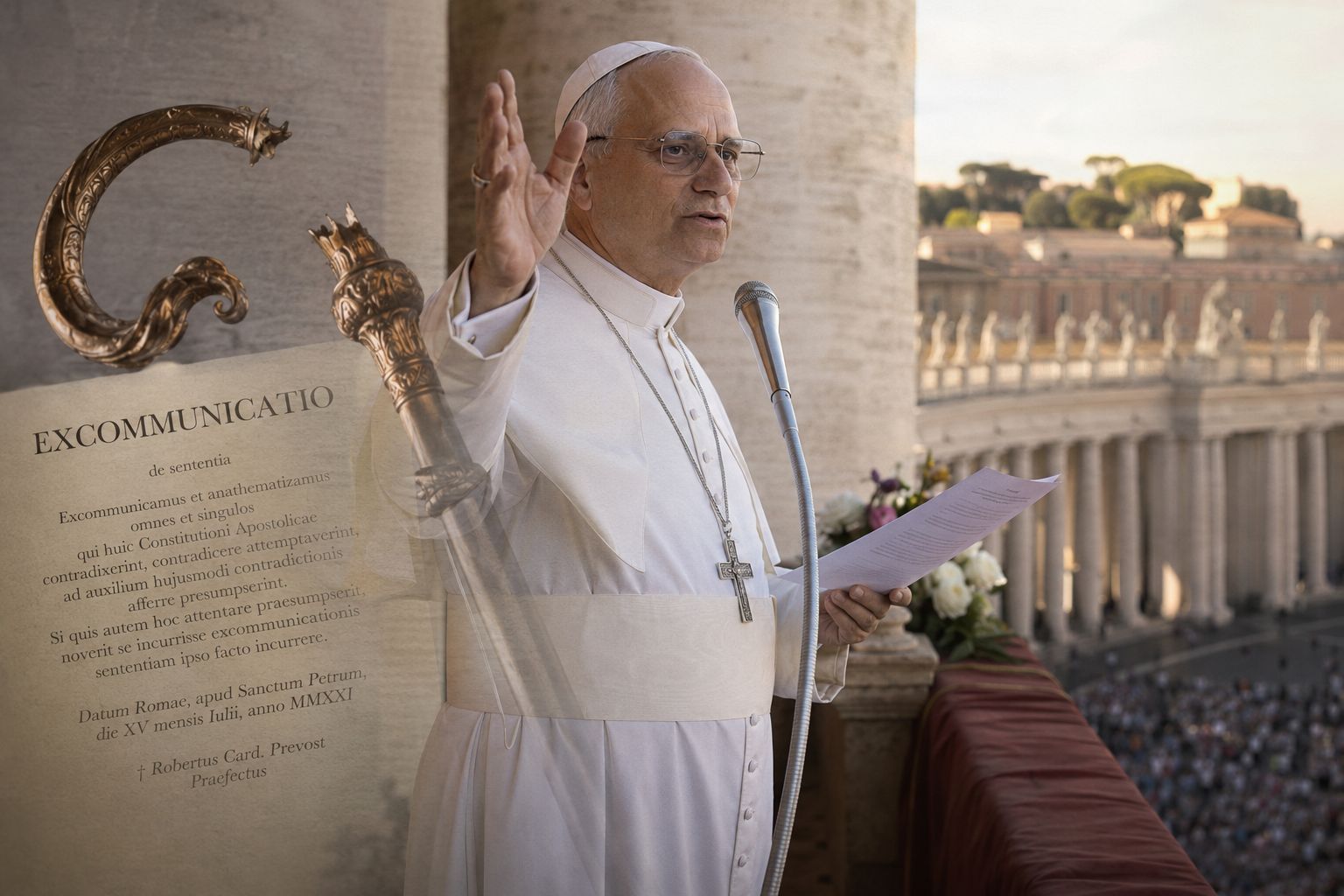
Pope Leo XIV Warns SSPX Schismatic Bishop Consecrations
By Catholic Gist International | June 24, 2026
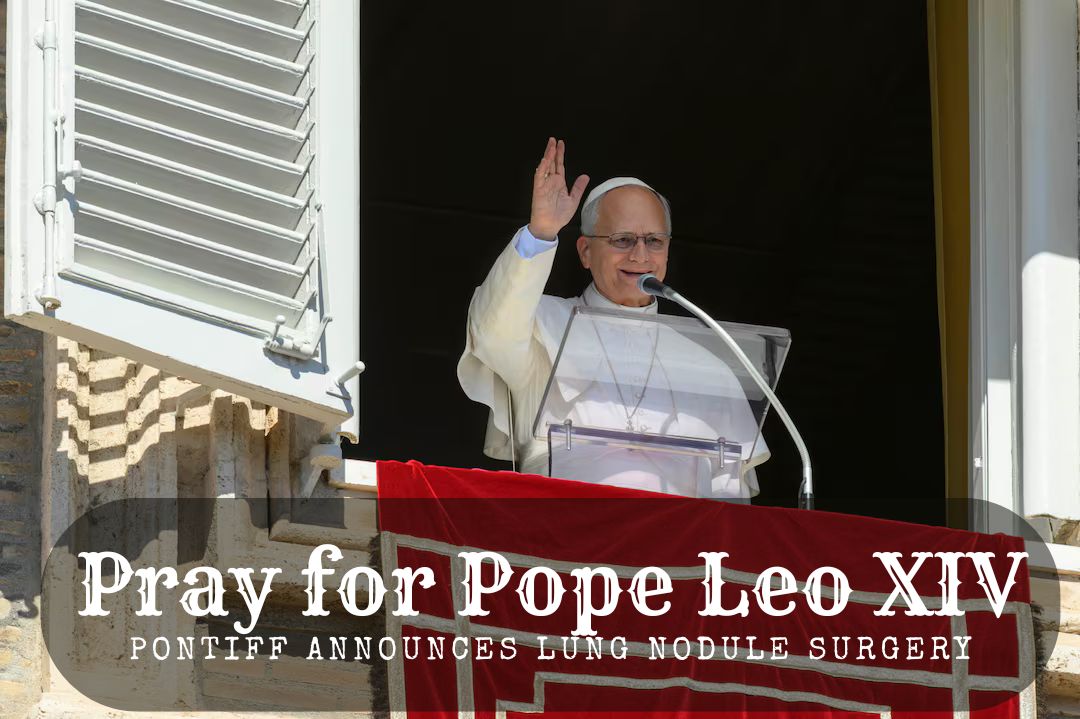
Pope Leo XIV has issued an explicit warning to the Society of Saint Pius X (SSPX): any attempt to consecrate bishops without papal approval will trigger automatic excommunication under canon law. Consequently, this statement marks the most serious escalation in Vatican-SSPX relations since the 1988 Écône consecrations that originally split the traditionalist group from Rome. Furthermore, the Pope’s intervention comes as SSPX leaders publicly declare their intention to proceed with new episcopal ordinations.
The Vatican Press Office released the Pope’s warning on May 13, 2026, following reports that SSPX Superior General Father Davide Pagliarani planned to consecrate new bishops without seeking papal mandate. Meanwhile, the SSPX responded with a defiant “declaration of Catholic faith,” insisting their actions preserve tradition rather than violate it. Nevertheless, Pope Leo XIV left no room for ambiguity: such consecrations would constitute a schismatic act with immediate canonical consequences.
What the SSPX Announced
The Society of Saint Pius X, founded by Archbishop Marcel Lefebvre in 1970, currently operates with four bishops consecrated by Lefebvre in 1988. However, these prelates are aging, and the SSPX faces a leadership succession crisis. Therefore, Father Pagliarani informed Vatican officials that the Society intends to consecrate replacements without Roman approval.
Moreover, the SSPX leadership argues that their 1988 consecrations were justified by a “state of necessity” in the Church. Similarly, they now claim that contemporary doctrinal confusion and liturgical decline create comparable emergency conditions. Additionally, they point to Pope Francis’s restrictions on the Traditional Latin Mass through Traditionis Custodes (2021) as evidence that Rome no longer guarantees their spiritual survival.
The Society’s “declaration of Catholic faith,” published after the Vatican warning, rejected any characterization of their plans as schismatic. Instead, they framed the proposed consecrations as acts of fidelity to tradition and service to souls abandoned by mainstream Catholicism.
The Vatican’s Response: Canonical Clarity
Pope Leo XIV’s warning rests on Canon 1382 of the Code of Canon Law, which states that both the bishop who confers episcopal ordination without papal mandate and the one who receives it incur automatic excommunication (latae sententiae). This provision was invoked in 1988 against Archbishop Lefebvre and the four bishops he consecrated, as well as against the receiving prelates.
Cardinal Pietro Parolin, Vatican Secretary of State, reinforced the Pope’s message in a separate communication. First, he reminded SSPX leaders that Pope Benedict XVI’s 2009 decree lifting the excommunications of the four 1988 bishops was a gesture of reconciliation, not normalization. Second, he noted that subsequent negotiations under Pope Francis failed to achieve full communion precisely because the SSPX refused to accept the Second Vatican Council and the revised liturgical books unconditionally.
Furthermore, the Dicastery for the Doctrine of the Faith issued a doctrinal note clarifying that episcopal consecration without papal mandate violates the Church’s sacramental constitution. The note emphasized that the Pope alone possesses the authority to govern the universal Church and to establish its hierarchical structure.
Why This Matters: The Stakes of Schism
The potential excommunication of new SSPX bishops would carry consequences far beyond canonical technicalities. To begin with, it would formalize a schism that has remained technically irregular for nearly four decades. Consequently, Catholics attending SSPX chapels would face renewed questions about the validity of their sacraments and their own communion with Rome.
Moreover, the crisis intersects with Pope Francis’s Traditionis Custodes, which restricted celebrations of the Traditional Latin Mass. Many traditionalist Catholics, while not SSPX members, sympathize with the Society’s grievances about liturgical reform and doctrinal ambiguity. Therefore, a formal schism could radicalize segments of the traditionalist movement that currently remain within canonical structures, such as those served by the Priestly Fraternity of Saint Peter (FSSP) and Institute of Christ the King Sovereign Priest (ICKSP).
Additionally, the timing creates pastoral complications. Pope Leo XIV has sought to project openness to tradition—his Spain trip included reverent liturgical celebrations, and he has spoken warmly of Gregorian chant and sacred architecture. However, his firmness on SSPX consecrations demonstrates that openness does not extend to institutional independence from papal authority.
Historical Context: The 1988 Écône Consecrations
Understanding the current crisis requires recalling the events of June 30, 1988. Archbishop Marcel Lefebvre, despite explicit warnings from Pope John Paul II, ordained four bishops at the SSPX seminary in Écône, Switzerland. Immediately, the Vatican declared that Lefebvre and the new bishops had incurred automatic excommunication.
For twenty years, the SSPX operated in canonical limbo. Then, in 2009, Pope Benedict XVI issued Ecclesia Dei, lifting the excommunications as a gesture of mercy and opening formal doctrinal discussions. Nevertheless, these talks collapsed by 2018. Pope Francis subsequently restricted the Traditional Latin Mass through Traditionis Custodes and suppressed the Ecclesia Dei Commission that had overseen reconciliation efforts.
Now, Pope Leo XIV faces the prospect of re-enacting the 1988 drama. The SSPX argues that Rome’s current direction leaves them no alternative. Rome counters that no emergency justifies violating the Church’s constitutional order.
Reactions Across the Catholic Spectrum
Traditionalist Catholics
Some traditionalist commentators have expressed sympathy for the SSPX’s predicament while stopping short of endorsing unauthorized consecrations. Peter Kwasniewski, a prominent traditionalist theologian, wrote that the Vatican’s warning “sadly confirms what many feared—that genuine reconciliation remains impossible under current conditions.” However, he urged the SSPX to seek alternative solutions rather than provoke formal schism.
Progressive Catholics
Progressive voices have generally supported the Vatican’s firmness. The National Catholic Reporter editorialized that “no group can hold the Church hostage by threatening schism.” Meanwhile, theologian Massimo Faggioli argued that the SSPX’s demands for unconditional acceptance of their liturgical and doctrinal positions amount to “a parallel magisterium incompatible with Catholic ecclesiology.”
What Happens Next
| Scenario | Likelihood | Details |
|---|---|---|
| SSPX proceeds with consecrations | High | Father Pagliarani has shown no signs of retreating; excommunications would follow automatically |
| Last-minute negotiation | Moderate | Unlikely given public positions, but Vatican has history of eleventh-hour interventions |
| SSPX internal split | Moderate | Some members may oppose consecrations, potentially forming breakaway group seeking Roman reconciliation |
| Formal schism declared | Low but real | Vatican prefers to avoid explicit schism declarations; automatic excommunication operates without formal decree |
Theological Reflection: Unity and Its Limits
Pope Leo XIV’s warning raises enduring questions about Catholic identity. What does it mean to be “in communion” with Rome? Where is the line between legitimate dissent and schism?
The Church’s answer, articulated in Lumen Gentium and subsequent magisterial documents, holds that communion requires submission to the Pope as visible head of the College of Bishops. The SSPX, by rejecting this submission in the matter of episcopal appointments, places itself outside this communion—regardless of its members’ personal holiness or doctrinal orthodoxy on other matters.
Yet the pastoral challenge remains. Hundreds of thousands of Catholics worldwide worship at SSPX chapels, drawn by reverent liturgy, clear preaching, and communities that feel like refuges from secularization. A formal schism would leave these faithful in spiritual uncertainty, questioning the validity of their marriages, confessions, and confirmations.
Pope Leo XIV’s task, therefore, is not merely canonical enforcement but pastoral reconciliation. His warning is firm, but his Augustinian spirituality suggests he understands that law serves love—not the reverse.
Conclusion: A Defining Test for Pope Leo XIV
The SSPX crisis tests whether Pope Leo XIV can balance doctrinal clarity with pastoral creativity. His predecessors tried both severity (John Paul II) and mercy (Benedict XVI); neither fully succeeded. Now, the first American Pope faces the same ancient tension between unity and diversity, authority and conscience.

Leave a Reply