
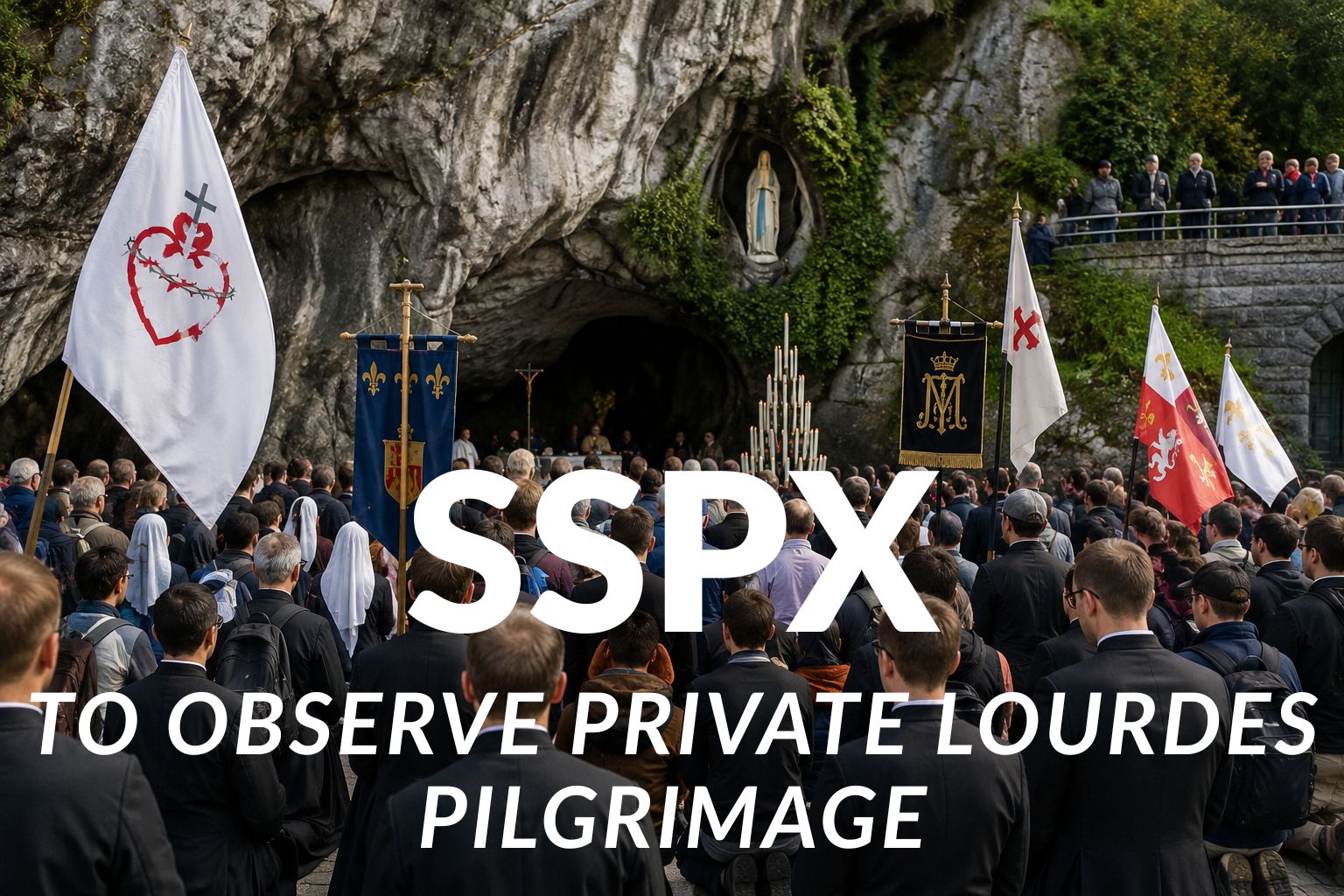
The long-running SSPX Lourdes pilgrimage has hit a serious obstacle this year. Bishop Jean-Marc Micas of Tarbes and Lourdes has withdrawn permission for the Society of Saint Pius X to hold its annual public event at the shrine. In response, the Society now says it will proceed anyway, but strictly as a private visit rather than an official pilgrimage.
The SSPX Lourdes Pilgrimage Ban Began on 13 August
Bishop Micas signed his decree on 13 August, directly citing the unauthorised episcopal consecrations that took place at Écône on 1 July. Those consecrations, carried out without a papal mandate, triggered automatic excommunications under canon law. Because of this, Micas concluded that circumstances at the shrine had fundamentally changed since previous years.
“I cannot authorise the celebration of Mass or the administration of the other sacraments, nor even public prayers by the Society of Saint Pius X within the Sanctuary,” he wrote. He added that the SSPX’s prior authorisation “is therefore withdrawn.” Even so, Micas made clear that individual pilgrims remained welcome to visit privately.
What the SSPX Lourdes Pilgrimage Previously Involved
For many years, Lourdes formed a fixed point on the SSPX’s international pilgrimage calendar. The Society traditionally used the Basilica of St Pius X, a vast underground church at the shrine, for its Masses and liturgical ceremonies. This year’s event had been scheduled for October, and UK registration had already sold out before the ban arrived.
The itinerary, still visible online at the time of writing, included a solemn high Mass, candlelight processions, all-night adoration, and guided tours connected to St Bernadette’s life. Clearly, the pilgrimage represented a significant annual gathering for SSPX faithful travelling from across Europe and beyond.
How the SSPX Responded to the Restriction
Rather than cancel outright, the Society issued a firm statement on 22 August from its French district house. While acknowledging “the authority of the local bishop,” the SSPX expressed both sorrow and incomprehension at the decision. It also pointed to what it called a double standard, noting that Anglican clergy had celebrated an official Eucharist inside the shrine’s upper basilica back in 2008, despite differing significantly from Catholic teaching on several core doctrines.
Consequently, the Society announced it would still travel to Lourdes, framing the visit as similar to its unofficial pilgrimages to Rome during recent Jubilee years. “The French District of the Priestly Fraternity of Saint Pius X fully intends to heed this invitation,” the statement read, referring to Micas’s openness toward private visits. However, the Society offered no specific details on how it would replicate the scale of its usual celebrations without formal shrine access.
The Wider Dispute Behind the SSPX Lourdes Pilgrimage Row
This local decision connects to a much larger canonical dispute. Following the July consecrations, the Holy See issued a decree confirming automatic excommunication for the six bishops involved. The SSPX subsequently lodged a “preliminary recourse” with the Vatican on 11 July, formally appealing that decree.
Canon law gave the Holy See thirty working days to respond, a deadline that has since passed without any public reply. Under canonical custom, this silence generally counts as a rejection, meaning the Society’s appeal process now continues to its next stage. Adding further complexity, the Vatican’s decree included a note suggesting that SSPX confessions and marriages might be invalid. Numerous canonists, including some critical of the Society, have argued that this particular claim rests on shaky legal ground, since only the pope himself can revoke faculties that Pope Francis had previously granted.
Why the Timing Matters for Catholics Watching Closely
The dispute unfolds at a delicate moment for the wider Church, as bishops worldwide face pressure to enforce Rome’s stance on SSPX liturgies consistently. Some commentators argue that Lourdes, given its history of welcoming non-Catholic pilgrimages, presents an awkward precedent for justifying this particular restriction. Others maintain that the unauthorised consecrations genuinely altered the Society’s canonical standing, making continued official access untenable.
Either way, this year’s modified SSPX Lourdes pilgrimage offers a clear illustration of how doctrinal disputes can quickly reshape long-standing devotional traditions. For the original detailed reporting on this story, see the Catholic Herald’s full account of the Society’s response.
What Happens Next
With the Holy See’s silence effectively rejecting the Society’s initial appeal, the canonical process will likely continue for months. Meanwhile, pilgrims connected to the SSPX will still travel to Lourdes this October, simply without access to formal liturgies inside the shrine itself. Whether this compromise satisfies either side remains genuinely uncertain, and further developments seem likely as October approaches.
Leave a Reply