
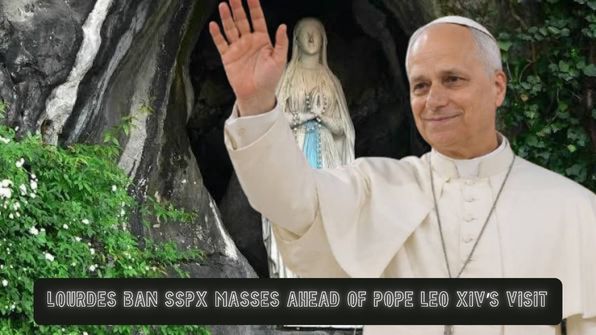
Lourdes Bans SSPX Masses Ahead of Pope Leo XIV Visit
Lourdes bans SSPX Masses and other public religious activities inside the Sanctuary of Our Lady of Lourdes, according to a new directive from Bishop Jean-Marc Micas of Tarbes and Lourdes.
The decision comes only weeks before Pope Leo XIV visits the famous French Marian shrine. The bishop’s letter, dated 13 August 2026, cites the Vatican’s recent declaration concerning the Society of St. Pius X (SSPX) and its bishops.
The restriction applies specifically to the SSPX. It does not amount to a general ban on every celebration of the Traditional Latin Mass at Lourdes. That distinction matters, especially amid the wider debate over the future of the older Roman rite under Pope Leo XIV.
Our Lady of Lourdes Feast Day: 11 February
The Church celebrates the Feast of Our Lady of Lourdes on 11 February each year.
Lourdes became one of the world’s best-known Catholic pilgrimage sites after the Virgin Mary appeared to Saint Bernadette Soubirous in 1858. Bernadette reported 18 apparitions at the Grotto of Massabielle.
Today, millions of pilgrims visit the shrine for prayer, confession, Mass, processions and the search for spiritual and physical healing.
The sanctuary is therefore more than a historic religious site. It remains a major centre of Catholic pilgrimage and Marian devotion.
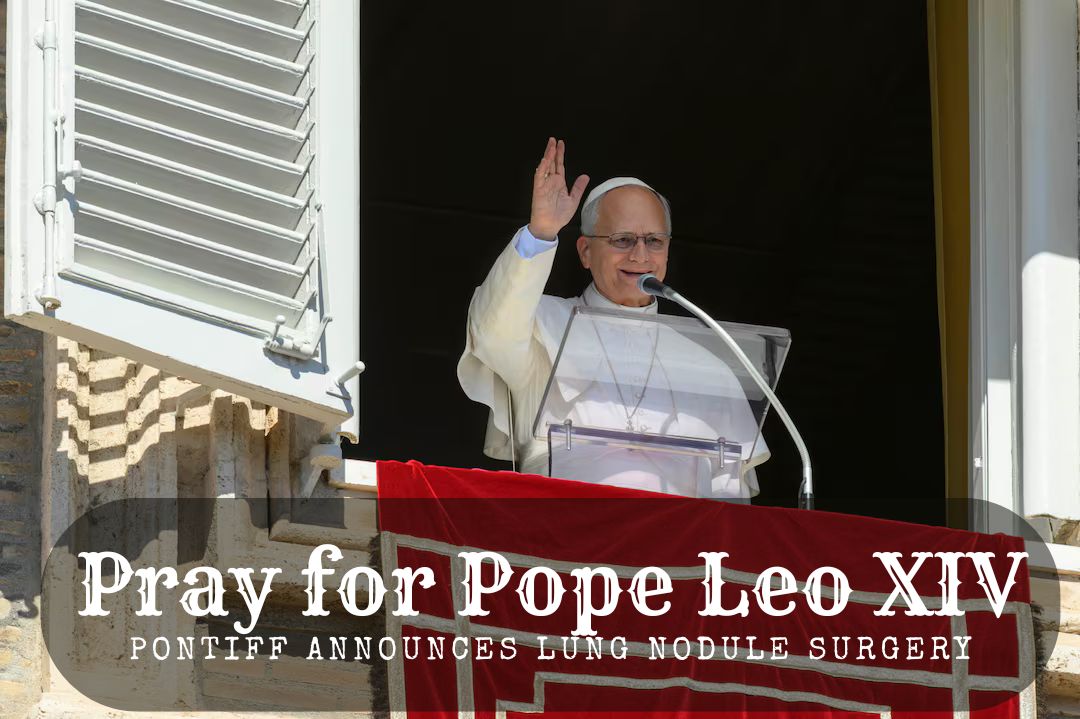
That makes the latest decision especially significant. Pope Leo XIV will visit Lourdes on 26 and 27 September 2026 during his apostolic journey to France. The official sanctuary programme describes the Pope as coming as a “pilgrim among pilgrims”.
What Does the Lourdes SSPX Ban Actually Say?
According to the newly reported directive, Bishop Micas has withdrawn permission for the SSPX to conduct public religious activities inside the sanctuary.
The restrictions cover Masses, other sacraments and public prayers organised by the Society.
However, the measure does not prohibit individual SSPX members or other Catholics from entering Lourdes as pilgrims. People may still visit the Grotto and other areas of the sanctuary for private prayer.
That point is important because headlines about a “Lourdes TLM ban” could create the impression that every Traditional Latin Mass has been prohibited.
The reported measure is narrower.
It targets the Society of St. Pius X, an organisation whose canonical relationship with Rome has entered a new and serious crisis following the events of July.
Why Did Bishop Micas Ban SSPX Celebrations?
Bishop Micas referred to the Vatican’s recent action against the SSPX.
On 1 July 2026, the society consecrated four priests as bishops at its seminary in Écône, Switzerland. The ceremony took place without a papal mandate and despite Pope Leo XIV’s opposition.
The following day, the Dicastery for the Doctrine of the Faith issued its decree.
The Vatican declared that Bishop Alfonso de Galarreta and the four newly consecrated bishops had incurred automatic excommunication. Bishop Bernard Fellay, who participated as co-consecrator, also incurred the penalty. The Vatican classified the episcopal consecrations as a schismatic act.
The Vatican went further in its accompanying explanation.
It stated that SSPX sacred ministers are in schism and warned Catholics against adhering to the society’s schism. It also stated that SSPX ministers exercise their sacramental ministry illicitly.
Those developments provide the immediate context for the Lourdes decision.
Pope Leo XIV Had Tried to Prevent the SSPX Break
The Lourdes restriction also comes after Pope Leo XIV personally attempted to prevent the confrontation from escalating.
In a 29 June 2026 letter to SSPX Superior General Father Davide Pagliarani, Pope Leo addressed the society’s leaders, clergy, seminarians and faithful. He expressed his concern for those connected with the SSPX and appealed for communion with the Catholic Church.
The letter is particularly relevant because it shows that Rome did not move directly from dialogue to sanctions.
Instead, Pope Leo continued efforts to maintain contact before the July episcopal consecrations.
Nevertheless, the SSPX proceeded with the four consecrations.
The Vatican subsequently treated the action as a schismatic act. The Society has rejected Rome’s assessment and continues to defend its position regarding the necessity of its episcopal consecrations.
Lourdes Bans SSPX Masses, But Not Every Traditional Latin Mass
This is perhaps the most important clarification for Catholics following the story.
Lourdes bans SSPX Masses, but that does not automatically mean Lourdes has banned the Traditional Latin Mass as such.
The SSPX and other traditional Catholic groups are not interchangeable.
For example, the Priestly Fraternity of St Peter (FSSP) operates separately from the SSPX and has historically served Catholics attached to the traditional liturgy while remaining in full communion with Rome.
Likewise, the broader debate surrounding the 1962 Roman Missal involves questions of liturgical discipline and permissions. The SSPX situation now involves an additional and much more serious question of ecclesial communion.
That difference should remain clear when reporting this story.
Why the Timing Before Pope Leo’s Visit Matters
The timing has naturally attracted attention.
Pope Leo XIV will travel to France from 25 to 28 September, with Lourdes forming one of the central stages of the journey. The Vatican’s programme includes his visit to the Marian shrine on 26 and 27 September.
At Lourdes, the Pope is expected to celebrate Mass and participate in Marian prayer.
The visit also carries a wider message about unity, healing and the Church’s relationship with France.
Against that backdrop, the SSPX restriction could become one of the most closely watched Catholic stories surrounding the pilgrimage.
However, there is currently no evidence that Pope Leo personally ordered the Lourdes restriction.
The decision comes from Bishop Micas, the diocesan bishop responsible for Tarbes and Lourdes and his reported letter points to the Vatican’s July action as its immediate canonical context.
A New Chapter in the SSPX Conflict With Rome
The Lourdes decision follows a dramatic escalation in a dispute that has lasted for decades.
The SSPX was founded by Archbishop Marcel Lefebvre in 1970. The organisation became famous for defending the traditional liturgy and opposing aspects of the reforms associated with the Second Vatican Council.
Tensions reached a historic point in 1988 when Lefebvre consecrated four bishops without papal approval.
Pope Benedict XVI later lifted the excommunications of the four bishops in 2009. However, the SSPX never achieved full canonical recognition and disagreements with Rome continued.
Pope Francis later granted SSPX priests faculties for confession and provided limited provisions concerning marriages. The July 2026 Vatican decree has now dramatically changed that situation.
The latest confrontation therefore represents more than another disagreement over liturgical preference.
It concerns the authority of the Pope and the boundaries of full communion with the Catholic Church.
What the Lourdes Decision Means for Catholics
For ordinary pilgrims, the practical message is straightforward.
Catholics may still visit Lourdes and pray at the Grotto. The sanctuary remains open to pilgrims from around the world. The restriction concerns SSPX-organised Masses, sacraments and public prayers within the sanctuary.
The decision also does not establish a worldwide prohibition on the Traditional Latin Mass.
Instead, it reflects the increasingly serious canonical consequences of the SSPX’s July episcopal consecrations.
For Pope Leo XIV, the situation creates a difficult backdrop as he prepares to visit Lourdes.
His own June letter to the SSPX showed that dialogue remained possible before the consecrations. The Vatican’s subsequent action, however, has created a far more serious rupture.
As the Pope prepares to kneel in prayer at the Grotto of Lourdes, Catholics will be watching closely for any words he may offer about unity, communion and the continuing divisions surrounding traditionalist Catholics.
The official Sanctuary of Our Lady of Lourdes has confirmed Pope Leo XIV’s September visit, while the Vatican’s published letter to the SSPX provides important context for the current dispute.
Leave a Reply