
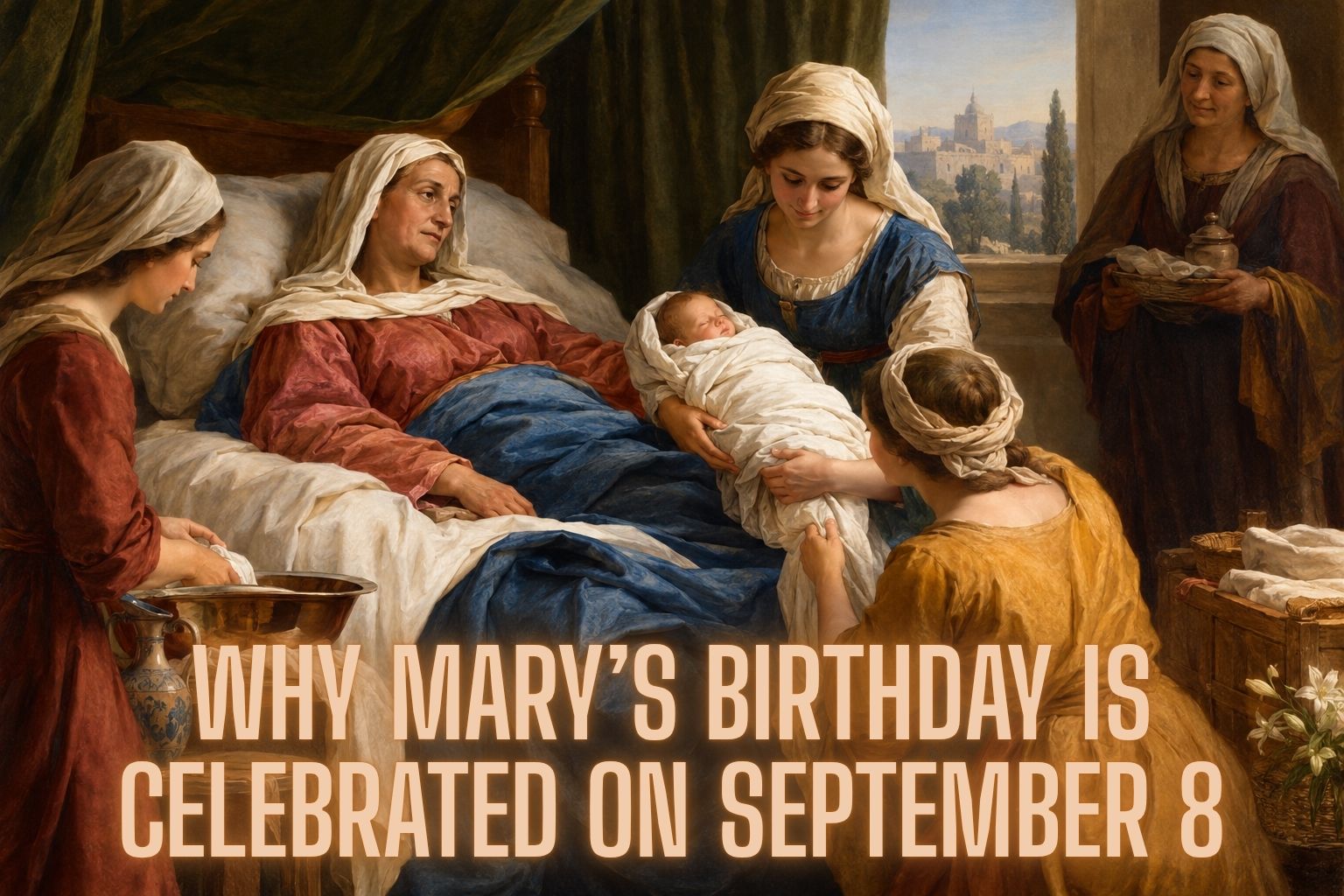
Why Catholics Celebrate Mary’s Birthday on September: A Feast Rooted in Ancient Tradition
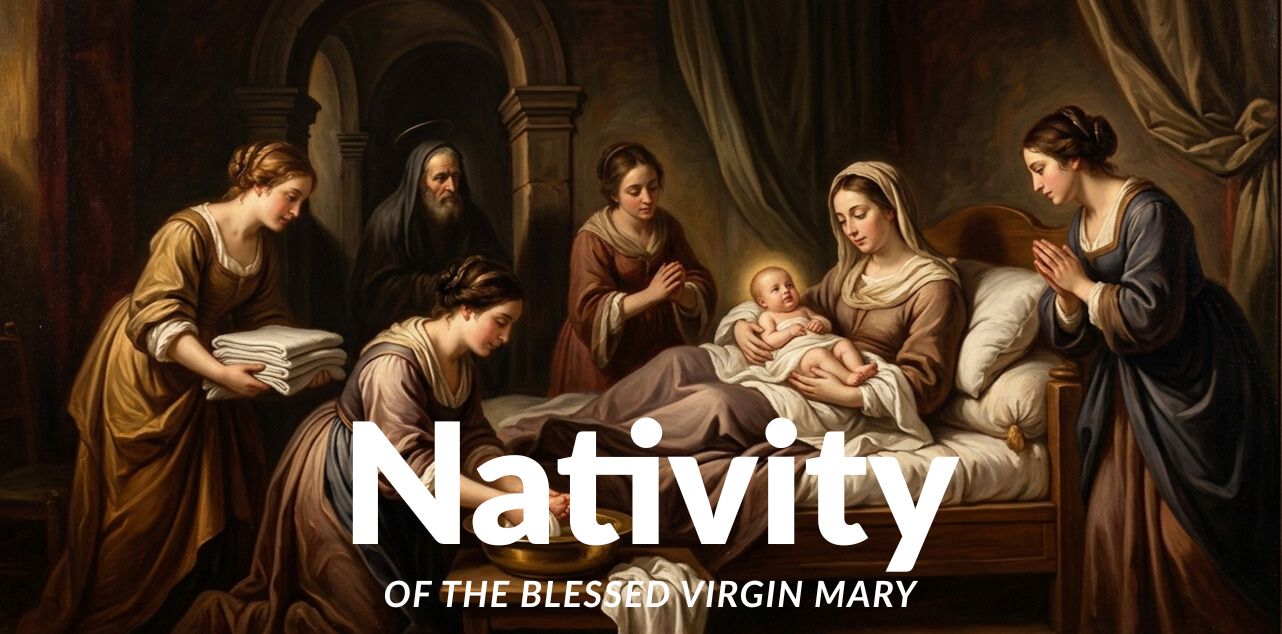
Every year, on 8 September, the Catholic Church observes the Nativity of the Blessed Virgin Mary. Catholics simply call it Mary’s birthday and it ranks among the oldest Marian feasts in Christian history. Consequently, understanding why Catholics celebrate Mary’s birthday requires a look back at Jerusalem in the fifth century. According to Jerusalem tradition, the place of Mary’s birth stood next to the Pool of Bethesda and a church built there in the early fifth century honoured Saint Anne. As a result, worshippers began marking Mary’s birth on the anniversary of that church’s dedication. Later, the feast travelled westward. Indeed, Pope Sergius I introduced the celebration to Rome during the eighth century, making it the third nativity feast on the Roman calendar, alongside those of Christ and Saint John the Baptist. Therefore, this feast carries centuries of unbroken devotion behind it.
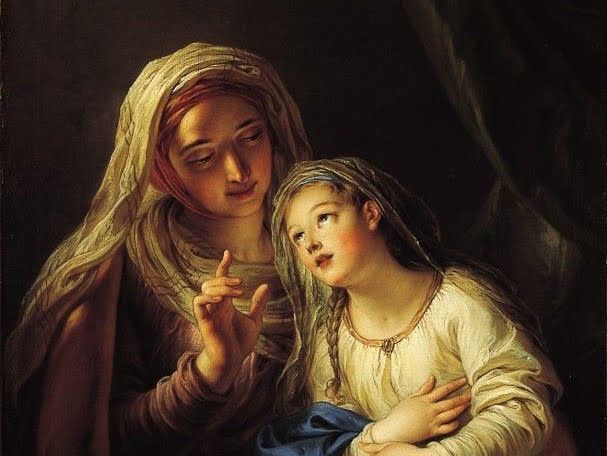
Notably, no Gospel passage mentions Mary’s birth directly. Instead, the story comes from the apocryphal Gospel of James, which names her parents as Saints Joachim and Anne. Nevertheless, the Church embraced this tradition wholeheartedly and it remains central to Marian devotion today.
The date itself carries theological weight. Since the Solemnity of the Immaculate Conception falls on 8 December, the Church celebrates Mary’s birthday exactly nine months later, on 8 September. This spacing is no accident; rather, it mirrors the natural span of pregnancy, tying two major Marian feasts neatly together.
Why, then, does this particular birth matter so much to Catholics? The answer lies in what Mary represents. Her arrival, according to Church teaching, signalled the first glimmer of hope after generations of waiting for a saviour. In other words, Mary’s birth prepared the way for Christ’s birth just as dawn precedes sunrise. Pope Paul VI captured this beautifully in 1972, describing her nativity as the “dawn of our salvation” in his document Marialis Cultus. Meanwhile, Pope Benedict VI, in a 1964 homily, spoke of Mary as the lamp carrying divine light into the world, a fitting image for a feast that celebrates beginnings.
Furthermore, this feast has never stayed confined to Rome alone. Instead, it spread widely across Europe and beyond, absorbing local customs along the way. In Hungary, communities have long risen before dawn to watch the sunrise, hoping to glimpse the Virgin within its light. In rural Hungary, families once placed seeds outside overnight, hoping Mary would protect future harvests from blight. This tradition linked Mary symbolically with fertile ground, new life, and the promise of abundant harvests. In France, devotion grew after reports of a Marian apparition to Saint Florent in Anjou. According to tradition, Mary asked Saint Florent to ensure that her birth would receive formal honour.
Consequently, by the eleventh century, this celebration had become a holy day of obligation across the Western Church. Paschasius Radbertus, writing before 860, noted that preaching on Mary’s Nativity had already spread throughout the universal Church. Pope Innocent IV later added an octave to the feast during the thirteenth century, extending the celebration for a further eight days, a custom that continued until 1955.
Today, Catholics mark the day through Mass, prayer, and personal Marian devotion. Many parishes hold special liturgies, while others encourage reflection on Mary’s role as the first among the redeemed. Because Mary was conceived without sin through the Immaculate Conception, her birth differs from typical saintly commemorations. The Church usually commemorates saints’ deaths because those moments mark their entry into eternal life.
Mary’s birthday stands apart, marking her entry into this world, already touched by God’s grace.
Ultimately, the feast invites believers to consider their own beginnings within God’s plan. Just as Mary’s birth foreshadowed Christ’s coming, Catholics are encouraged to see their lives within God’s greater story of salvation. For this reason, parishes worldwide honour 8 September with hymns, novenas, and quiet reflection. These celebrations keep alive a Marian tradition that has continued for well over a thousand years.
For further reading on saints and feasts marked this same week, see our earlier features on Saint Regina the Virgin Martyr. For additional background on this feast, readers may also consult Vatican News.
Leave a Reply