
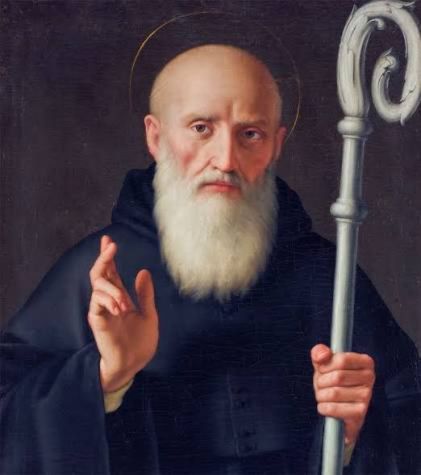
Saint Benedict of Nursia: Father of Western Monasticism
Saint Benedict of Nursia changed the course of Christian history from a small Mountain Cave. Born into chaos as the Roman Empire crumbled, he chose solitude over ambition and quietly built a way of life that would shape European civilization for centuries. Today, the Church honours Saint Benedict of Nursia as the father of Western monasticism and millions still follow the Rule he wrote nearly 1,500 years ago.
The Feast Day and Early Life of Saint Benedict of Nursia
The Catholic Church currently celebrates the feast day of Saint Benedict of Nursia on July 11, though monks traditionally observed it on March 21, the date of his death. He was born around 480 AD in Nursia, a town in the Umbria region of Italy, into a family shaped by Christian tradition. According to some accounts, he may have been the twin brother of Saint Scholastica, who would later found her own religious community nearby.
As a young man, Benedict traveled to Rome to pursue a classical education. However, he quickly grew disillusioned by the moral decay he witnessed in the city. Rather than continuing down that path, he abandoned his studies and fled to the countryside, seeking a simpler and more spiritual way of life.
A Hermit’s Life in the Caves of Subiaco
Around 500 AD, St. Benedict of Nursia settled in a remote cave near Subiaco, roughly forty miles east of Rome. There, he lived as a hermit for approximately three years, relying on a nearby monk named Romanus, who secretly lowered food to him using a rope and bell. This period of isolation deepened his prayer life and eventually attracted the attention of others.
Word of his holiness spread, and a nearby community of monks invited him to become their abbot. Unfortunately, these monks soon resented his strict discipline, and tradition holds that they attempted to poison him. Benedict reportedly blessed the poisoned cup before drinking, causing it to shatter, and he calmly returned to his solitary life afterward.
Founding Twelve Monasteries at Subiaco
Despite this setback, disciples continued to gather around Saint Benedict of Nursia, drawn by his wisdom and reputation for sanctity. By around 525 AD, he had organized twelve separate Monasteries near Subiaco, each housing twelve Monks under an appointed superior. This structure allowed his growing movement to expand while maintaining manageable, close-knit communities.
Nevertheless, jealousy and political conflict eventually forced Benedict to leave the region. Around 529 AD, he traveled south with a small group of followers, ultimately settling on a hilltop between Rome and Naples known as Monte Cassino.
Building Monte Cassino and Writing the Rule
At Monte Cassino, Saint Benedict of Nursia found a site still steeped in pagan tradition, complete with a temple dedicated to Apollo. Rather than avoiding the challenge, he destroyed the temple and built a Christian monastery in its place, gradually converting the surrounding population through his preaching and example.
It was here that Benedict composed his most enduring achievement: the Rule of Saint Benedict. Unlike many earlier monastic practices that emphasized extreme asceticism, his Rule promoted balance, moderation, and practical wisdom. It organized daily life around prayer, work, and study, often summarized by the Latin phrase “ora et labora,” meaning “pray and work.” This structured yet humane approach to communal living soon became the standard for Monasteries throughout Europe.
Later Years and Death
As his reputation grew, kings and Nobles increasingly sought his counsel. One especially notable event occurred around 542 AD, when the Gothic king Totila visited Benedict at Monte Cassino, an encounter historians consider one of the few firmly documented dates in his life. Around this same period, his sister Scholastica, who had established a convent nearby, died shortly before her brother.
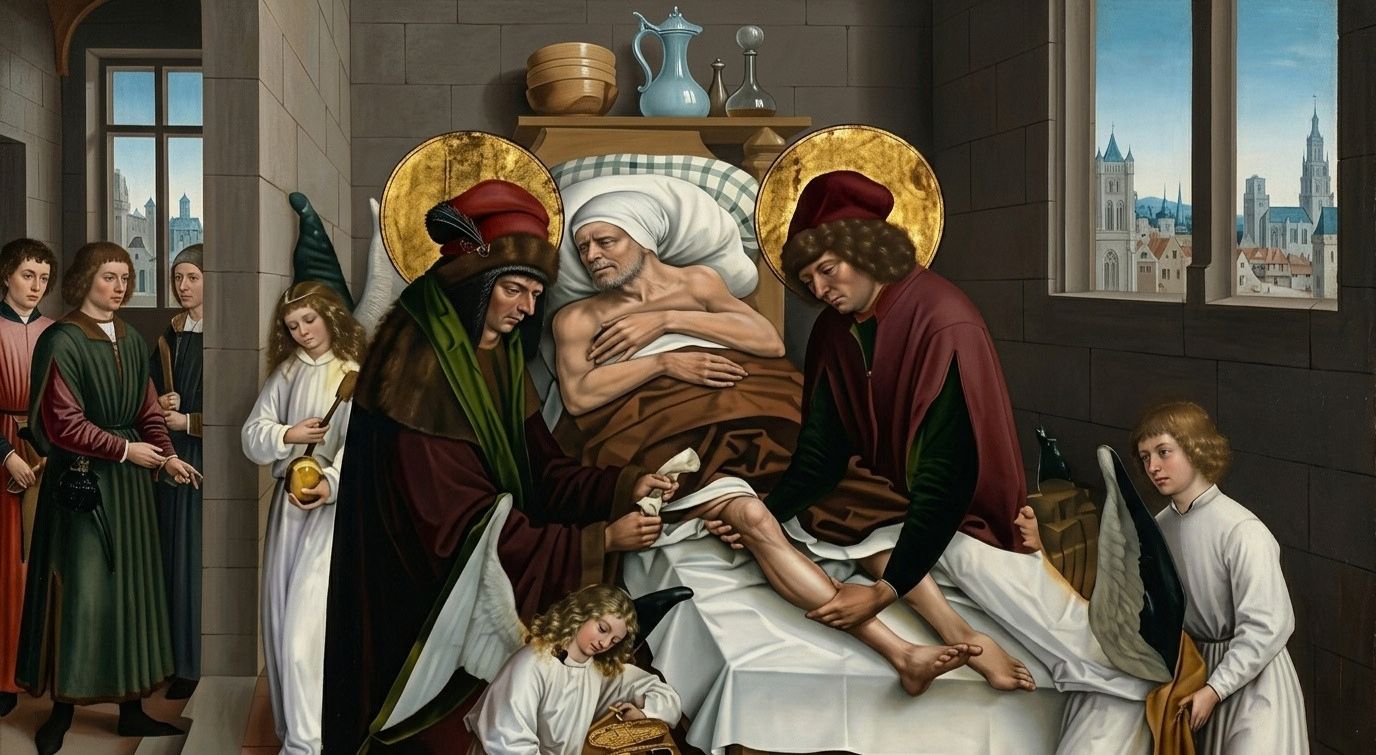
Saint Benedict of Nursia died at Monte Cassino around 547 AD. Since he had left no formal successor plan beyond his Rule itself, his monastic communities continued to spread and multiply across Europe long after his death, carried forward by Monks who embraced his balanced approach to spiritual life.
Legacy, Canonization, and Patronage
Pope Honorius III formally canonized Saint Benedict of Nursia in 1220. Centuries later, in 1964, Pope Paul VI declared him the patron saint of all Europe, recognizing the monumental role Benedictine monks played in evangelizing and civilizing the continent throughout the Middle Ages. Beyond this broad patronage, he is also invoked by Students, Farmers, Engineers, and Speleologists, as well as those seeking protection against poisoning.
Monte Cassino itself became far more than a Monastery under his guidance. It developed into a thriving center of learning, where Monks preserved classical manuscripts and texts that might otherwise have been lost during Europe’s turbulent early medieval period. In many ways, this quiet, disciplined community became a bridge connecting ancient Roman culture to the emerging civilization of medieval Europe.
Even today, the influence of Saint Benedict of Nursia remains visible in Monasteries around the world that still follow his Rule. His life demonstrates how withdrawing from the world, rather than weakening one’s impact, can sometimes become the very foundation for lasting and widespread transformation.


Leave a Reply