
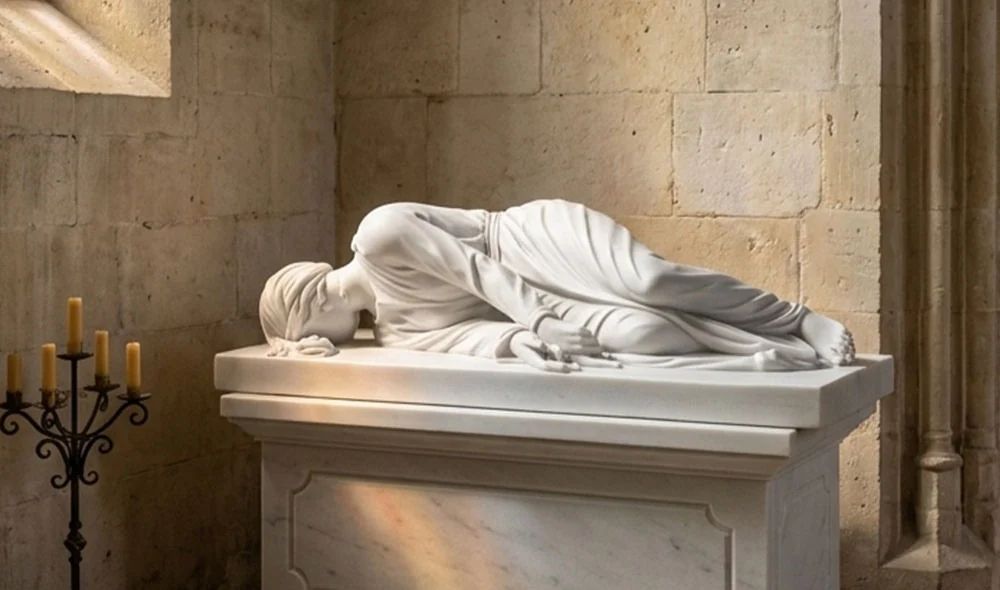
Image credit: Stefano Maderno
Patron Saint of Musicians
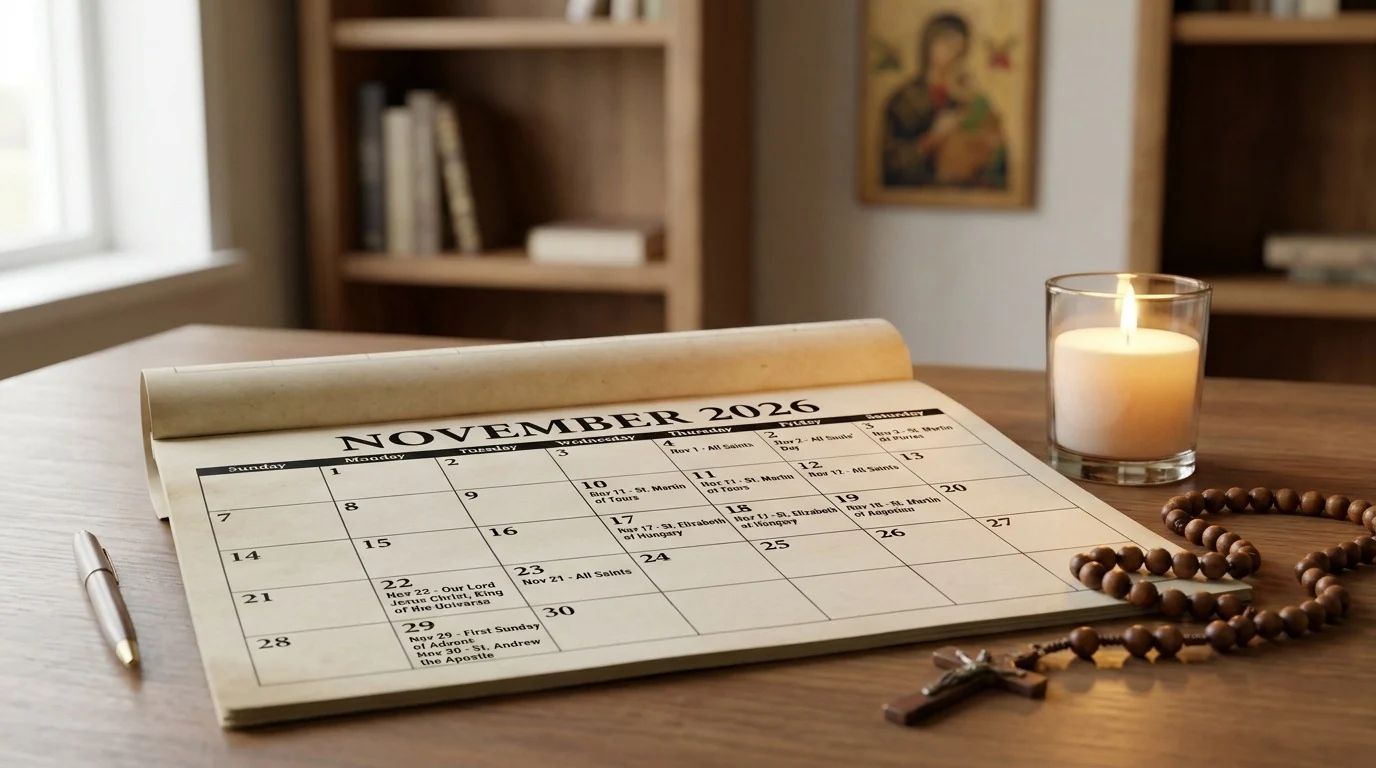
The Church remembers Saint Cecilia on November 22. Because Christ the King Sunday takes precedence this year, her memorial does not appear in the liturgy that day. Nevertheless, believers may still honour her in private prayer. Cecilia was a young Roman noblewoman who gave her life for Christ in the early third century.
Her story comes from an early account of her martyrdom, which blends history and tradition. According to this text, Cecilia vowed her virginity to God from a young age. However, her parents arranged her marriage to a pagan nobleman named Valerian. Thus, she faced a painful choice.
On her wedding day, musicians played in the hall. Cecilia, however, sat apart and sang to God in her heart. Later, the Church took that moment as the reason to call her the patron of musicians. That night, she told Valerian about her vow and about the angel who guarded her. Moreover, she urged him to seek baptism from Pope Urban I.
Valerian listened to her. After his baptism, he saw the angel standing beside Cecilia and holding crowns of roses and lilies. As a result, he and his brother Tiburtius embraced the faith. Both brothers later died as martyrs for refusing to sacrifice to idols. Meanwhile, Cecilia continued to bring others to Christ.
Soon afterwards, the Roman authorities arrested Cecilia. According to the account, the executioner struck her neck three times with a sword. However, she did not die at once. Instead, she lived for three days, still encouraging the faithful. During that time, she asked Pope Urban to turn her house into a church. Finally, she died, and the Christians buried her in the Catacomb of Callixtus.
Centuries later, Pope Paschal I rebuilt the church of Santa Cecilia in Trastevere. Around the year 821, he moved her relics there from the catacombs. Then, in 1599, Cardinal Paolo Emilio Sfondrato reopened the tomb during renovations. Witnesses reported that her body appeared incorrupt, as if she were asleep. Afterwards, the sculptor Stefano Maderno carved a famous statue showing the saint in that very pose.
The title of patron of musicians grew over time. Artists often painted Cecilia with an organ, and this image spread her fame. Moreover, in 1585, Pope Sixtus V founded a congregation of musicians in Rome under the patronage of Saint Gregory the Great and Saint Cecilia. Consequently, music schools, choirs and academies across the world adopted her name. Today, the Church also honours her as the patron of poets, singers and instrument makers.
The Church keeps her name close to the altar as well. Priests mention Saint Cecilia in the First Eucharistic Prayer, which is called the Roman Canon. Few saints receive that honour. Therefore, her witness remains part of the heart of the Mass.
What can Catholics learn from Saint Cecilia? First, she shows that prayer can happen in the middle of noise. Second, she proves that courage can be gentle, because she persuaded rather than attacked. Third, her life reminds us that music can lift the soul to God. Finally, she teaches that faith spreads through example, since her husband, her brother-in-law and many others believed.
Prayer to Saint Cecilia
Saint Cecilia, faithful virgin and martyr, you sang to the Lord with all your heart. Teach us to praise God in joy and in suffering. Bless every musician, singer and choir. Moreover, help us to stay loyal to Christ in every trial. Pray for us that our lives may become a song of praise. Amen.
Readers who wish to learn more can visit the Vatican News profile of Saint Cecilia, the Catholic Encyclopedia entry at New Advent and the Britannica article on Saint Cecilia. Furthermore, our Saints of the Day section offers more stories like this.



Leave a Reply