
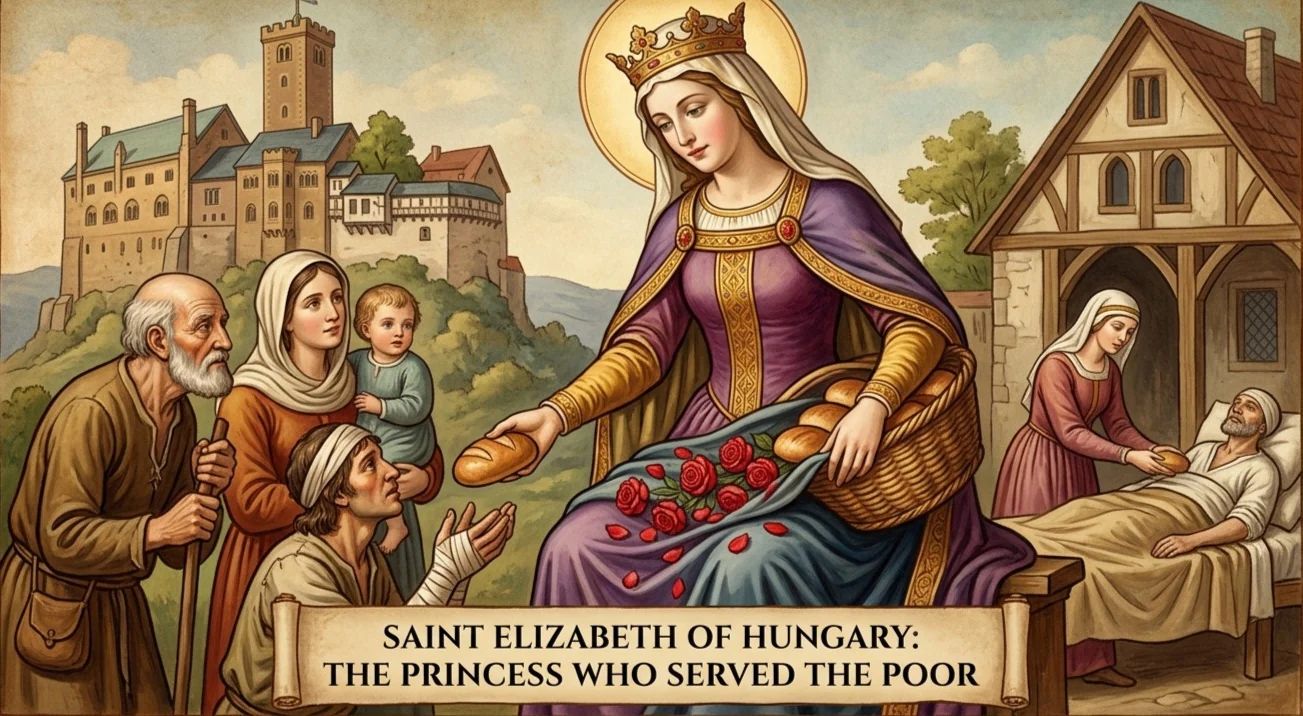
Saint Elizabeth of Hungary Traded a Palace for a Hospital
The Church honours Saint Elizabeth of Hungary on November 17. Before 1969, the Roman Calendar kept her feast on November 19. Moreover, she is one of the most beloved saints of the Middle Ages and she died at only 24. Therefore, her short life offers a powerful lesson about generosity, grief and trust in God. She is the patron of Hospitals, Nurses, Bakers and Widows.
Elizabeth was born on July 7, 1207, probably in Pozsony, which is now Bratislava in Slovakia. Her father was King Andrew II of Hungary and her mother was Queen Gertrude. As a child of four, she received a promise of marriage to Louis, the son of the landgrave of Thuringia, in Germany. This agreement strengthened an alliance between two noble families. Consequently, the little girl left her homeland and grew up at the Thuringian court, in the castle of the Wartburg.
Elizabeth showed remarkable piety even as a child. She loved to pray and she gave her possessions to the poor. However, some at the court mocked her for her simple habits. Despite this, she stayed faithful. In 1221, she married Louis at the age of 14. The couple loved each other deeply and they had three children. Moreover, Louis supported her charity. He even told her that she could give as much as she wished.
Elizabeth used her position to help the needy. She fed the hungry at the castle gate and she visited the sick in their homes. During a famine, she gave away grain from the royal stores. According to legend, she once carried bread in her cloak and her husband stopped her. When he opened the cloak, he found roses instead of bread. Historians treat this story as a pious legend. Nevertheless, it shows how people saw her charity.
Then tragedy struck. In 1227, Louis joined a crusade, but he died of illness on his way to the Holy Land. Elizabeth was only 20 and she was grief-stricken. After his death, his brother Henry took over the regency of Thuringia. According to Britannica, Elizabeth left the court. She took shelter with her uncle, Bishop Ekbert of Bamberg. Some accounts say that she faced harsh treatment before she left. Thus, she lost her home, her position and her husband within a short time.
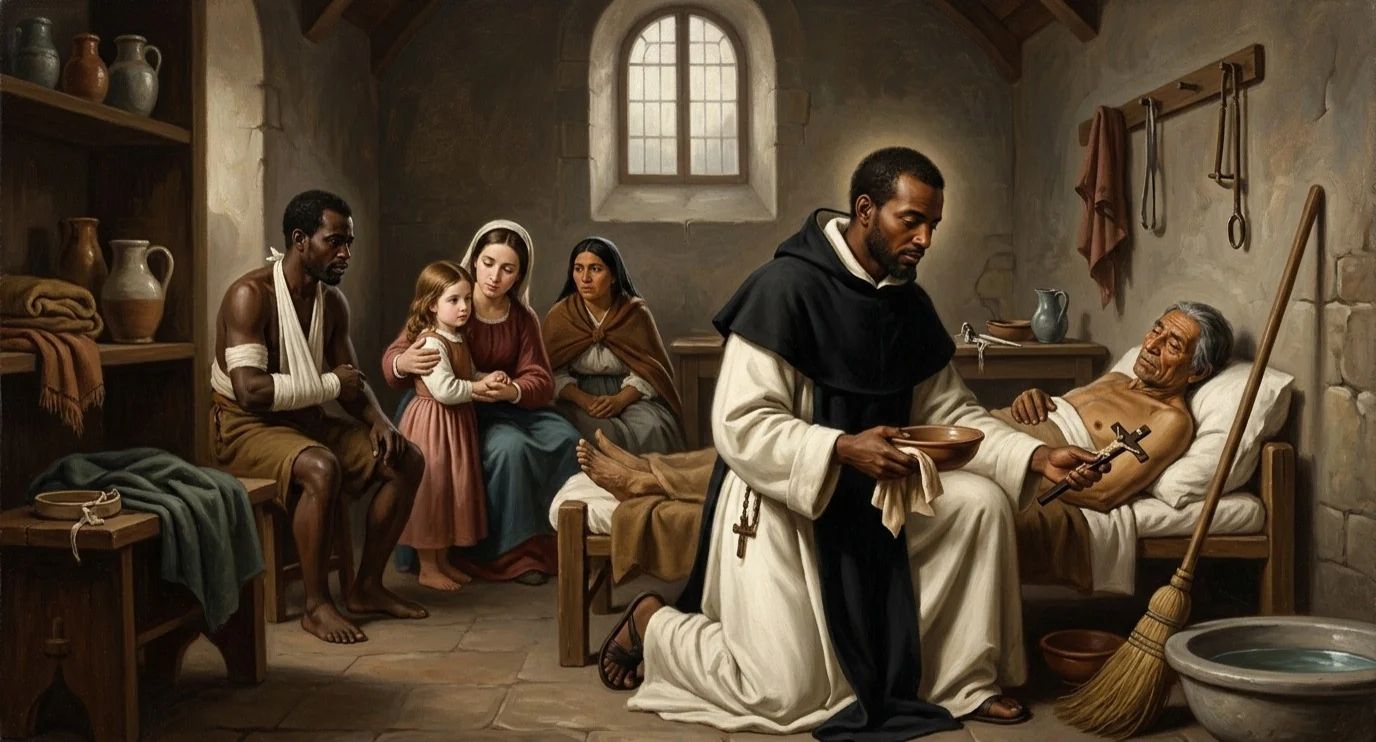
In this hard moment, Elizabeth chose a new path. On Good Friday in 1228, she renounced the world in a Franciscan church in Eisenach. Soon afterwards, she joined the Third Order of Saint Francis, which welcomed lay men and women. She received her dowry and used it to build a hospital in Marburg, in honour of Saint Francis. There she personally cared for the sick, including people with painful and contagious diseases. In addition, she washed the poor and fed them with her own hands.
Her spiritual director was Conrad of Marburg, a priest who guided her with great severity. He demanded harsh penances and controlled many aspects of her life. Elizabeth accepted his direction with humility. However, modern writers often question his methods. Even so, she remained cheerful in her work, and she kept caring for the poor until her strength failed. She died in Marburg on November 17, 1231, at the age of 24.
After her death, many pilgrims came to her tomb, and people reported healings. Church officials investigated these reports for several years. Pope Gregory IX canonised her on May 27, 1235, only four years after her death. A grand church, the Elisabethkirche, soon rose over her grave in Marburg. The Teutonic Order, which settled there, adopted her as a patron. Today, her golden shrine remains in the church, although the Reformation scattered most of her relics.
What can we learn from her? First, power can be a tool for service. She used her wealth and rank to help others. Second, grief can lead to deeper love. After her husband died, she turned her sorrow into mercy. In addition, she shows that holiness is possible for wives, mothers and widows. To learn more, read the Britannica, the Our Sunday Visitor and the America Needs Fatima.
In conclusion, Saint Elizabeth of Hungary shows that love for the poor is love for Christ. She gave up comfort and she gained a lasting place in the heart of the Church. Likewise, she reminds us that every life, however short, can carry great meaning. Therefore, let us ask for her prayers on this memorial. May we, too, serve the poor with joy.




Leave a Reply