

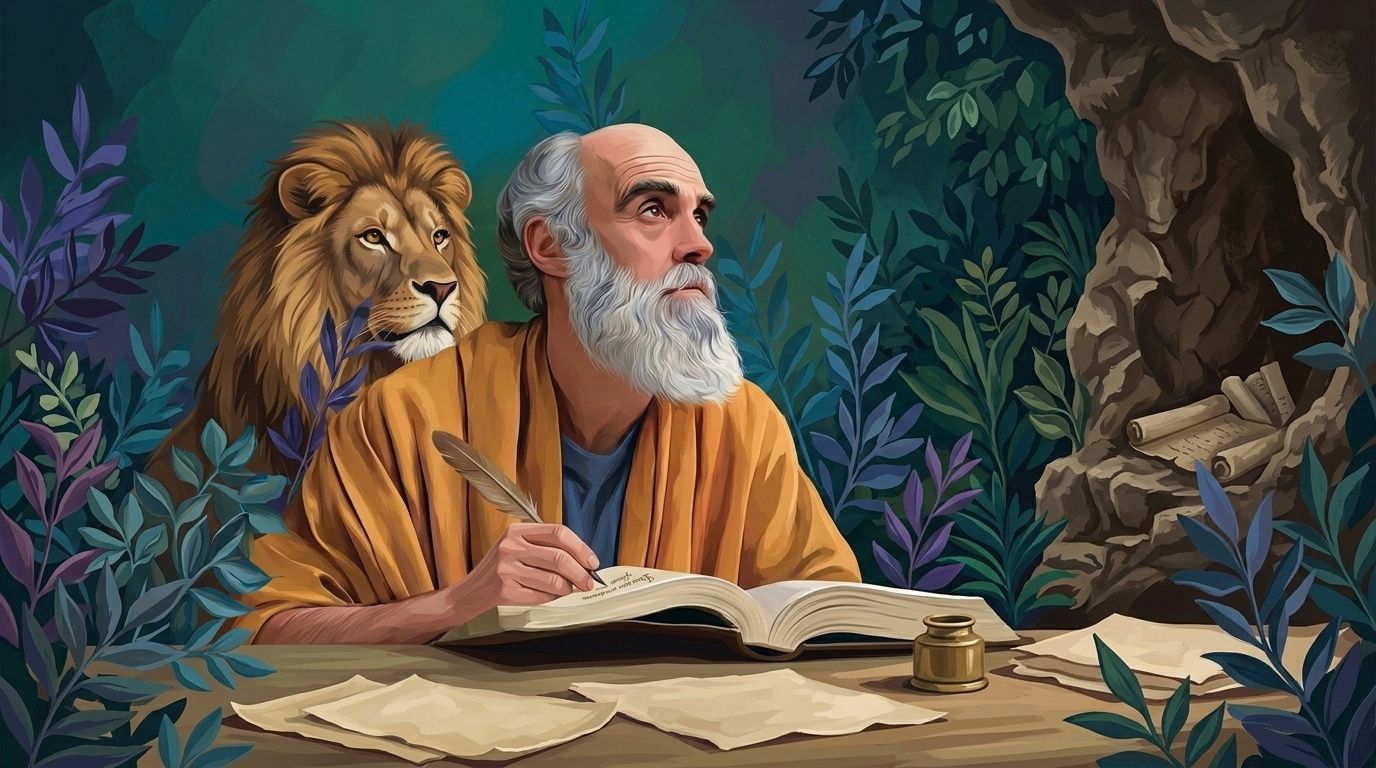
Image Credit: Saint Arsenius the Great (Pinterest)
Saint Arsenius the Great: From Roman Court to Desert Solitude
Saint Arsenius the Great lived one of the most striking transformations in the history of Christian monasticism. He began his life surrounded by imperial luxury as tutor to future Roman Emperors, yet he ultimately abandoned that comfort entirely to pursue a life of extreme humility in the Egyptian desert. Today, the Church remembers Saint Arsenius the Great as one of the most influential Desert Fathers, whose wisdom continues to shape the contemplative tradition.
The Feast Day of Saint Arsenius the Great
The Catholic Church traditionally celebrated the feast day of Saint Arsenius the Great on July 19, though the calendar reform following the Second Vatican Council later shifted his feast to May 8, aligning it with the date already used in the Eastern Orthodox Church. The Coptic Orthodox Church, meanwhile, commemorates him on 13 Pashons according to its own liturgical calendar. He died around the year 450, having lived to roughly ninety-five years old.
Early Life and Imperial Service
Born in Rome around 354 into a Christian senatorial family, Arsenius received an excellent education, mastering both Latin and Greek while studying rhetoric and philosophy. Pope Damasus I eventually ordained him a deacon and recommended him to Emperor Theodosius I, who was searching for a skilled tutor to educate his young sons. As a result, Arsenius traveled to Constantinople in 383 and spent the next eleven years teaching the future Emperors Arcadius and Honorius.
During this period, Arsenius lived a life of considerable luxury befitting his position at court. According to tradition, Theodosius once found his sons seated while their tutor stood before them, and the Emperor immediately insisted that their roles be reversed out of respect for Arsenius’ position. Despite this privileged life, however, Arsenius increasingly felt drawn toward a simpler, more spiritual existence.
Saint Arsenius the Great’s Journey to the Desert
Eventually, Arsenius left the imperial court altogether and sailed to Alexandria, seeking out the solitude of the Egyptian wilderness. He first approached Macarius the Great, a renowned leader among the monks of Scetis, who placed him under the guidance of John the Dwarf for testing. When Arsenius arrived, John deliberately ignored him at first, later tossing him a piece of bread without ceremony. Arsenius humbly accepted the treatment and ate while sitting on the ground, a response that convinced John of his genuine humility and led to his acceptance into monastic life around the year 400.
For the next several decades, Saint Arsenius the Great embraced a life of remarkable austerity. He wore only the simplest clothing, as penance for his former vanity, and he reportedly refused to change the water used for weaving palm mats, allowing it to grow foul as a form of self-denial for his earlier use of perfumes at court. Even while performing manual labour, he remained devoted to constant prayer, and witnesses described him as frequently moved to tears during his devotions.
A Life of Silence and Withdrawal
Saint Arsenius the Great became especially known for avoiding distractions from his relationship with God. When his former student, now Emperor Arcadius, discovered his location, Arsenius refused to return to court or even assist as an almoner for the poor. He also declined nearly all visitors, regardless of their rank, leaving hospitality duties to his disciples instead. His famous saying captures this spirit well: he often remarked that he had frequently regretted speaking, but never regretted staying silent.
In 434, raids by Libyan tribesmen forced him to leave Scetis. He relocated to Troe, near Memphis and also spent time on the Island of Canopus before eventually returning to Troe, where he died around 445. Despite his preference for solitude, he maintained a small circle of disciples, including Alexander, Zoilus, and Daniel, some of whom lived near him during his final years.
Writings and Lasting Influence
Several works are attributed to Saint Arsenius the Great, including guidance on monastic life and a short commentary on the Gospel of Luke. His sayings also appear extensively throughout the Apophthegmata Patrum, the widely read collection of Desert Father wisdom that continues to shape Christian spirituality today.
After his death, followers moved his body to a church built in his honor near Tura, Egypt, an area that developed into a significant monastic community and pilgrimage site for centuries afterward. Religious persecution eventually destroyed the monastery during medieval Egypt, but its legacy endured, and the 1941 discovery of ancient papyri near the site further connected Arsenius’s memory to the preservation of early Christian scholarship.





Leave a Reply